Roman funerary sphinx discovered embedded in Elda staircase
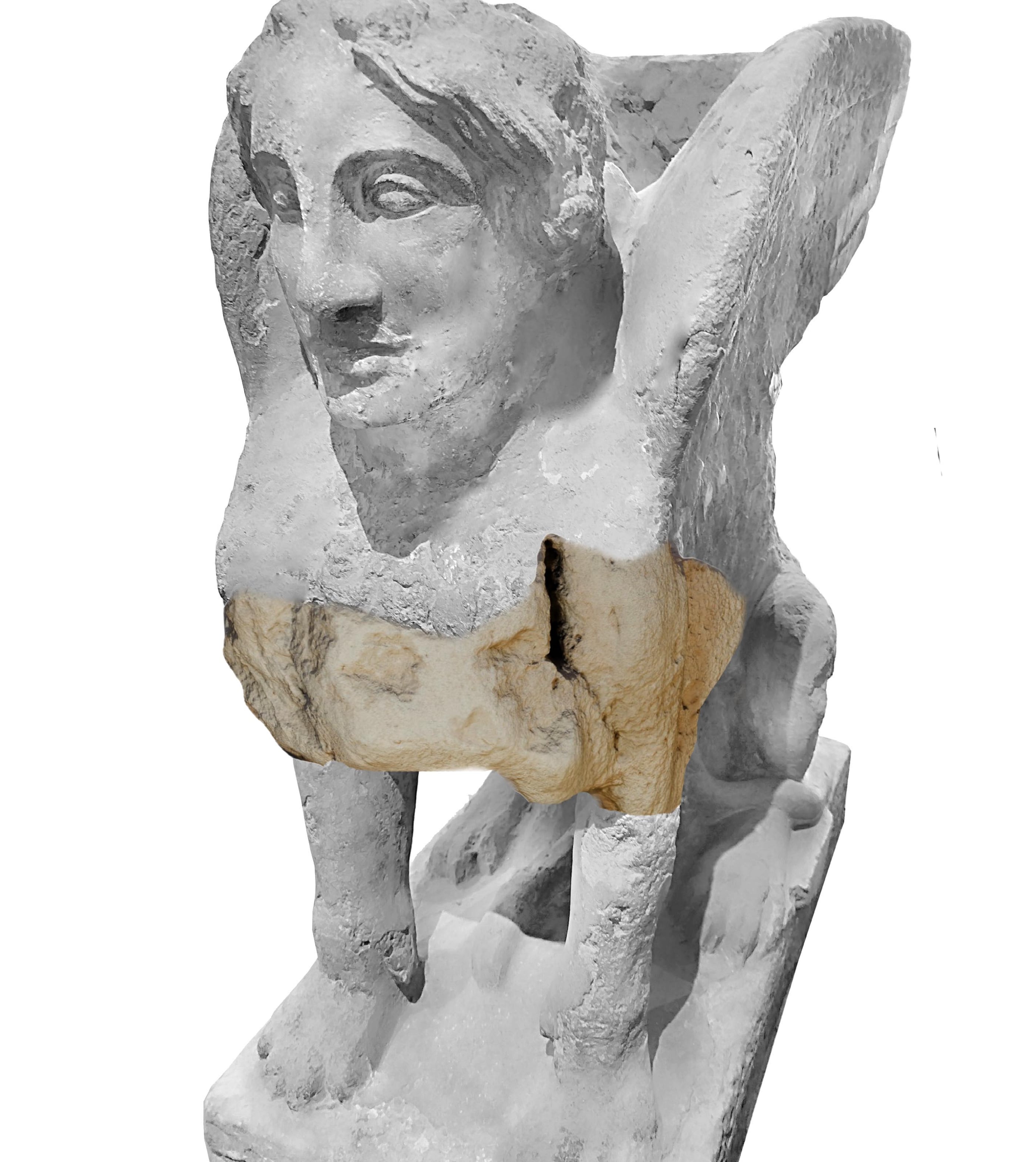
A Roman funerary sphinx, dating back to the 1st century AD, has been discovered in Elda, a city in the Alicante province of Spain. The sculpture was found embedded within a staircase, suggesting it was repurposed or incorporated into later construction. This artifact is believed to have originated from the tomb of a prominent individual from the nearby city of Elche. The sphinx, a mythical creature with the body of a lion and the head of a human, was often used in funerary contexts during the Roman period to symbolize guardianship and the passage to the afterlife. Its discovery in Elda provides valuable insights into the Roman presence and cultural practices in the region during the 1st century. Further study of the sphinx may reveal more about the social status and importance of the individual it commemorated in ancient Elche.
The discovery of this 1st-century Roman funerary sphinx in Elda highlights the enduring material legacy of Roman civilization in Spain. The artifact's integration into a later staircase underscores the complex historical layering of urban environments and the potential for archaeological finds in unexpected places. This event prompts consideration of how historical preservation efforts interact with modern urban development and infrastructure projects. Understanding the provenance of such artifacts, particularly their connection to prominent figures in ancient Elche, enriches our comprehension of regional power dynamics and burial customs during the early Roman Empire. Future archaeological work in Elda and Elche could further illuminate the extent of Roman influence and the interconnectedness of these ancient communities.
AI-generated to prompt reflection — not editorial opinion, not advice, not a statement of fact. How this works.