Roman Space Telescope to Detect Ancient Black Holes by Observing Stellar Consumption
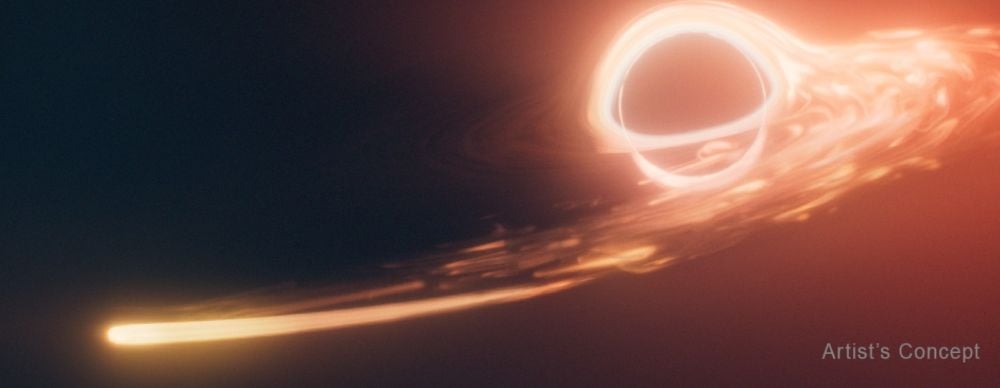
The Nancy Grace Roman Space Telescope is poised to significantly advance our understanding of supermassive black holes (SMBH) by observing Tidal Disruption Events (TDEs). When SMBHs within a specific mass range consume a star, they first tear it apart in a TDE. Astronomers can chart the growth of these black holes over cosmic time by detecting these events as the Universe has aged. The Roman Space Telescope is expected to identify approximately 100 TDEs annually, providing a wealth of data. This capability will allow for a more detailed mapping of SMBH evolution throughout the history of the cosmos. By studying how these massive objects grow, scientists aim to unravel fundamental questions about galaxy formation and evolution.
The Roman Space Telescope's mission to detect Tidal Disruption Events offers a novel observational approach to charting the growth of supermassive black holes. By focusing on the observable phenomenon of stars being consumed, the telescope circumvents some of the direct observational challenges associated with black holes themselves. This method leverages stellar dynamics as a proxy for black hole activity, potentially providing a more comprehensive dataset on black hole evolution across cosmic epochs. The success of this initiative hinges on the telescope's sensitivity and its ability to distinguish TDEs from other astrophysical events. Future advancements in observational cosmology may further refine these techniques, potentially integrating TDE data with other cosmological probes to build a more unified model of structure formation in the universe.
AI-generated to prompt reflection — not editorial opinion, not advice, not a statement of fact. How this works.