Romania Downs Drone for Second Day Amid Escalating Russia-Ukraine Conflict
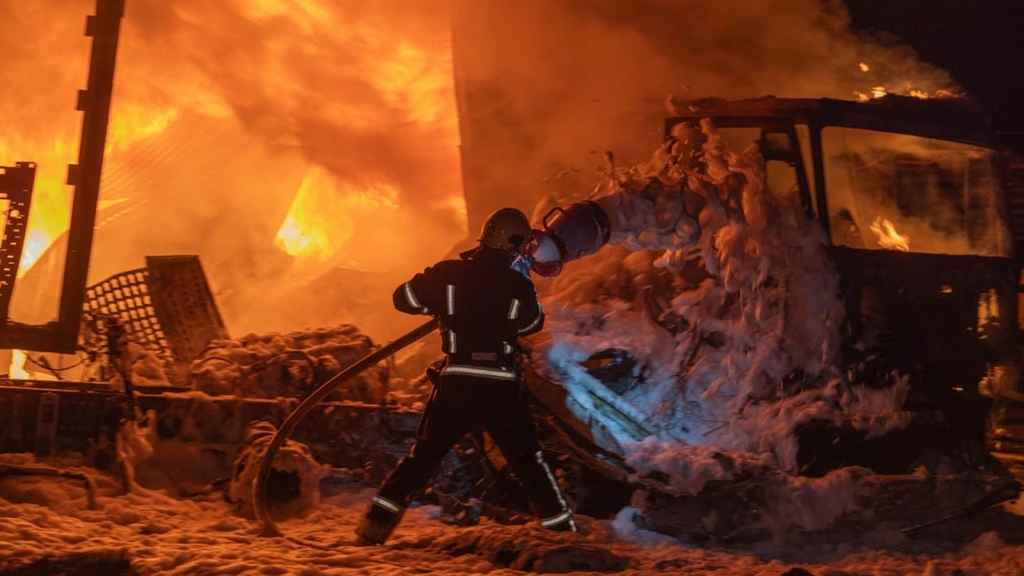
For the second consecutive day, Romania's military has intercepted and shot down an unidentified drone that entered its airspace. The incident occurred on an unspecified date at 8:22 AM, with F-16 fighter jets deployed to neutralize the unmanned aerial vehicle over uninhabited territory near the Ukrainian border. The Romanian Ministry of Defense confirmed the event but did not disclose the drone's origin. This follows a similar incident the previous morning near Padina, northeast of Bucharest, where a drone, suspected to be an Iranian-designed Shahed model used by Russia in Ukraine, was also downed. This marks the first time Romania has actively engaged and destroyed drones entering its airspace. Since Russia's 2022 invasion, numerous Russian and Ukrainian drones have violated Romanian airspace, which borders the Danube River, a target of Russian attacks on Ukrainian ports. Meanwhile, the conflict between Russia and Ukraine continues with significant casualties. Ukrainian officials have not yet commented on an attack on a summer camp in the Russian-occupied Zaporizhia region, which Moscow-appointed authorities claim killed eight people. In the northeastern Sumy region of Ukraine, Russian drone attacks overnight reportedly killed three drivers for a private postal service and caused a large fire. These events occur in the wake of a large-scale Russian assault near Kyiv the previous day, which resulted in at least ten deaths and one hundred injuries.
The repeated airspace violations by drones, originating from both Russian and Ukrainian forces, highlight the escalating spillover risks of the ongoing conflict. Romania's active defense measures underscore the challenges faced by NATO members in maintaining sovereign airspace integrity amidst asymmetric warfare. The incidents prompt consideration of enhanced surveillance and response protocols, balancing national security with de-escalation imperatives. As drone technology proliferates, such events may become more frequent, necessitating robust international frameworks for airspace management and accountability in conflict zones. The strategic implications extend to the reliability of early warning systems and the potential for miscalculation in densely contested border regions.
AI-generated to prompt reflection — not editorial opinion, not advice, not a statement of fact. How this works.