Romanian Drivers Warned of Fake Speeding Ticket Scam via SMS
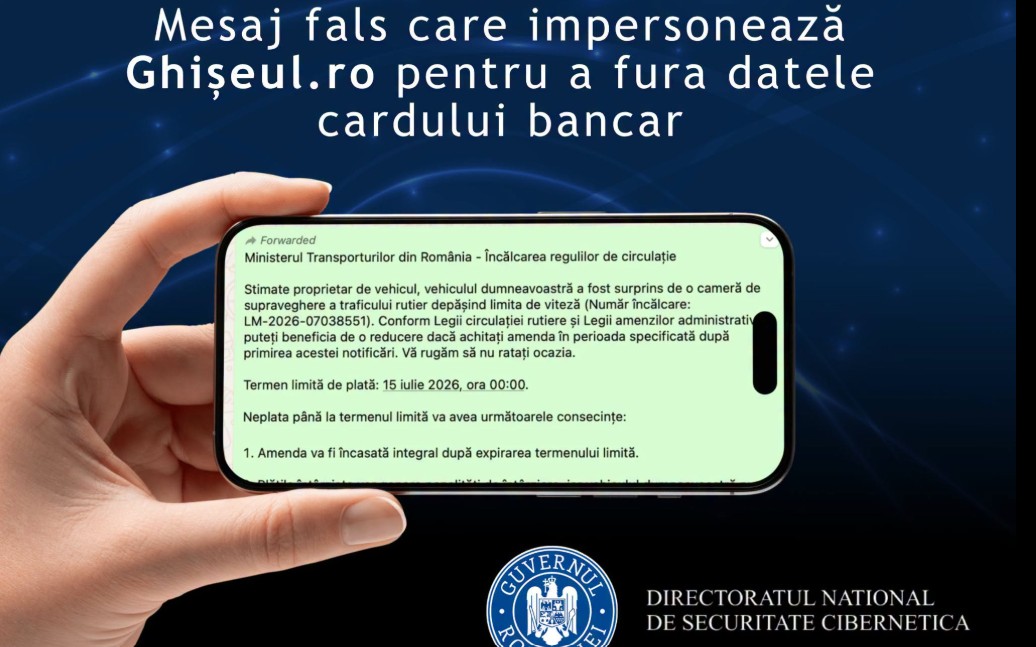
Cybercriminals are targeting Romanian drivers with a new online scam involving fake speeding tickets sent via SMS. The fraudulent messages impersonate Ghișeul.ro, a Romanian government payment portal, and falsely claim to originate from the Ministry of Transport. These messages inform recipients that they have incurred a speeding fine, allegedly captured by traffic cameras. The National Directorate for Cybersecurity (DNSC) issued a warning about this phishing attempt through an official social media post on Tuesday. The scam aims to trick individuals into believing they owe money for traffic violations. The DNSC is urging the public to be vigilant against such deceptive communications. This incident highlights the ongoing threat of cyber fraud targeting citizens through various digital channels. Authorities are working to identify and apprehend the perpetrators behind this scheme. Drivers are advised to verify any official-looking communication directly with the relevant authorities before taking any action.
This SMS-based phishing campaign exploits the common fear of traffic fines to extract personal information or financial gain from unsuspecting drivers. By impersonating official government entities like Ghișeul.ro and the Ministry of Transport, the perpetrators leverage established trust to bypass user skepticism. The effectiveness of such scams relies on the rapid dissemination of urgent-sounding messages, encouraging immediate action without critical evaluation. As digital interactions become more prevalent, the sophistication of these social engineering tactics is likely to increase, necessitating continuous public awareness campaigns and robust cybersecurity measures from both government agencies and private sector platforms to safeguard citizens against evolving online threats. The challenge lies in balancing accessibility of digital services with the imperative for secure communication channels.
AI-generated to prompt reflection — not editorial opinion, not advice, not a statement of fact. How this works.