Romanian Senator Claims Pro-EU Governments Disconnected Romania from EU
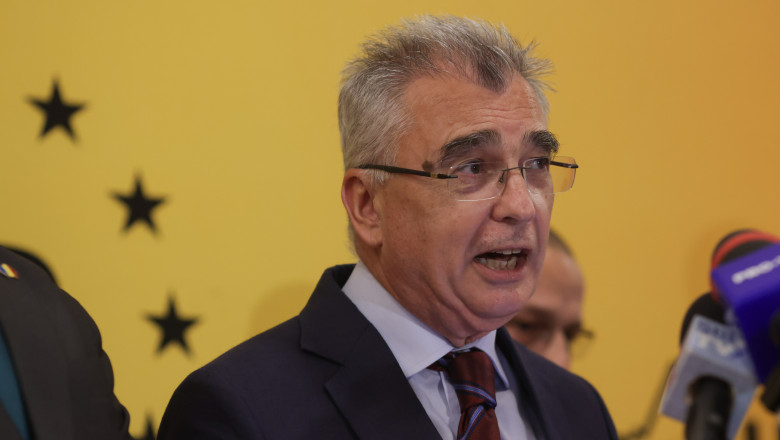
Petrișor Peiu, the leader of AUR senators in Romania, has accused successive pro-European governments of "decoupling" the country from the European Union. Peiu, a prominent figure in the Alliance for the Union of Romanians (AUR) party, believes that the policies enacted by these administrations have led to Romania's estrangement from the EU. He asserts that despite outward appearances of adherence to European integration, the actual implementation of governance has resulted in a practical disconnection. This statement reflects a critical stance from a nationalist political party towards Romania's integrationist policies. The AUR party generally advocates for a more nationalistic approach to governance and foreign policy, often expressing skepticism towards deeper integration with international bodies. Peiu's remarks suggest a narrative that Romania's sovereignty or national interests have been compromised by its alignment with the EU. The specific mechanisms or policies Peiu believes caused this "decoupling" were not detailed in the original statement. However, the accusation implies a perceived failure of pro-European governments to effectively represent Romania's interests within the EU framework or to foster genuine alignment.
This statement from Senator Petrișor Peiu of the AUR party presents a narrative that pro-European governance has led to Romania's disconnection from the European Union. From an analytical perspective, such claims often stem from a divergence between stated policy goals and perceived outcomes, or a nationalist interpretation of national interest versus supranational obligations. The underlying incentive structure for parties like AUR may involve mobilizing voters by highlighting perceived failures of mainstream parties and fostering skepticism towards international cooperation. Evaluating such claims requires a granular examination of specific economic, legal, and political integration metrics, rather than broad pronouncements. The long-term implications of such rhetoric could influence Romania's strategic positioning within the EU and its capacity for effective policy coordination, potentially leading to internal political friction and external diplomatic challenges.
AI-generated to prompt reflection — not editorial opinion, not advice, not a statement of fact. How this works.