Romeu Zema Nominated for President, Criticizes PT, STF, and Proposes Amazon Prison
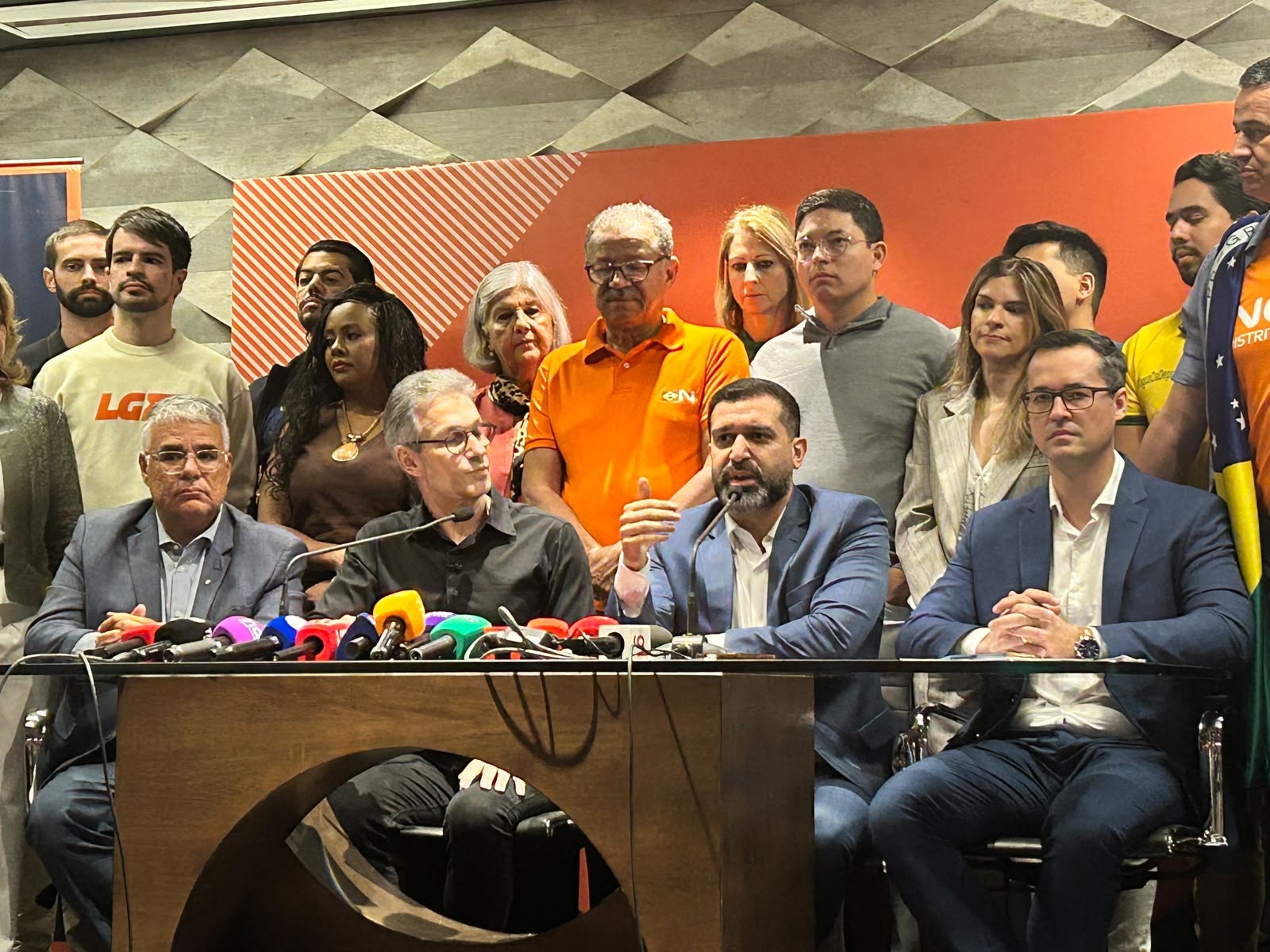
Romeu Zema, former governor of Minas Gerais, has been officially nominated as the Novo Party's presidential candidate for the upcoming elections. The announcement came during the party's virtual national convention, followed by a press conference in Brasília attended by party president Eduardo Ribeiro. In his first official address as a candidate, Zema launched sharp criticisms against President Luiz Inácio Lula da Silva, the Workers' Party (PT), and ministers of the Supreme Federal Court (STF). He also referenced politicians and authorities linked to the Master case, an institution liquidated due to alleged billion-dollar financial fraud schemes, and improper deductions from INSS retiree benefits. Zema declared himself the only candidate who truly understands the "real Brazil," drawing on his private sector experience. He specifically targeted the STF, calling its actions "aberrations" and expressing that the country cannot endure another four years under Lula and the PT. He highlighted his ongoing legal dispute with STF minister Gilmar Mendes and has been increasingly critical of the court, associating its ministers with banker Daniel Vorcaro, former controller of Banco Master. Zema also proposed reforms for the STF, including a minimum age of 60 for nominations, selection via a triple list, and an end to individual ministerial decisions, suggesting a 15-year term limit. Regarding public security, Zema pledged to classify criminal factions as terrorist organizations, arguing this measure should have been adopted much earlier. He suggested building a "super-prison" in a remote area, preferably in the Amazon, to house organized crime leaders, advocating for long-term incarceration, potentially 25 years or more, and a "mass incarceration" approach. Zema also promised to end what he calls the "free-for-all of the untouchables," combat corruption, restore national sovereignty, reduce public sector privileges, and create a more favorable environment for entrepreneurs by tackling bureaucracy and excessive state burdens.
Romeu Zema's presidential candidacy launch is characterized by a strong populist appeal, contrasting his private sector background with perceived failures in public administration and the judiciary. His critique of the PT and STF aligns with a segment of the electorate disillusioned with established political and judicial institutions. The proposal for an Amazonian "super-prison" for organized crime leaders, while aiming to project an image of decisive action on security, raises significant logistical, environmental, and human rights considerations. Such a policy could be viewed as an attempt to bypass complex legal frameworks for crime and punishment, potentially creating a system focused on incapacitation over rehabilitation or due process. The strategy appears designed to resonate with public frustration over crime rates and perceived impunity, positioning Zema as an outsider capable of enacting radical change, though the feasibility and long-term implications of his security proposals warrant careful examination within the context of Brazil's constitutional and societal structures.
AI-generated to prompt reflection — not editorial opinion, not advice, not a statement of fact. How this works.