Roraima Security Firm Faces Legal Action Over Alleged Electoral Harassment
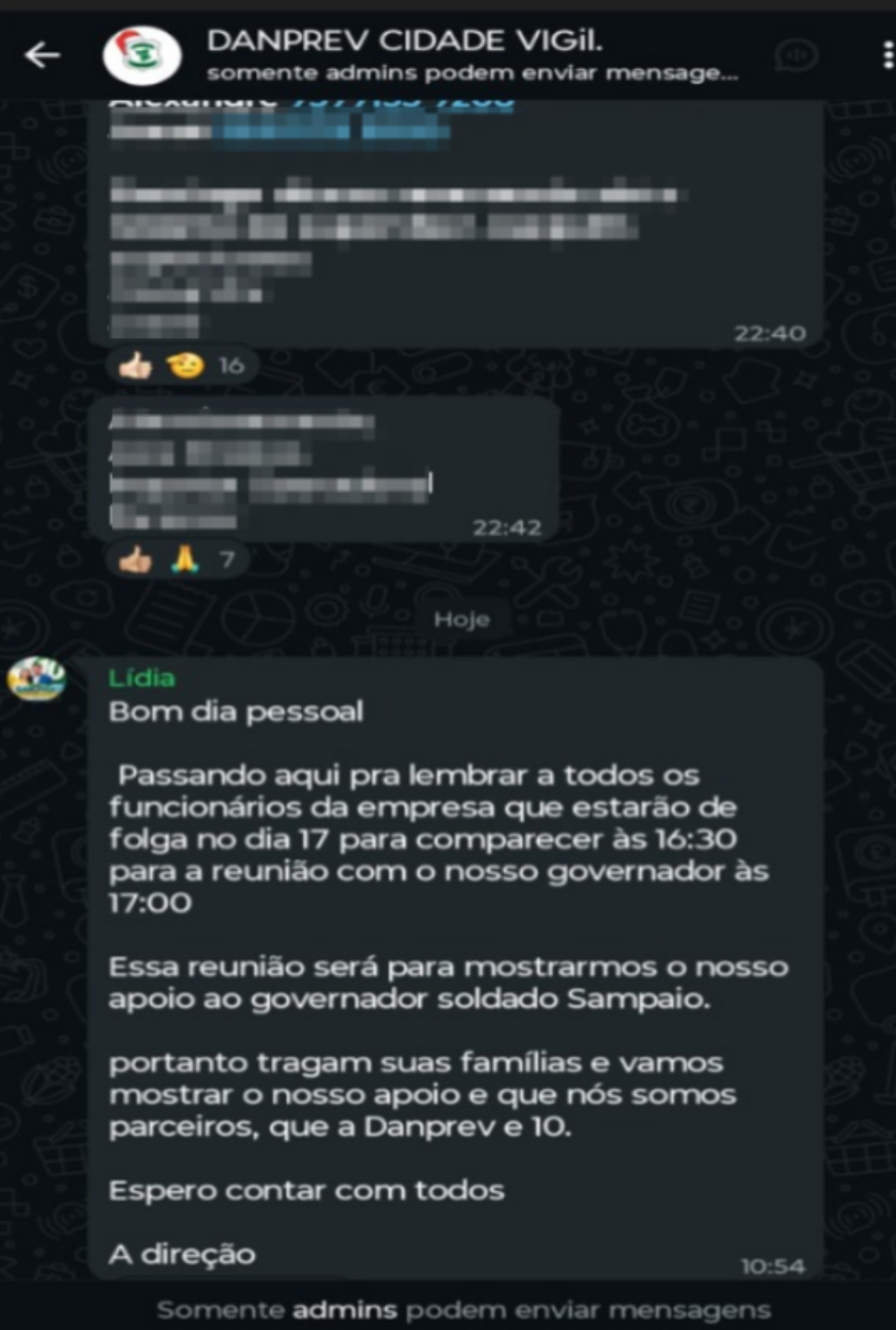
Danprev Serviços de Vigilância e Segurança Ltda, a security firm in Roraima, is facing a labor lawsuit for alleged moral and electoral harassment. The company, through its owner Lídia Teixeira da Silva, reportedly used WhatsApp to summon off-duty employees to a rally supporting then-candidate Soldado Sampaio (Republicanos) for governor. The Labor Court has prohibited this practice, emphasizing the vulnerability of employees who depend on their jobs. The lawsuit was filed by the Union of Employees in Private Security Companies of Roraima (Sintevitraver), which presented a message from the company's owner urging workers to bring their families to show support for Danprev. The defense for the company and its owner stated the message was an invitation without any imposition and denied any electoral harassment, coercion, or intimidation. Soldado Sampaio, who is not a party in the lawsuit, claimed no knowledge or authorization of such employee convocations. The union argues the message aimed to influence employees' political views and direct their votes. The court decision highlighted the power imbalance between employers and employees, likening the employer's influence to "private power's abnormal affirmation" and the persistence of "coronelismo." The judge ordered Danprev to cease pressuring employees for political events, with a daily fine of R$ 5,000 for non-compliance. Separately, the Public Prosecutor's Office is investigating potential misuse of public resources and WhatsApp groups by government officials to promote Soldado Sampaio's candidacy during work hours, which could constitute abuse of authority.
The legal actions against Danprev and the investigation into potential government misuse of resources highlight systemic risks associated with the intersection of employment, political influence, and digital communication. In an era where digital platforms facilitate rapid information dissemination, the potential for employers and public officials to exert undue influence over employees and citizens through coercive digital tactics is amplified. This situation underscores the critical need for robust regulatory frameworks and enforcement mechanisms to safeguard democratic processes and protect individual autonomy from undue pressure, particularly within hierarchical structures like employment relationships. Future governance models must proactively address the evolving landscape of digital influence to ensure fair electoral practices and prevent the erosion of individual liberties.
AI-generated to prompt reflection — not editorial opinion, not advice, not a statement of fact. How this works.