Rotterdam D66 Council Rejects Nominee, Selects Own Member for Alderman Role
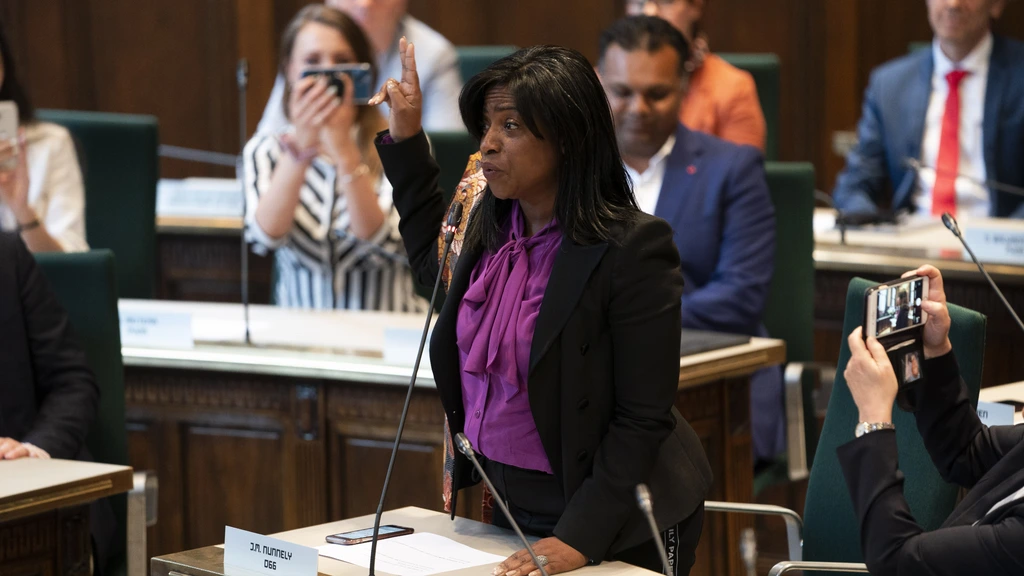
In a surprising turn of events, Eva Heijblom was unexpectedly voted out as Rotterdam's candidate for Alderman of Culture and Mobility by a majority of the city council. The council instead chose fellow D66 member Joan Nunnely for the position. Heijblom, who was awaiting the outcome with her family, left the council chamber without comment after the vote. Nunnely, who had previously criticized the perceived lack of diversity in the city's leadership, expressed surprise and pride at receiving the council's trust. She stated she was unaware of the development and is now considering whether to accept the role. Heijblom's background includes serving as a D66 council member in Lansingerland and currently as Director-General of Digitalization and Public Organizations at the Ministry of the Interior and Kingdom Relations. The secret ballot revealed Heijblom received 21 votes, while Nunnely secured 23. The D66 faction left the chamber shortly after the appointment of another D66 alderman, Chantal Zeegers. Jeroen Postma of PRO, a coalition partner, affirmed his party's commitment to voting for all nominated candidates, expressing a need for further discussion on how to proceed and whether Nunnely will accept the position. The current coalition, comprising PRO, D66, VVD, Volt, and CDA, holds a slim majority of 23 out of 45 seats, raising questions about how the votes were cast.
This unexpected rejection of a nominated candidate by a city council highlights potential internal party dynamics and coalition governance challenges. The secret ballot mechanism, while intended to ensure free expression, can obscure the precise alignment of political interests, making future coalition stability uncertain. The narrow one-seat majority suggests that any future disagreements or shifts in voting patterns could significantly impact policy implementation. Looking ahead, the Rotterdam council may need to establish clearer internal communication protocols and candidate vetting processes to ensure coalition cohesion and public trust in the governance process, particularly in an era where political transparency and accountability are increasingly scrutinized.
AI-generated to prompt reflection — not editorial opinion, not advice, not a statement of fact. How this works.