Routine Health Data Enhances AI Models for Neuroimaging
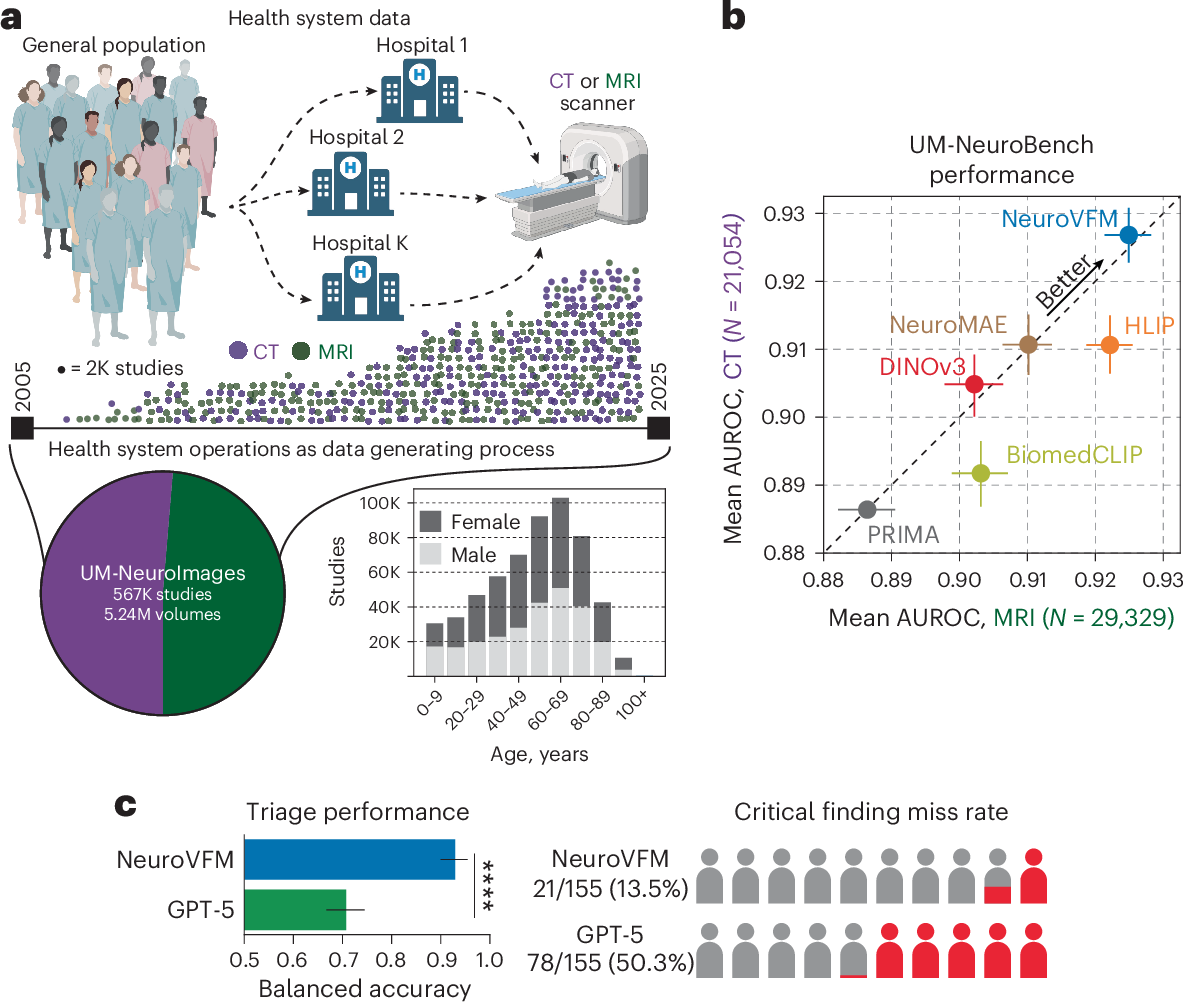
Routine health system data is proving instrumental in developing more effective artificial intelligence (AI) models for neuroimaging. These datasets, often collected for standard patient care, offer a rich source of information that can significantly improve the accuracy and reliability of AI algorithms. By analyzing this real-world data, researchers can train AI systems to better identify subtle patterns and anomalies in brain scans that might be missed by traditional methods or AI models trained on more limited datasets.
The application of AI in neuroimaging holds immense potential for diagnosing and monitoring neurological conditions such as Alzheimer's disease, Parkinson's disease, and brain tumors. The integration of routine health data allows AI models to learn from a broader spectrum of patient populations and disease presentations, leading to more generalized and robust diagnostic tools. This approach could accelerate the development of AI-powered medical devices and software, ultimately benefiting patient outcomes through earlier and more precise diagnoses.
AI's integration into neuroimaging, fueled by routine health data, presents a significant opportunity to democratize advanced diagnostic capabilities. This approach leverages existing infrastructure, potentially lowering the cost and increasing the accessibility of sophisticated medical analysis. However, the reliance on existing data raises critical questions about data privacy, algorithmic bias stemming from historical healthcare disparities, and the need for robust validation frameworks. Ensuring equitable access to the benefits of these AI advancements will require careful consideration of data governance, ethical deployment, and continuous monitoring for performance drift across diverse patient groups. The next decade will likely see a push for standardized data sharing protocols and regulatory oversight to harness AI's potential responsibly in healthcare.
AI-generated to prompt reflection — not editorial opinion, not advice, not a statement of fact. How this works.