RS Governor Candidates Clash on Management, Promises, and Criticisms
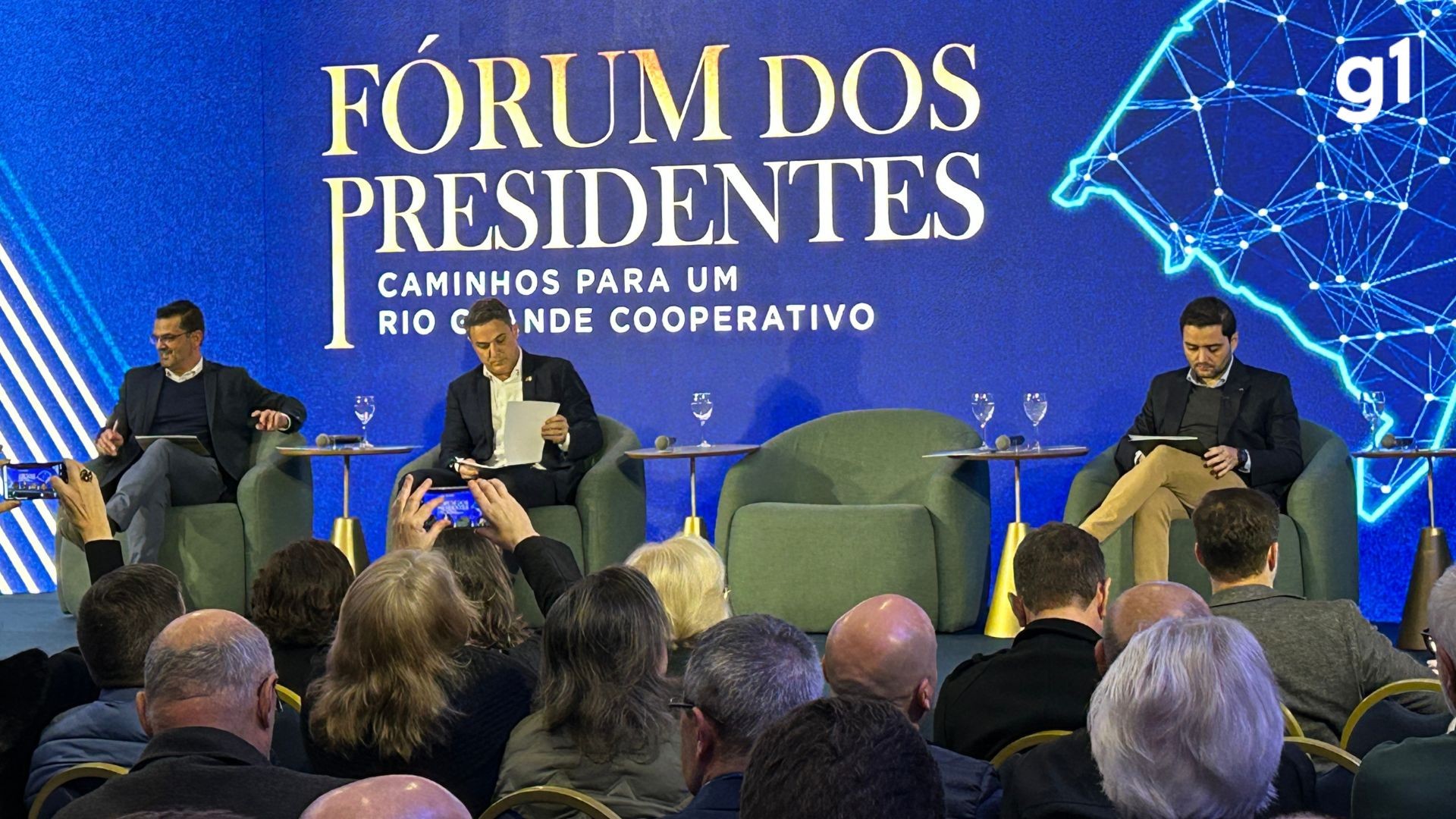
Key pre-candidates for the governorship of Rio Grande do Sul participated in a panel hosted by the Ocergs (Sistema Ocergs), aiming to differentiate themselves through their management proposals and styles. The event featured Gabriel Souza (MDB), the current vice-governor, who emphasized continuity and the experience gained in his current role, arguing against a "start from zero" approach to governance. He highlighted the importance of avoiding setbacks in state finances and investments, advocating for the continuation of the current political group's leadership.
Luciano Zucco (PL), a federal deputy, acknowledged progress under the current administration but asserted that more needs to be done, citing Rio Grande do Sul's slow economic growth over two decades. Zucco stressed the necessity for stronger political representation at the federal level to secure resources and advance the state's agenda. Marcelo Maranata (PSDB), a former mayor, positioned himself as an independent manager, detached from national political polarization, and emphasized the value of municipal-level experience in understanding and addressing daily citizen needs. He also criticized the division within the state's congressional delegation when voting on benefits for Rio Grande do Sul.
Pre-candidate Juliana Brizola (PDT) was absent due to health reasons, a fact noted by her opponents. Her campaign issued a statement expressing regret for her inability to attend, emphasizing her respect for Ocergs and the cooperative sector's contribution to the state's development, and reaffirming her commitment to dialogue with the sector.
The pre-candidates' participation in the Ocergs panel highlights the strategic importance of aligning with key economic sectors like cooperativismo for electoral success in Rio Grande do Sul. Each candidate's platform reflects distinct approaches to governance, ranging from emphasizing continuity and executive experience to advocating for federal political leverage or municipal-level proximity to constituents. The discussion implicitly reveals the challenges of balancing state economic performance with federal influence and the persistent issue of political polarization impacting regional development. Future governance will likely require navigating these competing interests, fostering inter-party cooperation on critical state issues, and addressing the long-term economic stagnation identified by some candidates. The candidates' strategies underscore a broader trend where gubernatorial hopefuls seek to project competence and distinct policy visions to capture voter attention in a competitive political landscape.
AI-generated to prompt reflection — not editorial opinion, not advice, not a statement of fact. How this works.