Rubio: Trump's Response to Iran Will Be 'An Eye for an Eye'
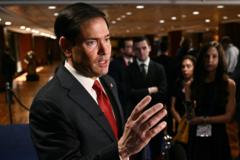
As the United States continued its airstrikes against Iran for the twelfth consecutive night, Secretary of State Marco Rubio stated that Donald Trump's approach to the conflict would be one of "an eye for an eye." This statement suggests a retaliatory strategy where the response to any aggression would be proportionate to the initial act. The ongoing airstrikes indicate a sustained military engagement between the two nations. Rubio's remarks highlight a potential escalation or a clear declaration of intent regarding the nature of future confrontations. The phrase "an eye for an eye" implies a direct and equivalent response to perceived provocations. This policy, if enacted, could set a precedent for how the US engages with Iran in the immediate future. The duration of the airstrikes, now extending over twelve nights, underscores the seriousness of the current situation. Rubio's comments provide insight into the potential strategic thinking guiding the US response.
The stated policy of "an eye for an eye" suggests a reactive strategic framework, emphasizing direct reciprocity in conflict. This approach, while potentially deterring immediate aggression through the threat of equivalent reprisal, risks entrenching cycles of escalation. In the context of geopolitical tensions, such a tit-for-tat strategy may limit diplomatic flexibility and increase the likelihood of unintended consequences. Future-oriented analysis suggests that sustainable security in the AI era will increasingly rely on de-escalation mechanisms and proactive conflict prevention, rather than purely reactive deterrence models. The long-term efficacy of such a policy in fostering stability, particularly in a region with complex historical dynamics, warrants careful consideration of alternative approaches that prioritize strategic foresight and de-escalation.
AI-generated to prompt reflection — not editorial opinion, not advice, not a statement of fact. How this works.