Rufus the Hawk: Wimbledon's Celebrity Bird of Prey Guarding the Courts
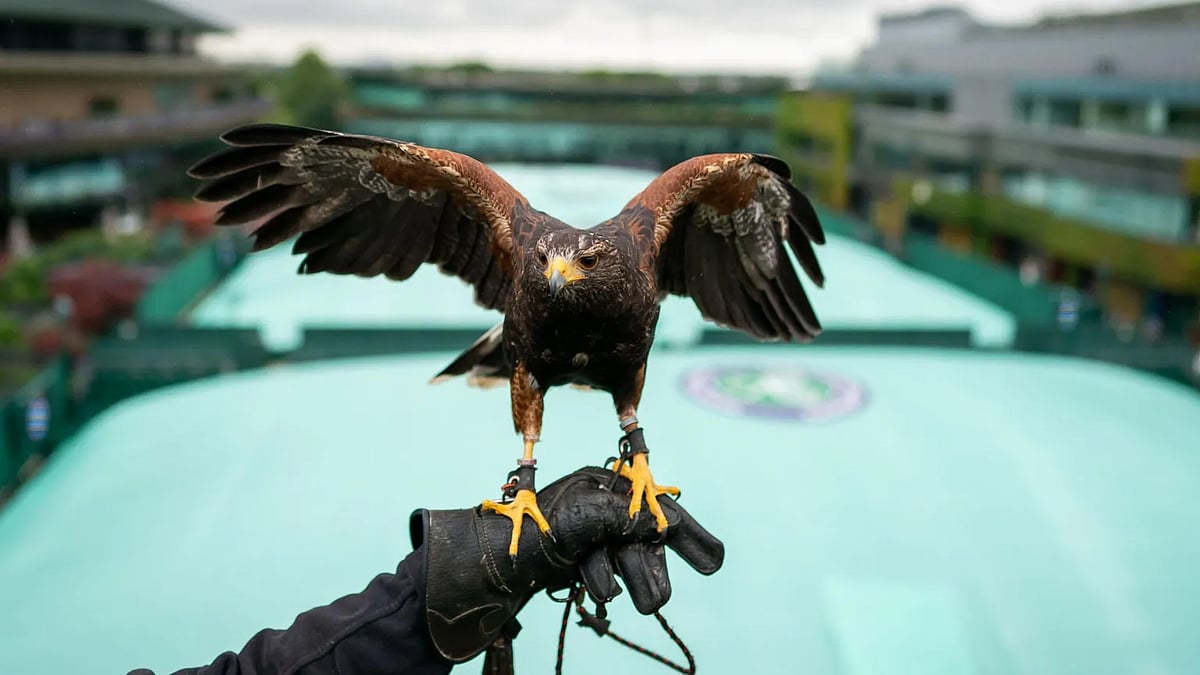
Rufus, a Harris hawk, is a highly trained bird of prey responsible for patrolling the grounds of the All England Lawn Tennis Club, home to the Wimbledon Championships. His primary duty is to deter pigeons from landing on the courts and surrounding areas, preventing them from damaging the grass and disrupting the prestigious tennis tournament. Trained by Wayne Davis of Avian Environmental UK, Rufus has become an integral and celebrated part of the Wimbledon experience. He performs his duties daily, flying over the courts before matches commence to scare away pigeons. Beyond Wimbledon, Rufus also provides bird control services at other significant London landmarks, including Westminster Abbey and the Queen Elizabeth Olympic Park. His presence is crucial for maintaining the pristine condition of the Wimbledon courts, which are renowned for their perfect grass surfaces. Rufus began his patrols at Wimbledon in 2008 when he was just 16 weeks old, and has been a fixture for approximately 17 years. The use of birds of prey for pest control at Wimbledon dates back to 1999, initiated by Rufus's trainer, Wayne Davis. Rufus gained significant public attention in 2012 when he was stolen from his owner's vehicle but was thankfully recovered unharmed a few days later. His role has elevated a simple pest control task into a unique and endearing tradition, making him a well-known figure among spectators, players, and the media.
The deployment of Rufus the hawk at Wimbledon highlights an innovative, environmentally conscious approach to pest management within a high-profile sporting venue. This method leverages natural predator-prey dynamics to maintain the integrity of the playing surface and the competitive environment, avoiding the use of chemicals or physical deterrents that could be detrimental to the grounds or the sport. The success of Rufus underscores the potential for integrating animal assistance into operational logistics for large-scale events. Looking ahead, such symbiotic relationships between human infrastructure and the natural world may offer scalable solutions for ecological challenges in urban and recreational spaces, promoting biodiversity and sustainability.
AI-generated to prompt reflection — not editorial opinion, not advice, not a statement of fact. How this works.