Rural land occupants in Boa Vista report police violence during eviction attempt
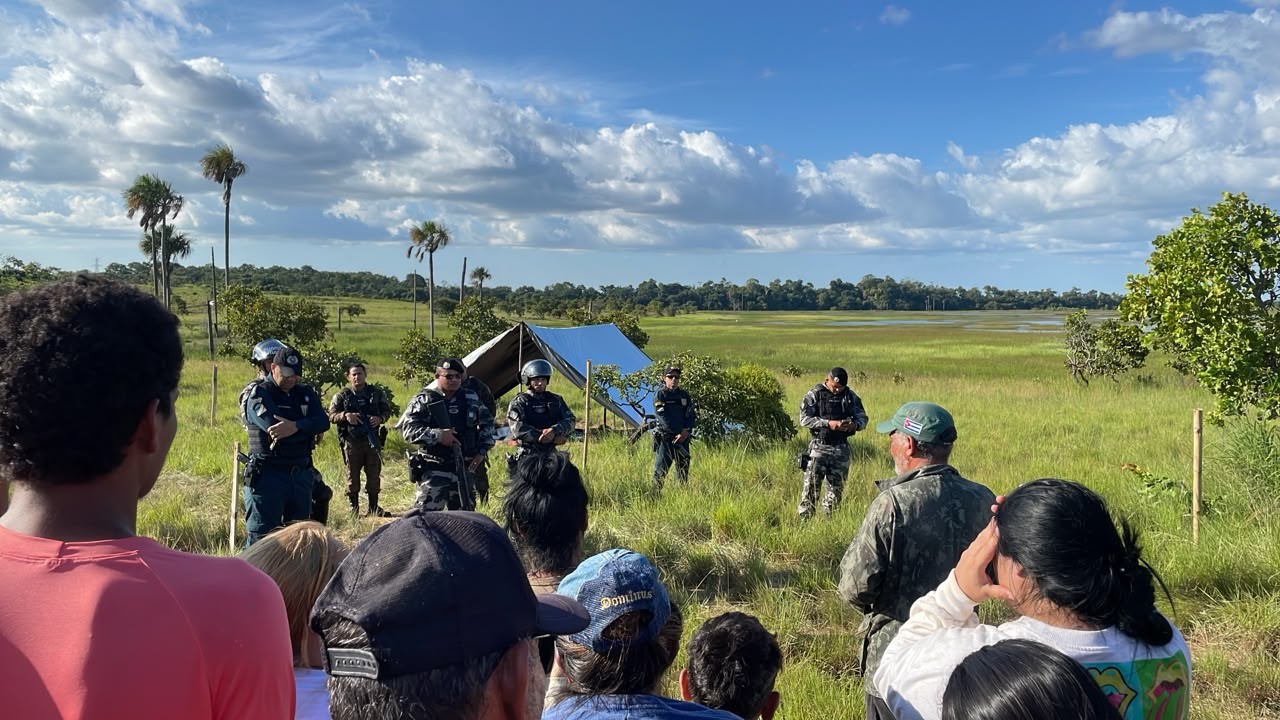
Families occupying a rural area in Boa Vista, Roraima, have reported experiencing violence from the Military Police (PM) on Saturday, November 11th. The incident occurred after the son of former senator Romero Jucá filed a police report alleging invasion of the Fazenda Rancho Alegre property. According to popular lawyer Auzerina Duarte, who represents the families, approximately 400 people from the 'Acampamento Raimunda Farias,' affiliated with the Landless Workers' Movement (MTST), have occupied the area since July 6th, intending to establish a settlement. Duarte stated that police and officials from the Urban Development and Housing Company (Emhur) arrived at the camp around 5 PM to evict the residents without presenting a judicial warrant. She claims Emhur officials asserted that a police report alone was sufficient grounds for removal, which she contested. Videos shared with the press appear to show a police officer kicking a man, followed by several officers restraining him. A special police unit also participated in the operation. The PM, in a statement, confirmed that two individuals identified as leaders resisted the police action, necessitating the use of restraint techniques and handcuffs. The police also stated that shots were fired into the air, allegedly by officers, though the community denies any armed presence. The PM's note also indicated that the intervention aimed to curb irregular land division, in line with Federal Law No. 6.766/1979, and that no residents were removed, with any further eviction contingent on a court order. The police report filed by Rodrigo de Holanda Menezes Jucá, the former senator's son, described the group as unauthorized invaders who were clearing land and setting up tents, possibly under leadership. He did not comment when asked about his ownership title to the land. The Civil Police had not responded by the time of reporting, and the Boa Vista City Hall, responsible for Emhur, had not commented on the warrant issue.
This situation highlights the complex interplay between land rights, property claims, and law enforcement actions in Brazil. The reported use of force during an eviction attempt, initiated following a police report filed by an individual with political connections, raises questions about due process and proportionality. The differing accounts regarding the legality of the occupation, the presence of a judicial warrant, and the necessity of police intervention warrant scrutiny. Future interventions in similar land disputes could benefit from clearer protocols that prioritize de-escalation and ensure adherence to judicial oversight, particularly when vulnerable populations are involved. Examining the governance structures that manage land allocation and dispute resolution could reveal systemic opportunities for improvement, aiming to balance property rights with the fundamental need for housing.
AI-generated to prompt reflection — not editorial opinion, not advice, not a statement of fact. How this works.