Russia charges Telegram founder Pavel Durov with aiding terrorism, places him on wanted list
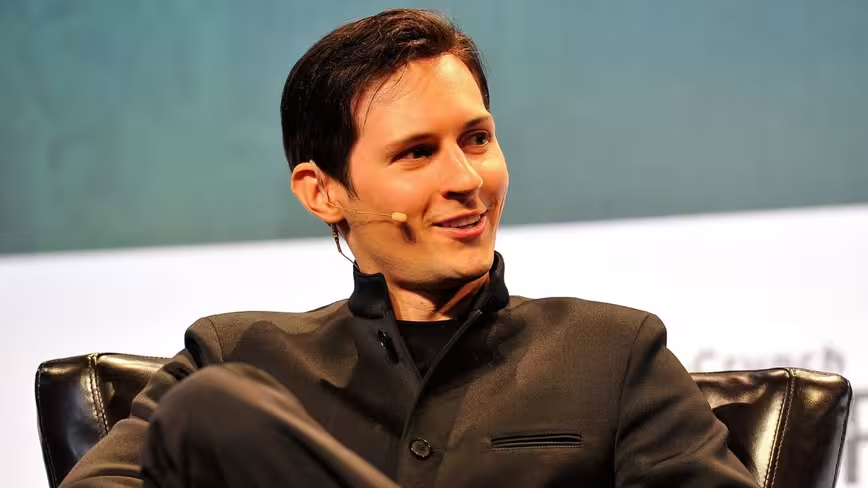
Russia's Federal Security Service (FSB) has filed charges against Pavel Durov, the founder of the messaging app Telegram, accusing him of facilitating terrorism. The FSB also intends to place Durov on an international wanted list. The charges stem from Durov's alleged failure to remove specific channels and bots operating on Telegram. The Russian authorities claim these platforms were utilized for coordinating attacks and acts of sabotage within Russia. This action represents a significant escalation in the Russian government's efforts to control or influence the content disseminated through the popular messaging service. The FSB's move indicates a direct confrontation between Russian state security and the decentralized nature of Telegram's operations. Further details on the specific channels and the evidence presented by the FSB are not yet publicly available. The situation highlights ongoing global tensions surrounding the regulation of online communication platforms and their role in political and security matters.
Russia's charge against Pavel Durov and Telegram's inclusion on a wanted list reflect a broader trend of state efforts to assert control over digital communication platforms. The FSB's stated rationale centers on the alleged use of Telegram for coordinating illicit activities, framing the platform's operational model as inherently enabling terrorism. This perspective often overlooks the challenges of content moderation in decentralized systems and the potential for such actions to stifle free expression. From a governance standpoint, this move raises questions about the balance between national security imperatives and the principles of open digital infrastructure. The long-term implications may involve increased pressure on global tech companies to comply with varying national regulations, potentially leading to fragmented internet services or the adoption of more restrictive content policies worldwide. This dynamic will likely intensify as AI-driven content generation and dissemination become more sophisticated.
AI-generated to prompt reflection — not editorial opinion, not advice, not a statement of fact. How this works.