Russia faces fuel shortages amid Ukrainian attacks, impacting daily life and public opinion.
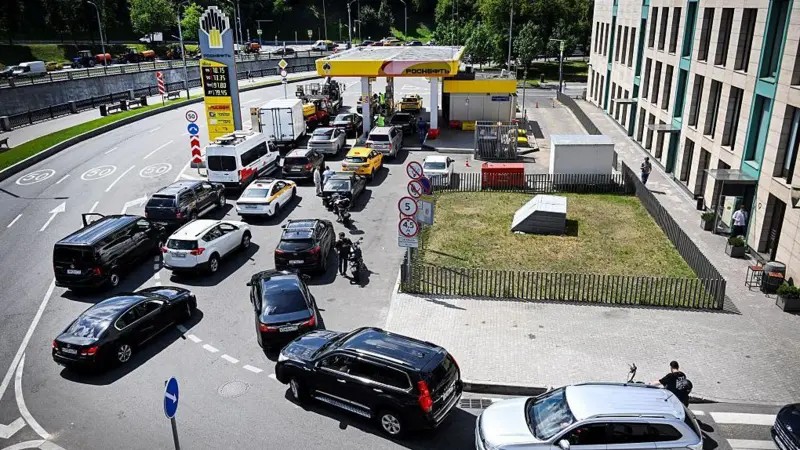
Russia is experiencing significant fuel shortages, with long queues at gas stations even in the capital, Moscow. Citizens express frustration and concern over dwindling supplies and rising prices, with some questioning their travel plans. The crisis is attributed by some to a combination of Russia's lack of preparedness and Ukrainian missile strikes targeting oil refineries. These attacks, along with internet restrictions, are bringing the war closer to the daily lives of Russians, despite President Putin's efforts to shield the population from its consequences. The fuel scarcity is affecting various sectors, including agriculture and public services, leading to rationing in some regions and concerns about potential damage to vehicles from lower-quality fuel. Public opinion polls indicate a decline in Putin's approval ratings and growing pessimism about the economy, with a significant drop in confidence in the country's direction. Analysts suggest the fuel crisis could be a "watershed moment" for Russia's economic growth, though its full impact may not be evident in statistics until July. Despite these economic pressures and the hope from Ukraine and some European nations that this could lead to negotiations, experts like Nina Khrushcheva believe Putin is unlikely to back down. Instead, she suggests he may become more aggressive and repressive when feeling pressured. Khrushcheva dismisses the Western expectation of a regime change as unrealistic, noting a prevailing sense of resignation among Russians. Recent statements from Putin, appearing in military uniform and asserting strategic initiative and territorial gains, suggest a hardening of his stance rather than a move towards de-escalation.
The current fuel shortage in Russia, exacerbated by Ukrainian drone and missile attacks on oil refineries, highlights the interconnectedness of geopolitical conflict and domestic economic stability. While these attacks aim to disrupt Russia's war effort and potentially pressure its leadership, they also create ripple effects within the Russian populace, impacting daily life and potentially eroding public support. However, historical patterns and expert analysis suggest that external pressures may not necessarily lead to a change in strategic direction from President Putin. Instead, such pressures could reinforce a narrative of external aggression, potentially leading to increased domestic repression and a more entrenched, defiant posture. The challenge for international actors lies in discerning whether economic hardship will translate into sustained political pressure on the Kremlin, or if the Russian state's capacity for control and narrative management will mitigate these effects. Looking ahead, the sustainability of Russia's economic resilience against ongoing conflict and targeted disruptions will be a critical factor, alongside the internal dynamics of public sentiment and state response.
AI-generated to prompt reflection — not editorial opinion, not advice, not a statement of fact. How this works.