Russia Launches American, Two Cosmonauts to ISS Amid Geopolitical Tensions
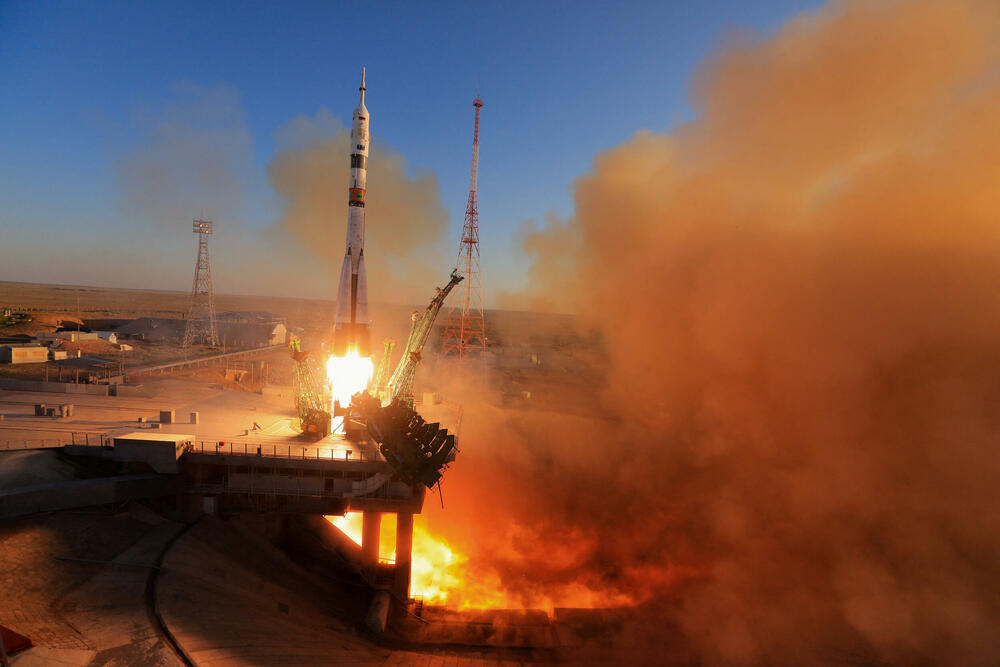
A Soyuz spacecraft carrying one American astronaut and two Russian cosmonauts has successfully launched towards the International Space Station (ISS). The mission underscores the continued, albeit strained, cooperation between NASA and the Russian space agency Roscosmos aboard the 27-year-old orbital outpost. This collaboration has persisted despite significant geopolitical tensions between the United States and Russia, notably including Russia's ongoing war in Ukraine. The primary driver for maintaining this partnership is the technical necessity of operating and maintaining the ISS. The ISS requires continuous joint efforts from its international partners to ensure its functionality and safety. This launch highlights the complex interplay between international politics and scientific endeavors, demonstrating that some collaborative projects transcend global conflicts due to their inherent operational requirements. The successful ascent marks another chapter in the long-standing human presence on the ISS, facilitated by the enduring, albeit fragile, alliance between the two space agencies.
The enduring partnership between NASA and Roscosmos on the ISS, despite severe geopolitical rifts, illustrates a critical dynamic where technical interdependence can override nationalistic friction. This situation highlights the inherent value of established, complex international infrastructure, suggesting that the operational realities of such systems necessitate a degree of sustained cooperation. Looking ahead, the reliance on such joint ventures raises questions about the long-term sustainability of space exploration initiatives in an increasingly fragmented global landscape, particularly as technological advancements may offer alternative pathways or intensify existing dependencies.
AI-generated to prompt reflection — not editorial opinion, not advice, not a statement of fact. How this works.