Russia Launches Major Missile Attack on Ukraine, Causing Widespread Damage
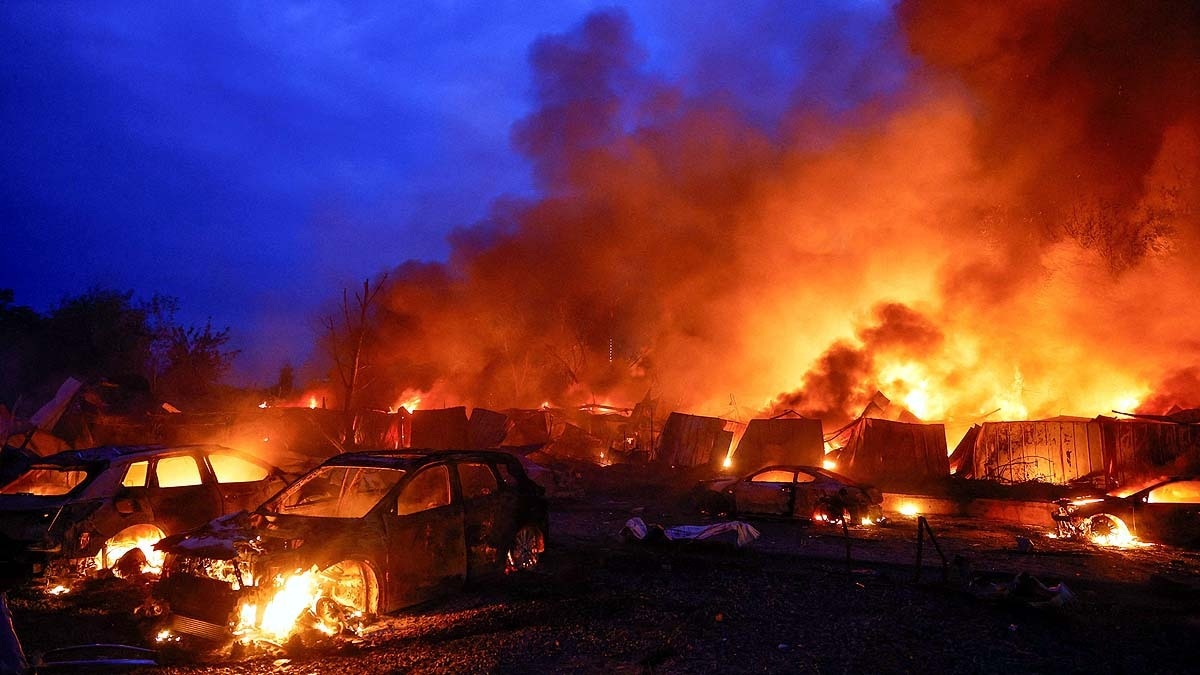
Russia launched a significant missile attack on Ukraine, firing 29 high-speed missiles that Ukraine's air defense systems were unable to intercept. The attacks in Kyiv resulted in the deaths of 11 people. This escalation highlights Ukraine's critical shortage of interceptor missiles, a vulnerability that Russia is reportedly exploiting. The extensive use of missiles by Russia suggests a strategy to overwhelm Ukraine's defenses and inflict substantial damage. The situation underscores the ongoing challenges Ukraine faces in defending its territory against a more heavily armed adversary. The reported casualties and destruction indicate a severe impact on civilian life and infrastructure. Ukraine's reliance on external military aid for advanced air defense systems remains a crucial factor in its ability to counter such assaults. The effectiveness of Russia's missile strikes points to a persistent threat that requires sustained attention and resources for Ukraine's defense.
The reported missile attacks by Russia on Ukraine, resulting in casualties and damage, illustrate a critical military dynamic: the strategic exploitation of an adversary's resource limitations. Ukraine's documented deficit in interceptor missiles appears to be a key factor enabling the effectiveness of Russian strikes. This situation prompts consideration of the long-term implications of defense supply chains and the strategic importance of maintaining adequate stockpiles of defensive munitions. From a systems perspective, the conflict highlights the ongoing tension between offensive capabilities and defensive capacities, particularly in the context of protracted warfare. Future defense strategies may need to prioritize not only the acquisition of advanced weaponry but also the robust and resilient production and distribution of essential defensive assets to counter such asymmetric pressures.
AI-generated to prompt reflection — not editorial opinion, not advice, not a statement of fact. How this works.