Russia Launches US Astronaut and Two Cosmonauts to International Space Station
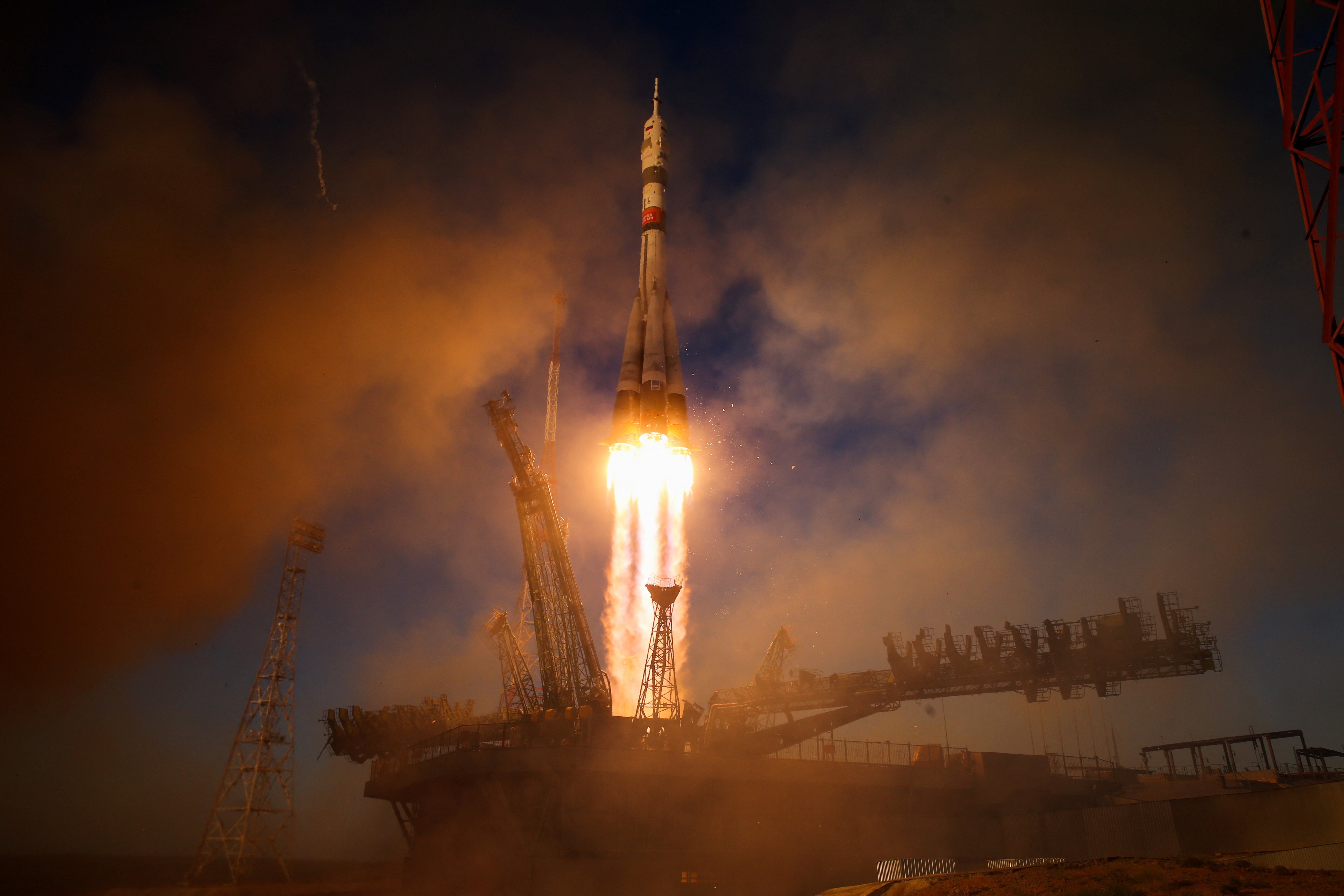
Russia successfully launched a Soyuz MS-29 spacecraft from the Baikonur Cosmodrome in Kazakhstan on Tuesday, April 14th, carrying one NASA astronaut and two Russian cosmonauts to the International Space Station (ISS). The crew, consisting of NASA astronaut Anil Menon and cosmonauts Pyotr Dubrov and Anna Kikina, is expected to spend approximately eight months aboard the ISS as the 75th rotational crew. The launch marked the resumption of crewed flights from a recently repaired launchpad, which had been out of service after sustaining damage during a previous launch. This mission also saw a rare joint appearance of the heads of NASA and the Russian space agency, Roscosmos. NASA Administrator Bill Nelson traveled to Baikonur to meet with Roscosmos Director Dmitry Bakanov and witness the launch, representing the first visit by a NASA chief to the Russian launch site since 2018. The Soyuz spacecraft and its crew were placed into orbit about 10 minutes after liftoff, commencing a roughly three-hour orbital journey to the space laboratory. For Anil Menon, 49, this mission represents his first spaceflight. The launch occurred from Launch Pad 31, which had undergone months of repairs after a previous crewed launch severely damaged the historic site, the only Russian launch location capable of transporting crews.
This event highlights the enduring international cooperation in space exploration, even amidst geopolitical tensions. The successful joint mission underscores the shared scientific and logistical imperatives that transcend national boundaries in maintaining the ISS. The repair and reactivation of the launchpad demonstrate resilience in space infrastructure, crucial for future missions. The presence of both NASA and Roscosmos leadership signifies a commitment to continued collaboration, suggesting that the operational necessities of space programs can foster dialogue and mutual reliance. Looking ahead, the reliance on shared platforms like the ISS and Soyuz, while effective, points to systemic dependencies that future space governance models may need to address to ensure greater autonomy and redundancy for all participating nations.
AI-generated to prompt reflection — not editorial opinion, not advice, not a statement of fact. How this works.