Russia's Su-57 Fighter Jet Potentially Deployed Against Drones and Missiles
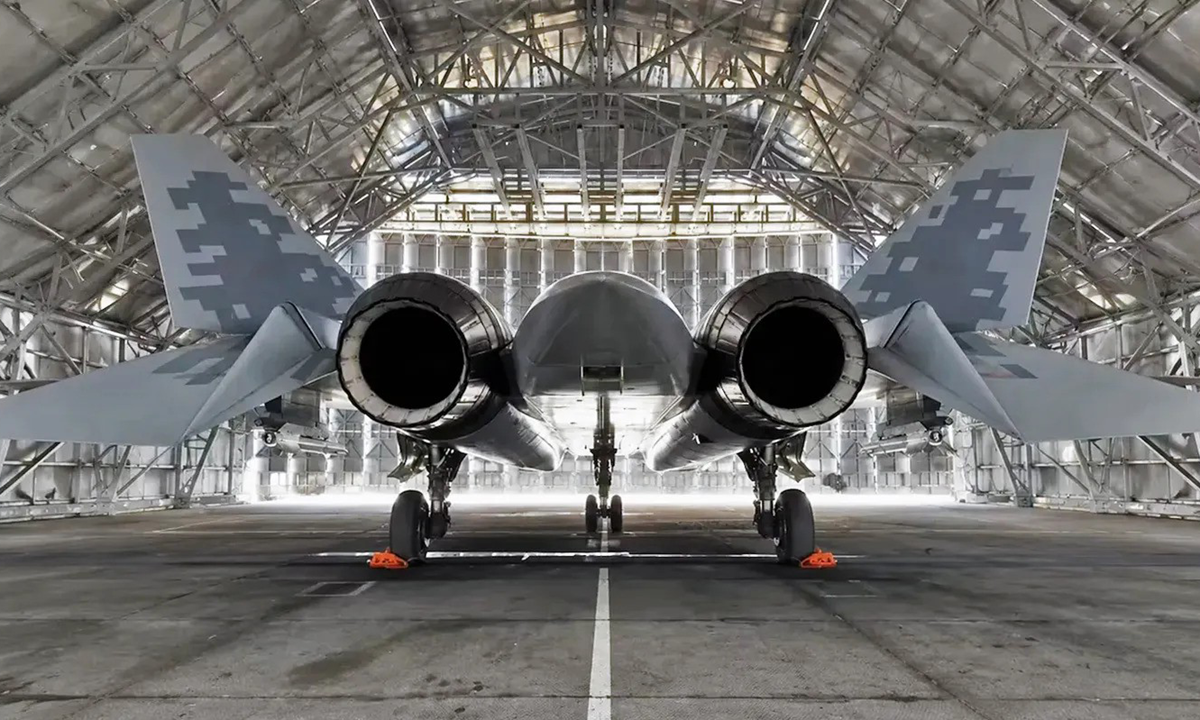
New imagery has emerged indicating that Russia's Su-57 fighter jet may have been deployed to counter Ukrainian unmanned aerial vehicles (UAVs) and cruise missiles. The recently released photographs show a Su-57 equipped with two missiles mounted on external pylons. These external weapons appear to be specifically configured for engaging aerial threats such as drones and cruise missiles. This development suggests a potential shift in the operational role of the Su-57, moving beyond its intended air-to-air combat capabilities to include air defense against less conventional and lower-altitude threats. The deployment could signify Russia's efforts to adapt its advanced fighter technology to the evolving battlefield dynamics of the conflict. The use of the Su-57 in such a role would highlight its versatility and the Russian military's attempts to leverage its capabilities against a diverse range of Ukrainian aerial assets. Further analysis of the missile types and the operational context will be necessary to fully understand the implications of this potential deployment.
The reported deployment of the Su-57 fighter jet with external ordnance against drones and cruise missiles suggests a strategic adaptation by Russian forces. This maneuver could reflect an effort to leverage advanced platform capabilities against increasingly prevalent asymmetric threats, potentially optimizing resource allocation. From a systems perspective, integrating such a high-value asset into roles traditionally handled by dedicated air defense systems raises questions about operational efficiency and risk management. The long-term implications may involve reassessing the cost-effectiveness of employing fifth-generation fighters for counter-UAV and counter-cruise missile missions, particularly in light of evolving threat landscapes and the potential for technological attrition. This development prompts consideration of how future air forces will balance high-end platform deployment with the need for robust, scalable defense against diverse aerial threats.
AI-generated to prompt reflection — not editorial opinion, not advice, not a statement of fact. How this works.