Russia tests humanoid robot "Volodya" as conductor on Sapsan high-speed train
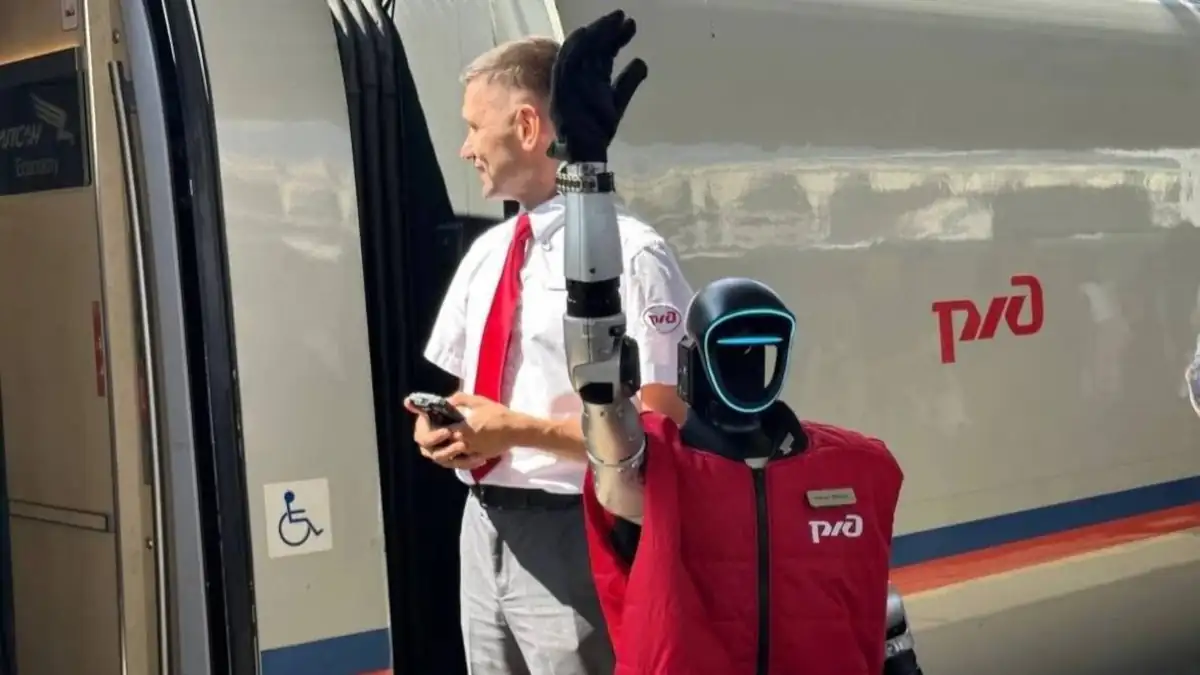
Russian Railways (RZD) announced on August 1, 2026, that they have begun testing a humanoid robot named Volodya. This robot is performing some of the duties typically handled by a human conductor aboard the Sapsan high-speed train. The specific train involved in the trial was Sapsan n°768, operating on the Moscow–Saint Petersburg route. Volodya's responsibilities include checking passenger tickets and assisting travelers with directions. This initiative marks a significant step in exploring automation within the Russian railway system, particularly on its high-speed services. The RZD is evaluating the robot's performance and integration into passenger services.
The deployment of the Volodya robot on the Sapsan high-speed train represents a test case for integrating AI and robotics into public transportation infrastructure. This move by Russian Railways could signal a broader trend towards automation aimed at improving operational efficiency and potentially reducing labor costs. However, the success of such systems will depend on their reliability, passenger acceptance, and the ability to handle unforeseen situations that typically require human judgment and empathy. The long-term implications involve a re-evaluation of the human role in service industries and the potential for job displacement, alongside the development of new technical roles for maintenance and oversight of these automated systems.
AI-generated to prompt reflection — not editorial opinion, not advice, not a statement of fact. How this works.