Russian Hajj: Empire and Pilgrimage to Mecca Explores Overlooked History
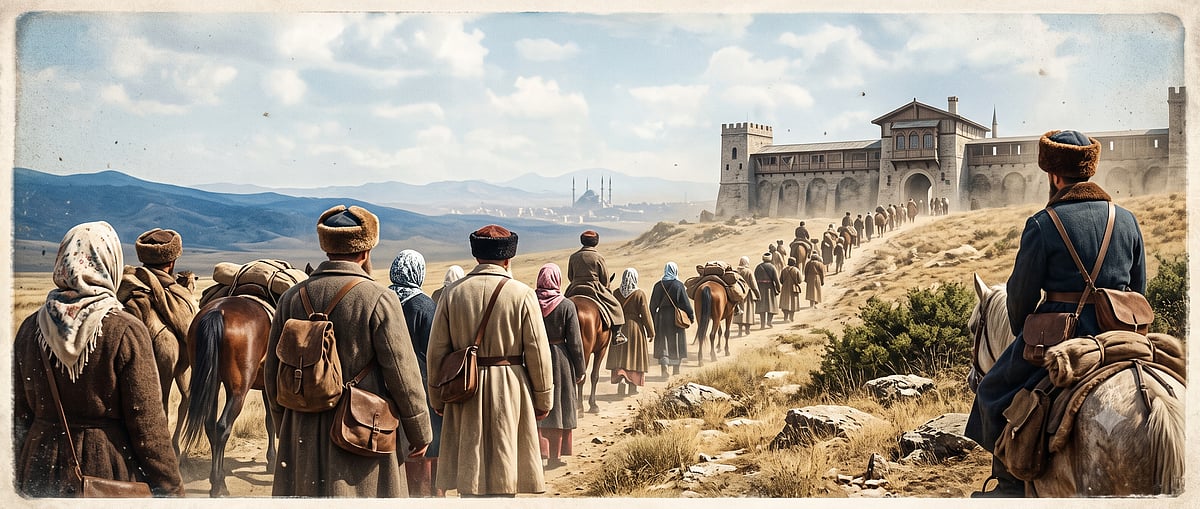
A book titled "Russian Hajj: Empire and the Pilgrimage to Mecca," authored by Ilia M. K. and published by Cornell University in 2015, sheds light on the significant yet often overlooked history of Russian pilgrims undertaking the Hajj. The research-based work draws upon memoirs of Russian hajjis, contemporary newspaper articles, and diplomatic correspondence between Russian officials and Ottoman and Hejazi authorities. It reveals that the Hajj was a major pilgrimage for Russians, particularly during the 19th and early 20th centuries, even surpassing other forms of migration from Russia at the time. As the Russian Empire expanded, Islam became the second-largest religion, prompting the government to facilitate Hajj travel. This included infrastructure development, such as building inns and contributing to the Hejaz Railway, and employing staff to assist pilgrims. The Russian government, both during the Tsarist and Soviet eras, exerted control over its Muslim subjects' Hajj journeys, balancing assertions of authority with efforts to secure loyalty. Economic motives were also present, with pilgrims purchasing tickets for Russian-owned shipping and rail companies. The book's author notes that the absence of the Hajj in Russian migration history reflects a broader neglect of the position and narrative of Muslims within Russian history. Despite this oversight, scholars have produced substantial literature on the active presence, movement, and interactions of Muslims in Eurasia. K. argues that Muslims were one of Russia's most mobile populations, engaging in commerce, religious pursuits, and education across the empire and beyond its borders.
This study highlights the complex interplay between imperial governance and religious practice, revealing how the Russian state managed and leveraged the Hajj for its own geopolitical and economic interests. The narrative suggests that state control over pilgrimage routes and participants served dual purposes: asserting imperial authority while simultaneously seeking to foster loyalty among its Muslim populations. The economic dimension, through the patronage of Russian transportation companies, further underscores the state's strategic integration of religious travel into its broader imperial economy. The author's observation on the historical omission of the Hajj from Russian migration studies points to a potential systemic bias in historical narratives, which may have marginalized the experiences and contributions of minority religious groups. Future research could explore the long-term impact of these state-managed pilgrimage policies on Muslim identity and community formation within Russia and its former territories, particularly in the context of evolving nationalisms and secularism in the 21st century.
AI-generated to prompt reflection — not editorial opinion, not advice, not a statement of fact. How this works.