Russian Missile Likely Struck Poland, PM Tusk States
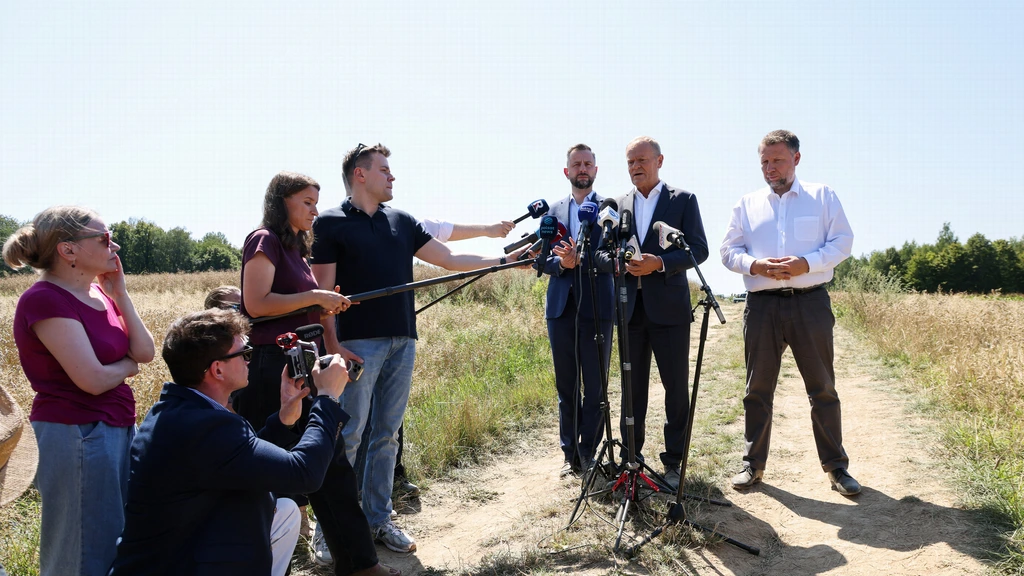
A projectile that crashed in Poland, creating a 10-meter crater in the village of Tarnawa-Kolonia, is likely a Russian Kh-101 missile, according to Polish Prime Minister Donald Tusk. The incident occurred approximately 100 kilometers from the Ukrainian border, following intense Russian missile and drone attacks on Ukrainian cities, including Lviv. Polish military detected an object around 3:40 AM, and an F-16 fighter jet was deployed to intercept it, but the object disappeared from radar shortly after. Prime Minister Tusk emphasized that there is no indication Poland was a deliberate target, but acknowledged that Polish forces were prepared to engage the missile had it continued its flight. The Polish army had previously scrambled fighter jets to protect its airspace due to the heavy Russian assaults on neighboring Ukraine, with around twenty objects observed near its airspace during the night. European leaders, including European Commission President Ursula von der Leyen and European Council President António Costa, condemned the incident as an unacceptable violation of EU airspace and a testament to the threat posed by Russian aggression to all of Europe. French President Macron also issued a strong condemnation. NATO's Supreme Allied Commander Europe, General Alexus Grynkewich, has conferred with Polish Chief of General Staff Wieslaw Kukula, affirming that NATO and Poland have activated air and ground defenses and will take all necessary measures to defend allied territory. This event follows a pattern of airspace violations by Russian and Ukrainian drones in NATO territory, with similar incidents occurring in Romania and Poland previously.
This incident highlights the escalating risks of miscalculation and unintended escalation in the ongoing conflict, particularly as military operations near NATO borders intensify. The presence of a suspected Russian missile within Polish airspace, regardless of intent, underscores the fragility of regional security and the potential for a localized event to trigger a broader alliance response. The situation necessitates a careful balance between asserting territorial integrity and de-escalating tensions to prevent a wider conflict. Future considerations should focus on enhancing real-time threat detection and communication protocols between NATO members and Ukraine, as well as exploring diplomatic channels to establish clear de-escalation zones and protocols for airspace incursions.
AI-generated to prompt reflection — not editorial opinion, not advice, not a statement of fact. How this works.