Rusty Waters: Permafrost Thaw Creates Orange Streams Across Alaska's Brooks Range
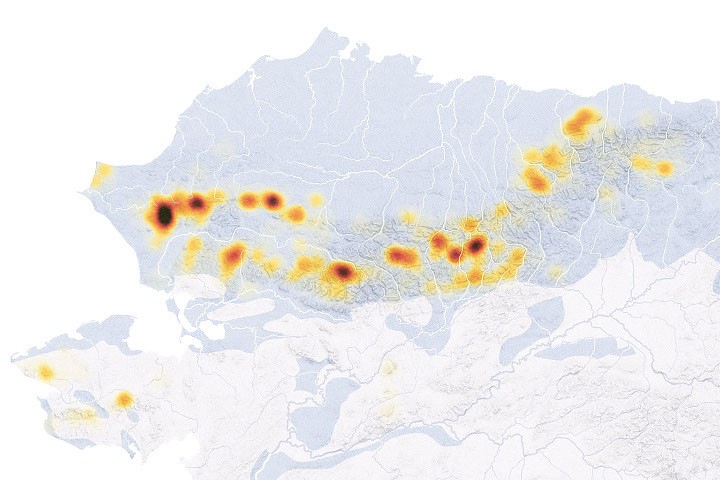
Orange-colored streams are appearing in hundreds of watersheds across Alaska's Brooks Range, a phenomenon linked to thawing permafrost. This unusual coloration indicates the presence of iron-rich minerals being released as the permanently frozen ground melts. The permafrost acts as a barrier, trapping these minerals. When it thaws, these minerals are exposed and can dissolve into the water, leading to the distinctive rusty hue. Scientists are observing this change in numerous locations throughout the region. The extent of the permafrost thaw is becoming increasingly apparent through these visible environmental indicators. This development raises questions about the broader ecological impacts of permafrost degradation in Arctic environments. Further research is needed to understand the full implications of these iron-rich waters on local ecosystems and water quality.
The visible transformation of Alaskan waterways due to permafrost thaw highlights a critical environmental feedback loop driven by climate change. As rising global temperatures accelerate the melting of permafrost, previously sequestered minerals are released into aquatic systems. This process, while visually striking, signals a significant alteration in Arctic hydrology and geochemistry. The long-term implications for biodiversity, water resource management, and indigenous communities dependent on these ecosystems warrant careful, forward-looking assessment. Understanding the rate and scale of these changes is crucial for developing adaptive strategies in a rapidly evolving Arctic environment.
AI-generated to prompt reflection — not editorial opinion, not advice, not a statement of fact. How this works.