Ruto Vows to Sanction Underperformers Without Hesitation
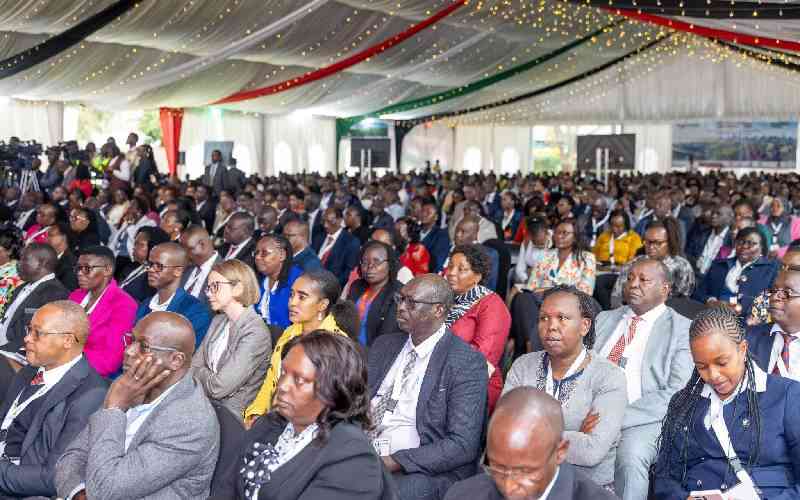
President William Ruto has declared his intention to impose sanctions on public sector employees who are not performing their duties effectively. He emphasized that promotions within the public service should be merit-based, recognizing demonstrated results rather than simply years of service. This directive aims to foster a culture of accountability and performance within government institutions. Ruto's stance signals a shift towards a more results-oriented approach in public administration. The president's commitment suggests a drive to enhance efficiency and productivity across various government departments. This policy is expected to encourage employees to focus on achieving tangible outcomes and meeting performance benchmarks. The underlying principle is to ensure that public resources are utilized effectively and that citizens receive the services they deserve, driven by competent and dedicated public servants.
President Ruto's directive to sanction underperformers and prioritize merit-based promotions reflects a common governance challenge: aligning public sector incentives with desired outcomes. By focusing on performance metrics over tenure, the administration seeks to address potential inefficiencies and foster greater accountability. This approach, if implemented transparently and equitably, could lead to improved service delivery. However, careful consideration must be given to defining clear, objective performance indicators to avoid arbitrary sanctions and ensure fairness. The long-term success will depend on establishing robust evaluation systems and potentially re-evaluating existing bureaucratic structures that may hinder performance-driven cultures, especially in the context of evolving technological demands and citizen expectations in the coming decade.
AI-generated to prompt reflection — not editorial opinion, not advice, not a statement of fact. How this works.