São Luís Historic Center Faces Decay, Vandalism, and Collapse Risk
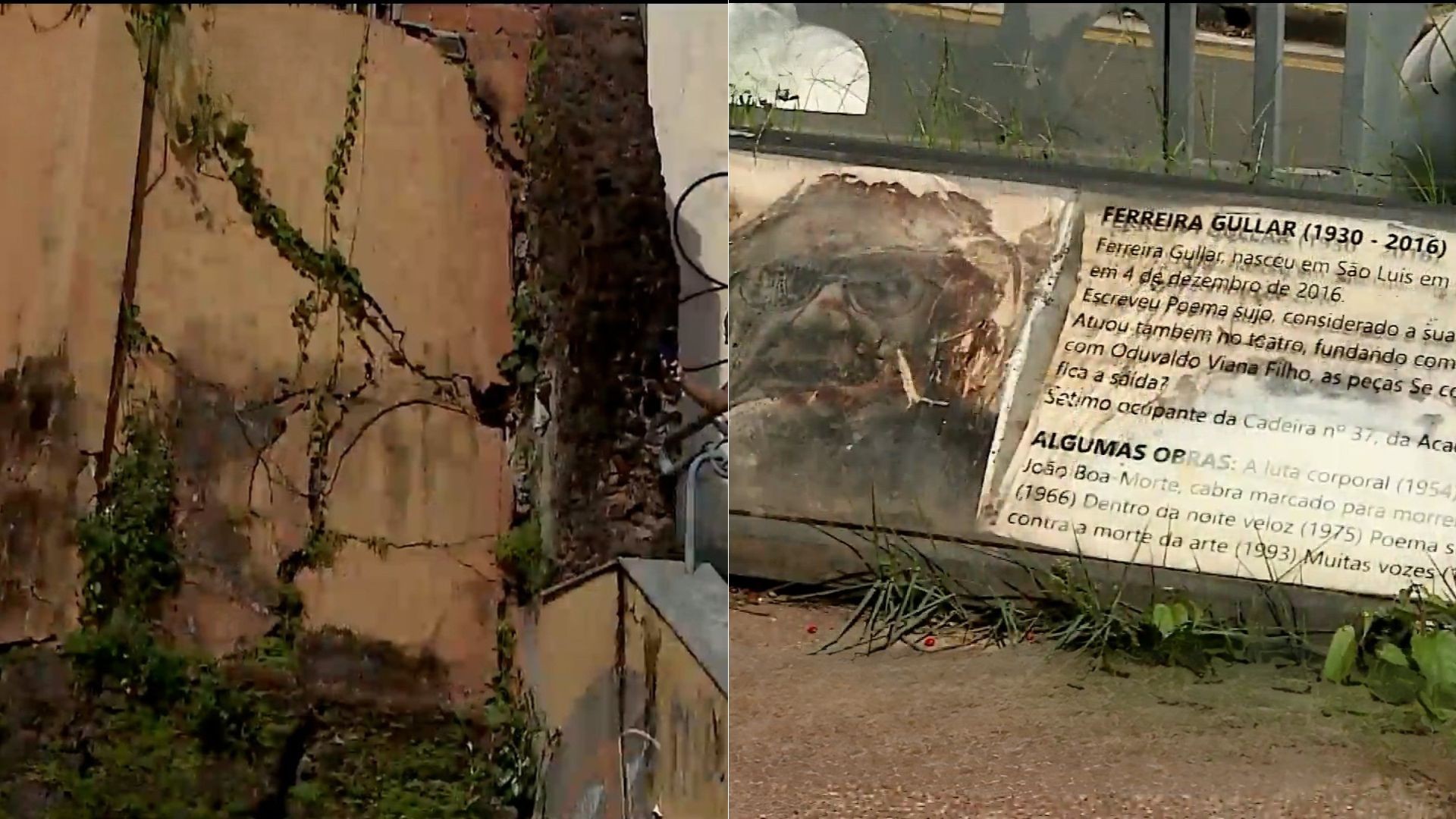
The historic center of São Luís, a UNESCO World Heritage site since 1997, is suffering from severe deterioration across numerous properties and public spaces. Images reveal widespread issues including cracks, holes, exposed rebar, damaged roofs, graffiti, and condemned structures in squares and historic buildings. At Praça da Alegria, accessibility ramps are damaged with exposed materials, and sidewalks and benches are broken. A historic building housing a flower shop shows a roof riddled with holes and broken windows, with an employee expressing fear of sudden collapse. The Praça dos Poetas, inaugurated in 2020, is now fenced off and deteriorating, with damaged signage erasing cultural references. Praça Nauro Machado exhibits cracks, graffiti, damaged steps, and rusted fixtures, with exposed wiring on poles, indicating a lack of significant maintenance since a minor revitalization in 2015. The National Historical and Artistic Heritage Institute (IPHAN) stated that Praça da Alegria is under state protection, not federal, and that maintenance for Praça Nauro Machado falls under the São Luís City Hall. The City Hall acknowledged municipal maintenance for the squares, citing vandalism during unauthorized events at Praça Nauro Machado and noting that state authorities removed safety barriers for a festival. The Maranhão state government announced revitalization works for Praça dos Poetas, including repairs to facilities, kiosks, flooring, landscaping, and restoration of signage and busts, while directing inquiries about Praça Nauro Machado to IPHAN.
The state of disrepair in São Luís's historic center, a UNESCO World Heritage site, highlights a complex governance challenge involving federal, state, and municipal authorities, alongside potential issues with public use and vandalism. The conflicting responsibilities and delayed maintenance suggest systemic inefficiencies in heritage preservation funding and execution. Looking ahead, the integration of smart city technologies could offer solutions for real-time monitoring of structural integrity and public space condition, while community engagement programs might foster a greater sense of ownership and deter vandalism. The long-term economic viability of such heritage sites often depends on balancing preservation costs with sustainable tourism and adaptive reuse strategies, requiring clear, collaborative frameworks to prevent further degradation.
AI-generated to prompt reflection — not editorial opinion, not advice, not a statement of fact. How this works.