São Paulo Artist Reimagines African Deities with Modern Marginalized Figures
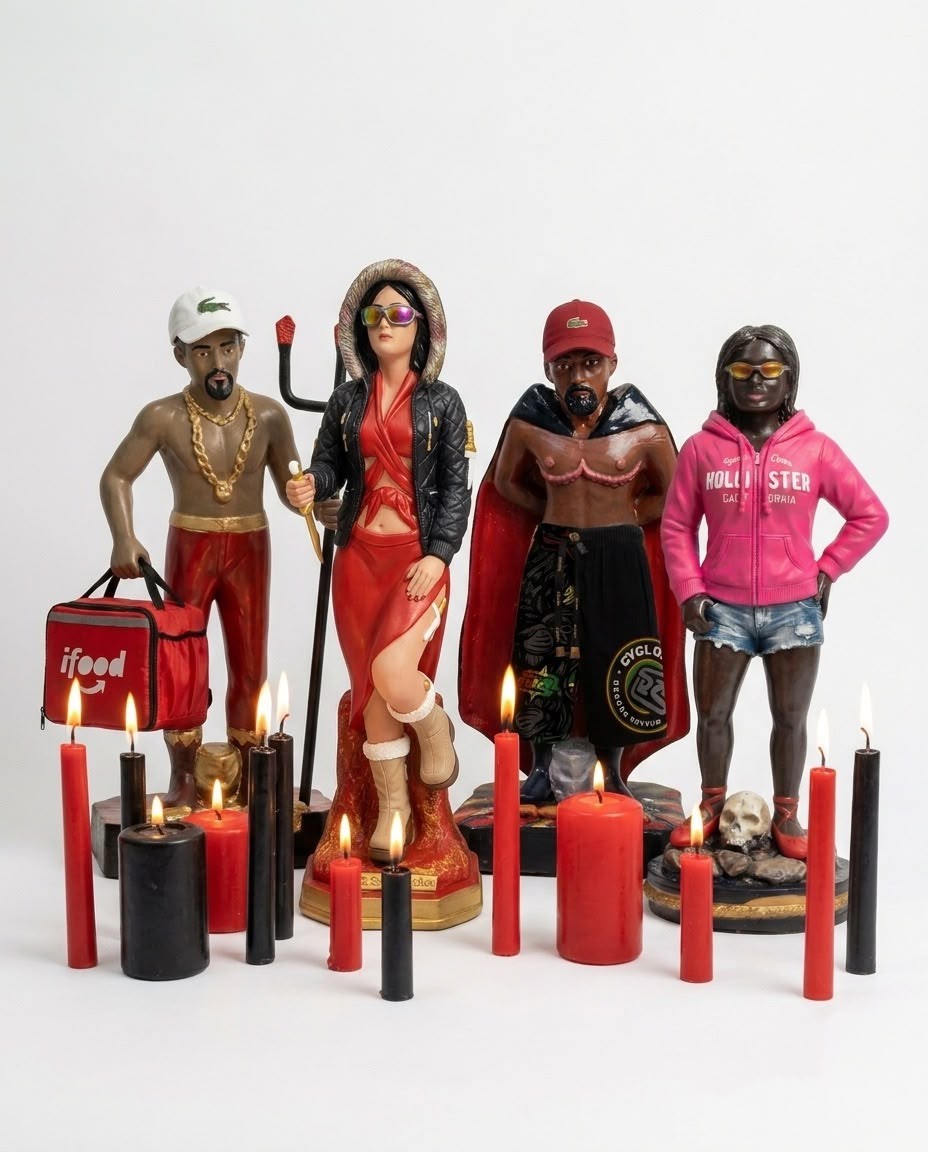
São Paulo-based multi-artist Ezio Rosa, 32, has launched a new art series titled "Santinhos do Novo Mundo" (Little Saints of the New World) that reinterprets Exus and Pombagiras, revered entities in Afro-Brazilian religions like Candomblé and Umbanda. Rosa's work features these spiritual figures depicted with contemporary elements, such as Exus wearing app-based delivery backpacks and Pombagiras inspired by transgender women. The series also includes representations of recycling workers, individuals experiencing homelessness, and sex workers, aiming to bridge the gap between these entities and the realities of the urban periphery and marginalized communities. Some sculptures exist physically, while others are shared digitally across the artist's social media platforms. Rosa, who has practiced Candomblé for nine years, stated that the project was born from a desire to create a new social imagination around Exus and Pombagiras, making them more relatable to those living on the fringes of society. He emphasizes that these reimagined figures represent people he encounters daily, including funk music fans, delivery couriers, and transgender individuals navigating survival. The artist hopes to challenge existing stereotypes and prejudices that often misrepresent Exus and Pombagiras as figures of evil, clarifying that they are actually guardians of paths, protectors, and messengers between the material and spiritual worlds. Rosa acknowledges that his artistic interpretations have met with mixed reactions within Afro-Brazilian religious communities, with some embracing the modern vision and others finding it a departure from tradition. He argues that the world has changed and that true understanding of these deities involves recognizing their connection to diverse human experiences, including vulnerability and social struggle.
This artistic project by Ezio Rosa offers a compelling recontextualization of spiritual entities within contemporary social landscapes, challenging traditional iconography by aligning them with marginalized urban populations. By depicting Exus and Pombagiras as delivery drivers, transgender individuals, and the homeless, Rosa prompts a critical examination of societal perceptions and the inherent universality of spiritual representation. The initiative highlights how religious and cultural symbols can evolve to reflect the lived experiences of diverse communities, particularly those often excluded from mainstream narratives. This approach encourages a broader understanding of spirituality that embraces social realities and systemic inequalities, fostering empathy and challenging ingrained biases. The series serves as a powerful commentary on social stratification and the potential for art to bridge divides by humanizing abstract concepts through relatable, modern archetypes.
AI-generated to prompt reflection — not editorial opinion, not advice, not a statement of fact. How this works.