São Paulo Avenue Sinking: Road Collapse Unresolved for Over a Month
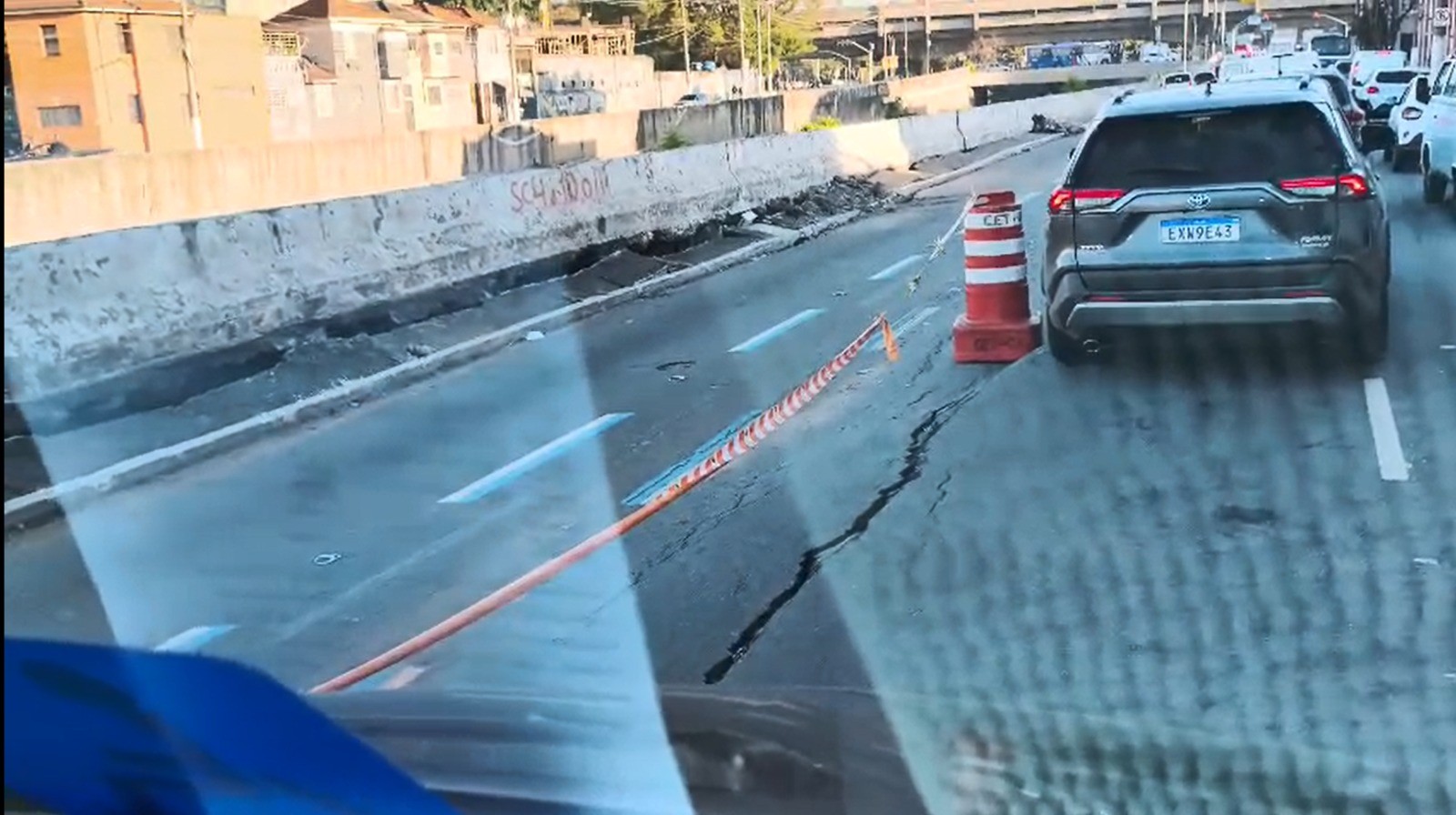
A section of asphalt on Avenida do Estado in downtown São Paulo has been sunken for over a month, leading to the closure of two lanes near number 1,397. Pedestrians first reported the issue more than a month ago, and it remains without a definitive solution. The São Paulo City Hall stated that an initial study of the site indicated the need for a joint reassessment with Sabesp, the city's water and sewage company. This new analysis was reportedly conducted last week. Sabesp confirmed that technical evaluations and reports are currently underway, and appropriate measures will be taken upon their completion. Due to the lane closures, the CET (Company of Traffic Engineering) advises that only cars and small vehicles can use the remaining open lanes. Larger vehicles, including trucks, are being rerouted to Avenida Cruzeiro do Sul. Traffic agents and electronic signs are in place to guide drivers through the altered traffic conditions. This incident follows a previous asphalt-related problem in São Paulo this year, when a crater opened on Rua da Consolação in March after an explosion attributed to flammable gas accumulation in an underground gallery, though no injuries were reported.
The prolonged closure of a major São Paulo thoroughfare due to a sunken road section highlights potential systemic issues in urban infrastructure maintenance and response coordination. The delay in resolution, exceeding a month, suggests possible bureaucratic hurdles or complexities in identifying the root cause, whether it be subsurface utility failures or structural integrity concerns. The involvement of both municipal authorities and Sabesp indicates a need for integrated infrastructure management and clear protocols for addressing such emergencies. Looking ahead, the increasing strain on aging urban infrastructure, coupled with the potential for more extreme weather events and subsurface activity, necessitates proactive monitoring and predictive maintenance strategies to prevent future disruptions and ensure public safety.
AI-generated to prompt reflection — not editorial opinion, not advice, not a statement of fact. How this works.