São Paulo Metro Opens Deepest Station in Latin America
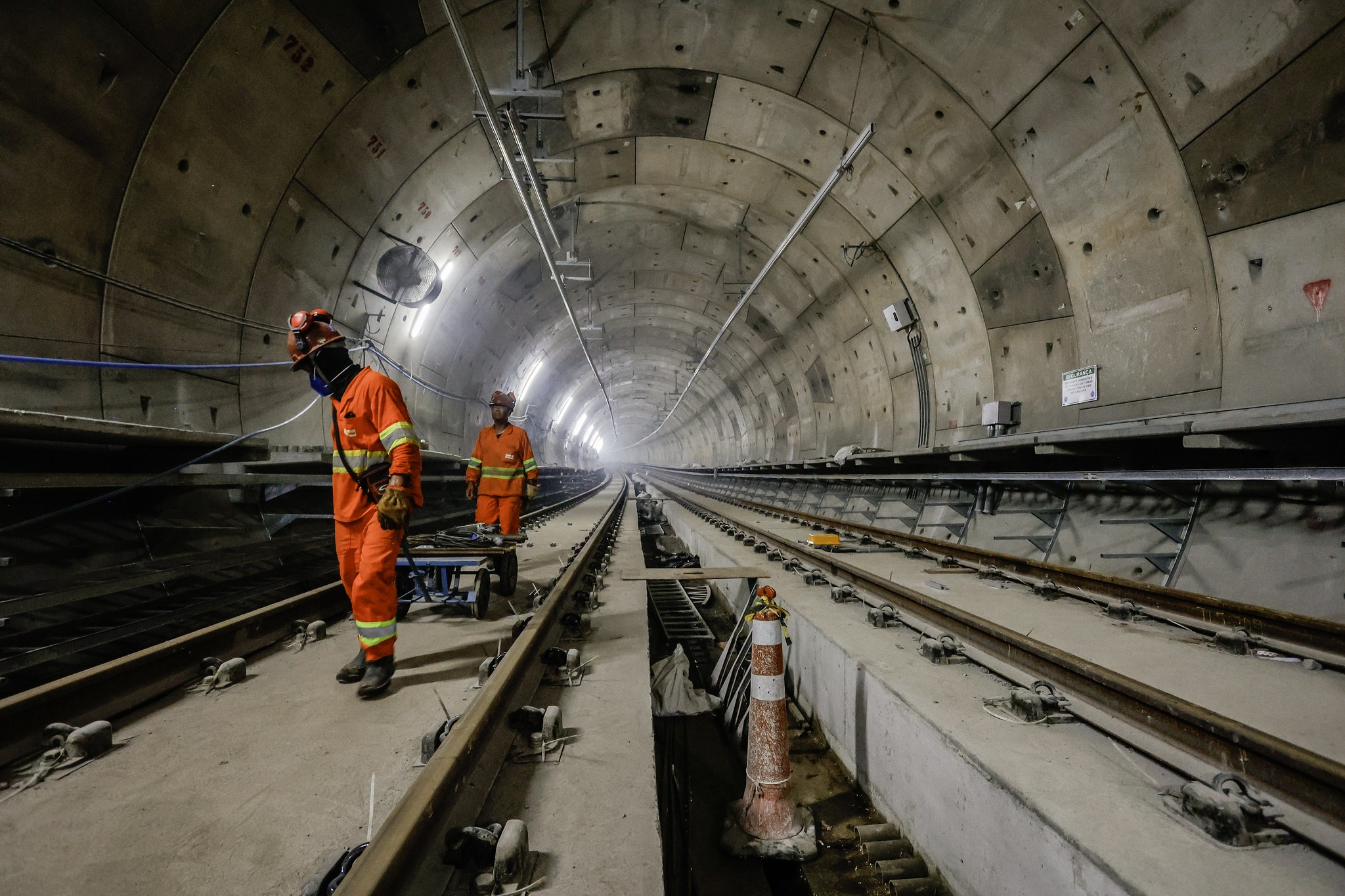
The Água Branca station on São Paulo's Line 6-Laranja has become the deepest operational metro station in Latin America, reaching a depth of 47.8 meters, equivalent to a 15-story building. This surpasses the previous record holder, Santa Cruz station, at 41.5 meters. The São Paulo government is launching the first segment of Line 6-Laranja this week, connecting João Paulo I and Perdizes stations. Access to these initial stations will be free during a reduced operating schedule from Monday to Friday. Upon full completion, Line 6-Laranja will link Brasilândia in the North Zone to São Joaquim in the city center, drastically cutting travel time from an estimated 1.5 hours by bus to just 23 minutes. Água Branca station is also a key connection point, integrating with the metropolitan train Line 7-Rubi and slated to connect with the future Intercity Train linking Campinas and São Paulo. The significant depth of these stations, including five others on Line 6-Laranja that will rank among the system's deepest, is attributed to geological conditions and the line's route passing under the Tietê River and another metro tunnel. Initially, six stations (João Paulo I, Freguesia do Ó, Santa Marina, Água Branca, Sesc-Pompeia, and Perdizes) will operate weekdays from 10 AM to 3 PM, using a shuttle system with two trains and 19-minute intervals, manually operated by an attendant. Future plans include autonomous train operation. The Line 6-Laranja project is a R$19 billion public-private partnership between the São Paulo government and the Linha Uni concessionaire.
The opening of São Paulo's Line 6-Laranja, featuring the deepest metro station in Latin America, highlights significant urban infrastructure development. The project's public-private partnership model underscores a strategy to leverage private capital for large-scale public transit expansion, potentially accelerating delivery timelines and innovation. The substantial depth of the stations, necessitated by subterranean complexities including river crossings and existing infrastructure, points to the increasing engineering challenges and costs associated with expanding urban transit networks in densely developed areas. This development also raises considerations about long-term operational costs, accessibility for all user groups given the depth, and the integration strategy with existing and future transit modes to maximize network efficiency and user convenience over the next decade.
AI-generated to prompt reflection — not editorial opinion, not advice, not a statement of fact. How this works.