São Paulo Metro Passengers Embrace Reading Amidst Declining National Literacy Rates
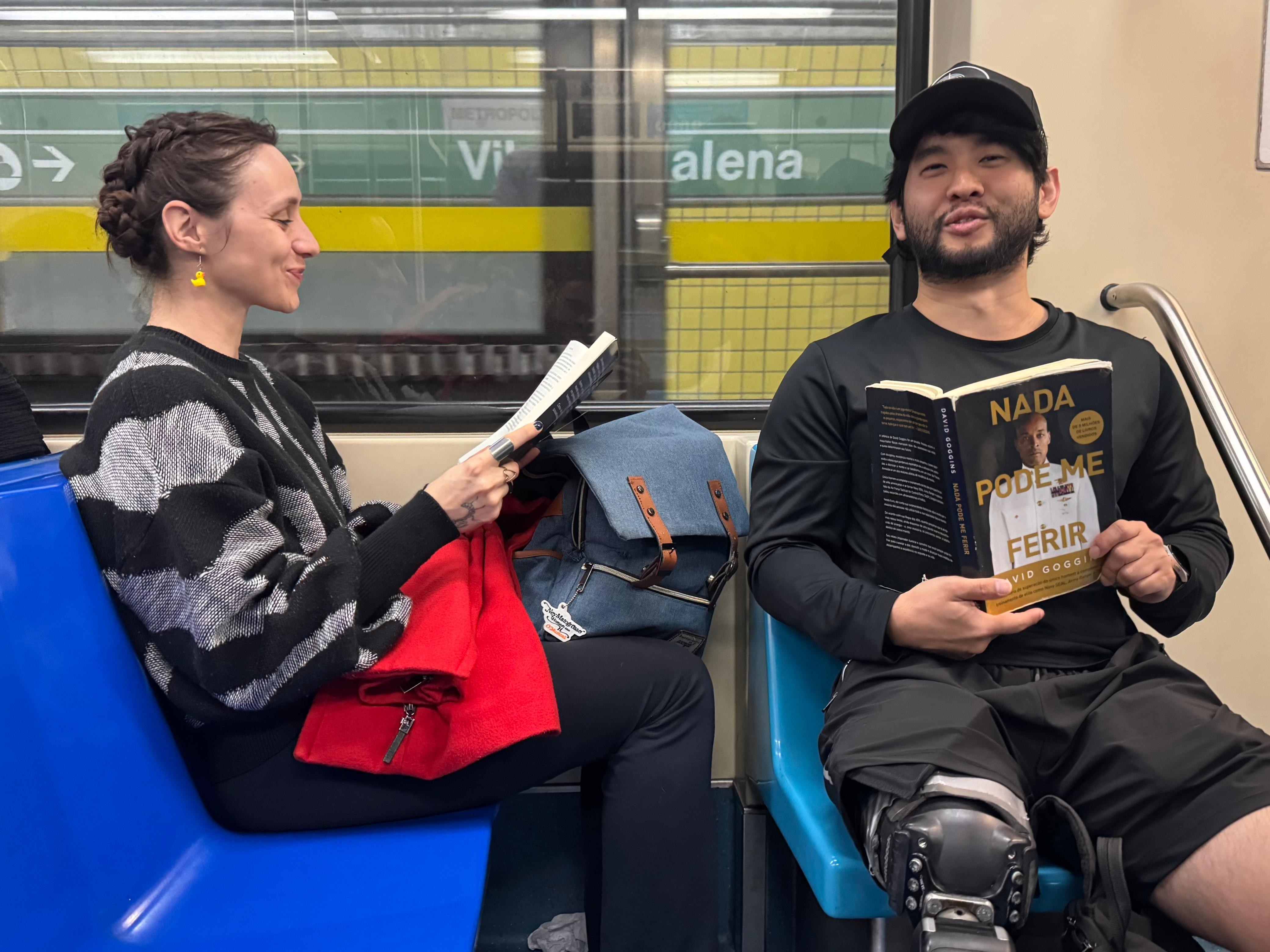
Passengers on São Paulo's metro system are transforming their daily commutes into opportunities for reading, carrying a diverse array of books across genres. From romances and thrillers to biographies and self-help titles, these on-the-go readers select their literature based on recommendations, social media trends, curiosity, or a desire for inspiration. The selection ranges from popular contemporary authors like Colleen Hoover to motivational works and international literature.
The "g1" news outlet surveyed passengers to understand this reading habit, asking, "What are you reading?" Among those interviewed were Mariel Bonzamota, 35, an artist and teacher reading a novel by her student, and Eduardo Yudi Arata, 29, an IT consultant rereading David Goggins' autobiography, "Can't Hurt Me." Arata finds Goggins' story of overcoming adversity, particularly after losing a leg in 2023, a significant source of motivation. Nurse Tamires Moraes, 38, dedicates her 40-minute commute between the Saúde and Trianon-Masp stations to reading Liz Moore's "Echos of the Forest," adapting her reading habits due to having a young baby and a demanding job.
This trend of reading in public transport stands in stark contrast to national statistics. A 2024 "Retratos da Leitura no Brasil" survey indicates that non-readers now form the majority in Brazil, with over half of the population not having read any part of a book in the preceding three months, representing a loss of 6.7 million readers since 2019. However, growth in book consumption is observed among young adults aged 18-34, largely fueled by social media platforms like TikTok and reader communities. Author and literature PhD candidate Bruna Paiva notes that social media has been instrumental in connecting younger generations with books and literary events, likening the enthusiasm at events like the São Paulo Book Biennial to a "Rock in Rio for books." She emphasizes that any engagement with reading, whether through bestsellers or literary classics, is valuable for fostering a broader culture of reading.
The observed reading habits within São Paulo's metro system highlight a localized engagement with literature, potentially serving as a personal refuge or self-improvement tool for commuters. This phenomenon occurs against a backdrop of declining national literacy rates, suggesting a divergence between individual coping mechanisms and broader societal trends. The influence of social media, particularly platforms like TikTok, appears to be a significant driver in popularizing specific titles and authors among younger demographics, creating new pathways into reading. While this digital engagement can foster a greater interest in books and literary culture, it also raises questions about the depth and critical engagement with the content being consumed, especially when popular works face scrutiny for their thematic handling of sensitive issues. The contrast between individual reading practices and national statistics underscores the complex interplay of personal motivation, digital influence, and systemic challenges in promoting widespread literacy.
AI-generated to prompt reflection — not editorial opinion, not advice, not a statement of fact. How this works.