São Paulo Mourns Young Garbage Collector Killed by Drunk Driver
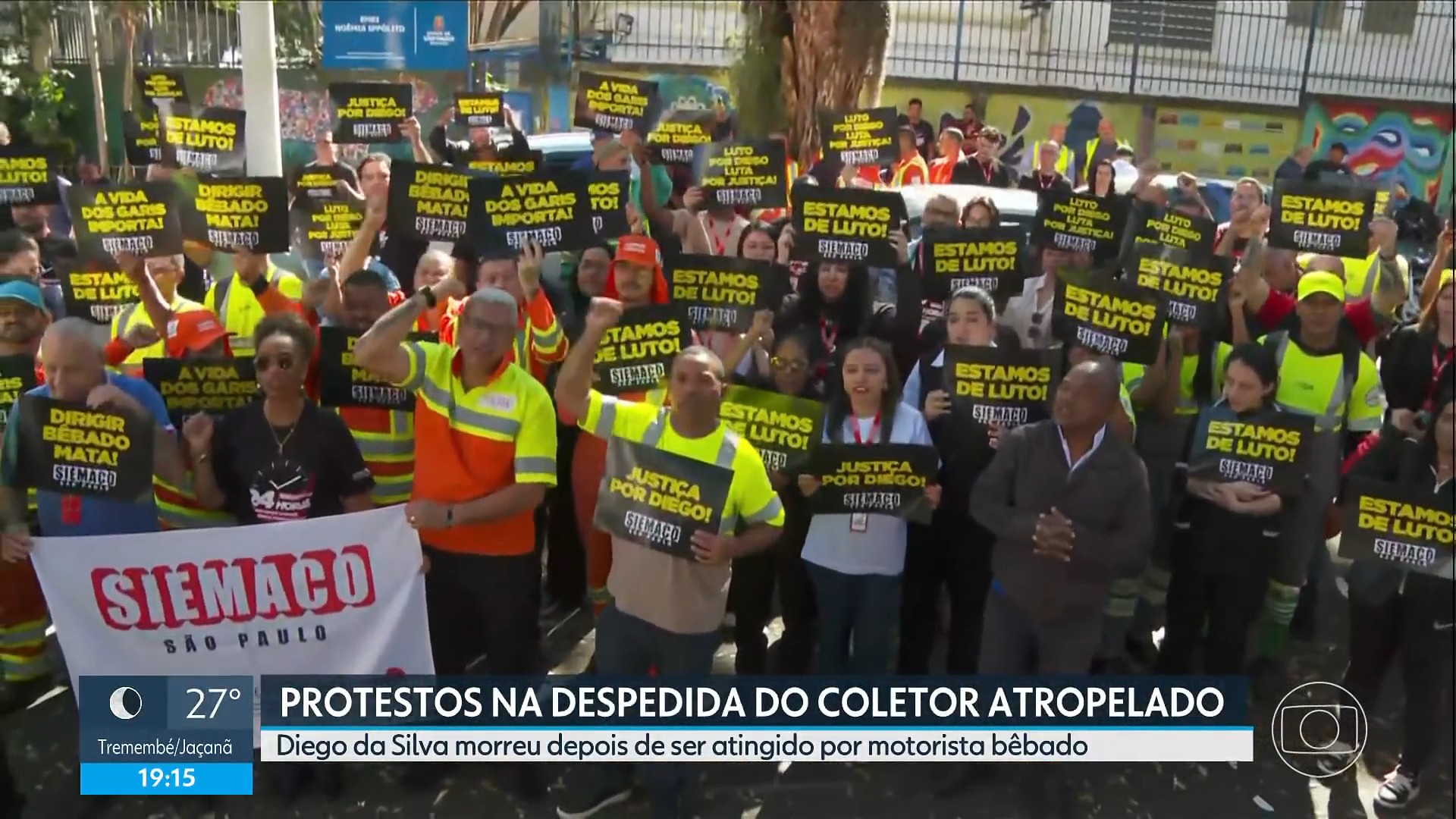
The body of 19-year-old garbage collector Diego Rafael da Silva was buried on Tuesday afternoon, May 28th, at the Vila Formosa Cemetery in São Paulo's East Zone. Silva tragically died after being struck by a drunk driver on Sunday night, May 26th. Dozens of his colleagues attended the funeral, which was reserved for family and friends. Prior to the burial, sanitation workers held a protest outside the Lapa police station, which is investigating the incident. The accident occurred on Rua do Bosque, where the driver, identified as 53-year-old Chinese businessman Guofang Huang, exhibited clear signs of intoxication. Huang is currently in preventive custody, charged with intentional homicide, and will remain detained during the investigation. Police arrived at the scene around 10:43 PM to find Silva being attended to by emergency services and the driver struggling to stand. Huang was assisted to a police vehicle and taken to the 7th Police District. There, with his son acting as an interpreter, he agreed to a breathalyzer test, which registered 0.73 milligrams of alcohol per liter of air – more than double the legal limit of 0.34 mg/L that constitutes a traffic crime. A colleague driving the truck with Silva reported that Huang initially fled the scene but returned minutes later after being pursued by a motorcyclist. He was then taken to a nearby building by fellow collectors to prevent public aggression. The São Paulo City Hall expressed solidarity with Silva's loved ones and stated that authorities are investigating the circumstances of the fatal incident.
This tragic event highlights the severe consequences of impaired driving, particularly when it impacts essential public service workers. The incident underscores the critical need for robust enforcement of drunk driving laws and potentially stricter penalties for drivers who endanger others, especially those performing vital community functions. From a systems perspective, the event prompts reflection on urban safety protocols for sanitation workers and the effectiveness of current public awareness campaigns regarding the dangers of alcohol consumption before operating a vehicle. Future considerations could involve enhanced protective measures for workers in high-traffic areas and technological solutions to deter or detect impaired driving more proactively, aligning with the increasing integration of AI and data analytics in public safety initiatives.
AI-generated to prompt reflection — not editorial opinion, not advice, not a statement of fact. How this works.