São Paulo Rail Strike: Metro and Buses Operate Normally, Some Train Lines Partially Affected
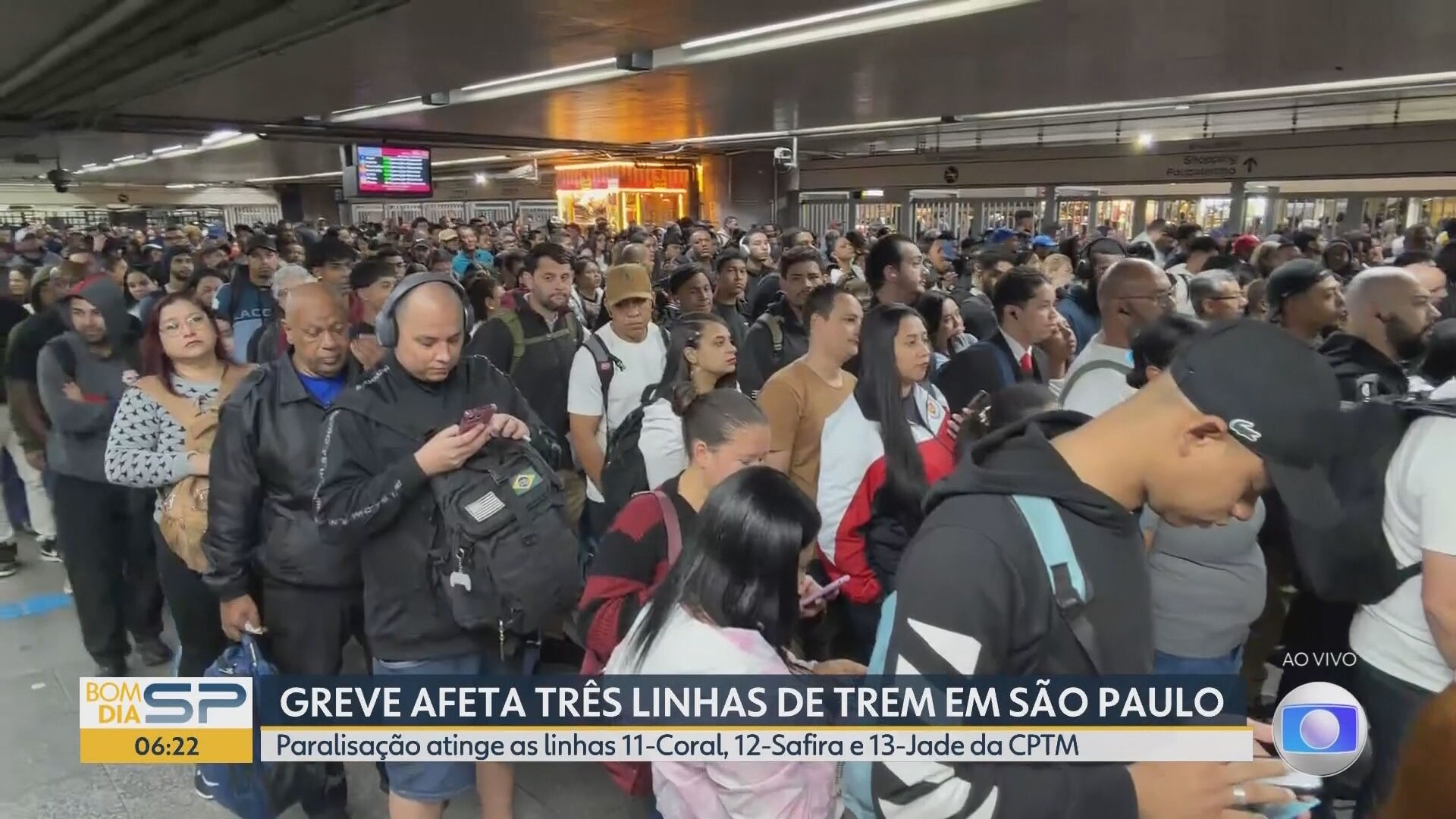
A rail workers' strike in São Paulo on Tuesday, October 4th, is impacting three lines of the Companhia Paulista de Trens Metropolitanos (CPTM): Line 11-Coral, Line 12-Safira, and Line 13-Jade. Despite the strike, other public transportation services in the metropolitan region are operating as usual, with some experiencing enhanced capacity. The Metro system proactively opened its lines 1-Azul, 2-Verde, 3-Vermelha, and 15-Prata at 4 AM to accommodate increased passenger flow. Line 3-Vermelha, which integrates with some affected train lines, received additional train sets and implemented intermediate maneuvers to boost service on high-demand segments. Most CPTM lines are functioning, with Line 11-Coral operating partially between Palmeiras-Barra Funda and Guaianases, and Line 12-Safira between Brás and Engenheiro Goulart. Line 13-Jade and the Airport Express are completely paralyzed. To manage the situation, CPTM has deployed 128 buses as part of an emergency support plan, covering routes for the affected lines. Staff have been reinforced at key stations like Corinthians-Itaquera, Tatuapé, Brás, and Palmeiras-Barra Funda to guide passengers and manage boarding.
The strike highlights the critical interdependence of public transportation networks and the challenges of managing labor disputes that disrupt essential services. While contingency plans involving bus replacements and increased Metro capacity mitigate immediate impact, the partial paralysis of key CPTM lines underscores vulnerabilities in the system's resilience. The situation prompts consideration of long-term strategies for labor relations within public transit, balancing workers' rights with the public's need for reliable mobility. Future planning should explore more robust mechanisms for dispute resolution and service continuity, particularly as urban populations grow and reliance on integrated transport systems intensifies.
AI-generated to prompt reflection — not editorial opinion, not advice, not a statement of fact. How this works.
