São Paulo Research Enlists Students to Uncover Why Rufous-Bellied Todies Sing at Night
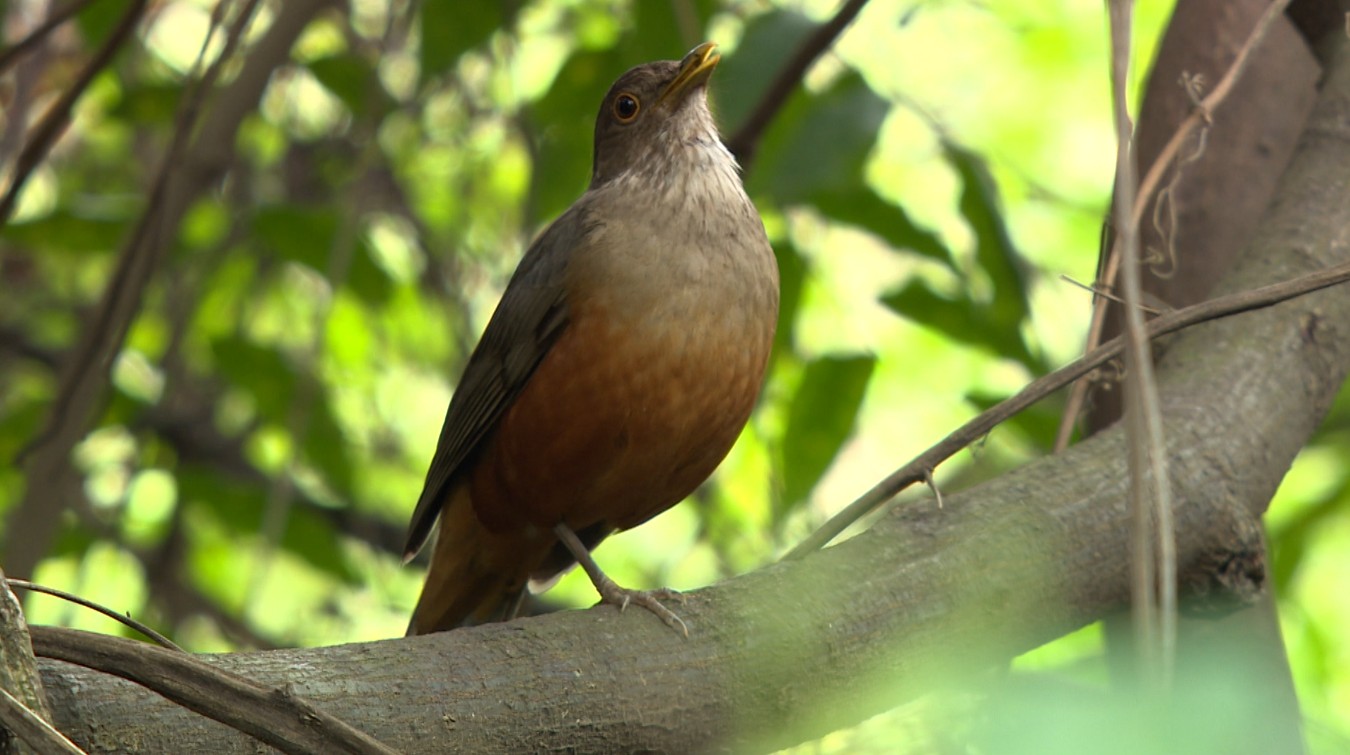
A research project at the University of São Paulo's Institute of Biosciences (IB-USP), supported by the Serrapilheira Institute, is investigating why the Rufous-Bellied Tody (Turdus rufiventris) is singing loudly in the middle of the night in São Paulo, a behavior uncharacteristic of its usual dawn chorus. The study aims to understand this disruption of the bird's natural singing schedule in the urban environment. To gather necessary observational data, the project is employing a citizen science methodology, engaging final-year middle school students as participants. Professor Ana Paula Assis, who leads the research, explained that involving students provides broader data distribution across the vast city, which would be difficult to achieve with traditional methods. The initiative also seeks to foster curiosity and appreciation for nature among urban youth. The research was inspired by Assis's own observations of the birds singing after 1 AM, prompting questions about the purpose of this altered vocalization, as bird songs typically serve to attract mates and defend territory. Preliminary findings suggest that rampant urbanization significantly influences the birds' behavior, with international studies indicating that birds may anticipate singing to avoid noise pollution. In São Paulo, both noise and light pollution are suspected of disrupting the Rufous-Bellied Tody's biological clock. Early results show a stark contrast: tody in forest areas like Horto Florestal begin singing around 5 AM, while those in urbanized regions start much earlier. Areas near Avenida Paulista have even recorded tody singing throughout the entire night. Assis noted that in noisy locations, the birds seem to lack a quiet window for singing, forcing them to compete with urban clamor. Artificial lights also confuse their sense of day and night. The pilot phase also observed a lack of tody song in Paraisópolis, a socioeconomically vulnerable area, suggesting that a deficit of vegetation might create wildlife voids and signal poor urban environmental quality. Schools interested in participating must register by July 31st. Each participating school will receive advanced recording equipment and sound level meters, with students receiving training on their use. The students will be responsible for deploying the equipment and collecting data, with the primary goal of immersing them in their natural surroundings and raising awareness about the region's biodiversity. The project plans to expand its monitoring network to at least 30 schools by 2026.
This research highlights how urban environmental pressures, specifically noise and light pollution, can significantly alter the ingrained biological rhythms of wildlife. The project's citizen science approach, leveraging students, offers a scalable solution for data collection in sprawling urban landscapes while simultaneously fostering environmental awareness. The observation of absent bird song in areas with less vegetation raises critical questions about urban planning's impact on biodiversity and the creation of ecological 'dead zones.' Understanding these behavioral shifts is crucial for developing more sustainable urban ecosystems that can support both human and non-human inhabitants over the next decade, particularly as cities continue to grow and technological integration increases.
AI-generated to prompt reflection — not editorial opinion, not advice, not a statement of fact. How this works.