São Paulo restricts street performers' sound equipment on Paulista Avenue
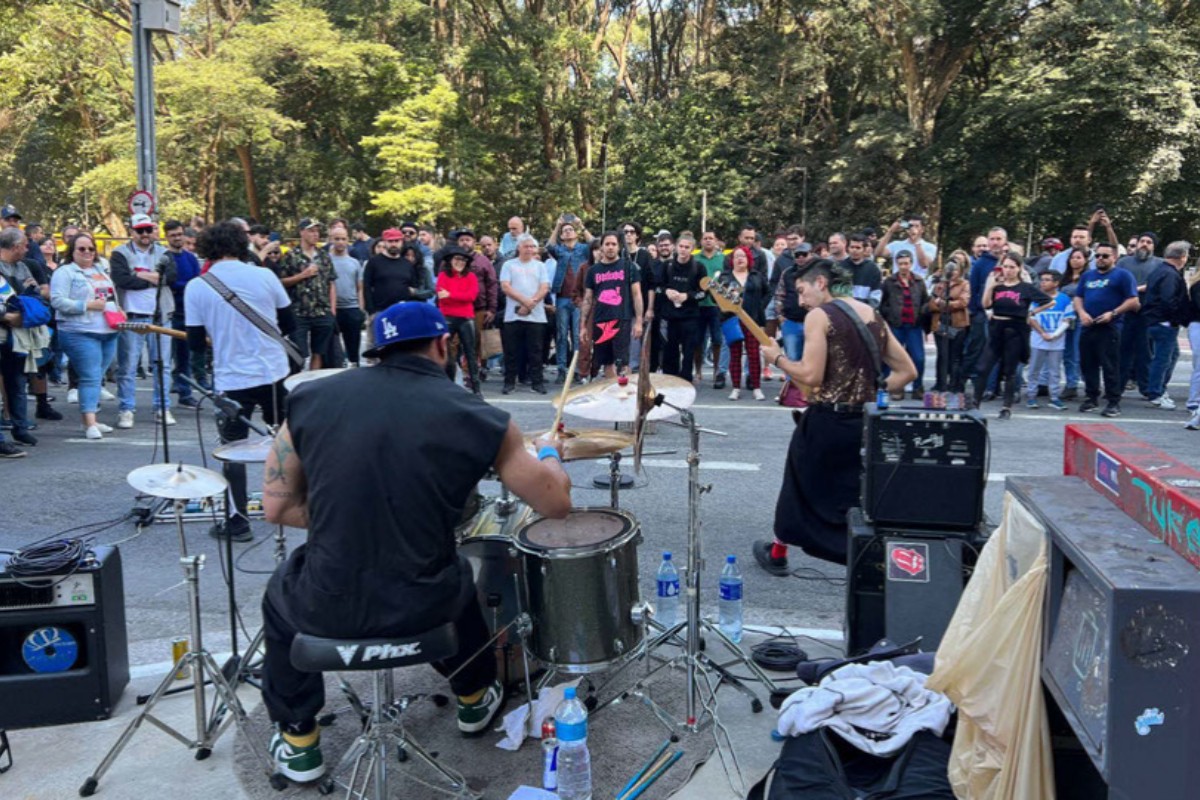
The São Paulo Prefecture has implemented a new regulation limiting the use of sound equipment by street performers on Avenida Paulista, particularly on Sundays and holidays. The measure prohibits the use of external power sources such as generators, batteries, and electrical connections to nearby businesses and residences for sound amplification. This decision comes amid pressure from residents concerning noise pollution and an ongoing investigation by the Public Prosecutor's Office into the city's oversight of the "Ruas Abertas" (Open Streets) program. The restriction, formalized by a joint ordinance from the Municipal Secretariat of Sub-prefectures and the Sé Sub-prefecture, could lead to the seizure of non-musical equipment if violated. The prefecture has not yet clarified which municipal bodies will be responsible for enforcing these new rules. The ordinance states the goal is to balance artistic expression with "inconvenience parameters" set by law, and it mentions a Conciliation Commission established in 2025 to address conflicts between residents and artists. However, this commission has reportedly held only two meetings since its inception without producing agreements. The new rule also coincides with the city administration's efforts to facilitate a large free concert on Paulista Avenue, a proposal that has met resistance from local businesses and residents who demand effective solutions for noise control before any expansion of large events. Since June, the capital's Environmental Prosecutor's Office has been investigating whether noise levels on Sundays and holidays constitute urban environmental damage and if public authorities have been negligent in their enforcement, which is deemed ineffective. Street performers have reacted negatively, with representatives calling the decision unilateral and effectively a ban on amplification. They argue that the existing mediation commission has been inactive and that the prefecture should focus on enforcing current rules before introducing new restrictions. Resident and merchant associations also criticized the ordinance, stating it does not effectively regulate noise emission but only the power source for equipment. They point out that many current sound systems use internal batteries, which remain permitted, and that unamplified groups like marching bands are unaffected. These groups advocate for clear regulations establishing maximum sound pressure limits, measurement methodologies, and specific enforcement for all noise sources on the avenue, alongside the reactivation of the Conciliation Commission and a Neighborhood Impact Study. A recent report indicated that only 16.36% of noise measurements on Paulista Avenue met technical standards, with an average of 70.9 decibels, and Sundays being the period of highest exposure.
This policy shift by the São Paulo Prefecture reflects a growing tension between urban cultural expression and residential quality of life, exacerbated by evolving city dynamics. The restriction on external power sources for street performers' sound equipment, while framed as a noise mitigation measure, may inadvertently stifle artistic activity by limiting practical amplification capabilities. The limited effectiveness of the established Conciliation Commission and the ongoing Public Prosecutor's Office investigation suggest systemic challenges in balancing diverse public interests and enforcing regulations. Looking ahead, the city faces the challenge of developing sustainable frameworks for public space utilization that accommodate both vibrant cultural scenes and resident well-being, potentially through technological solutions for noise monitoring and control, and more robust, inclusive governance structures for conflict resolution.
AI-generated to prompt reflection — not editorial opinion, not advice, not a statement of fact. How this works.
