São Paulo's Ibirapuera Olympic Stadium Reopens with Latin America's First Nine-Lane Track
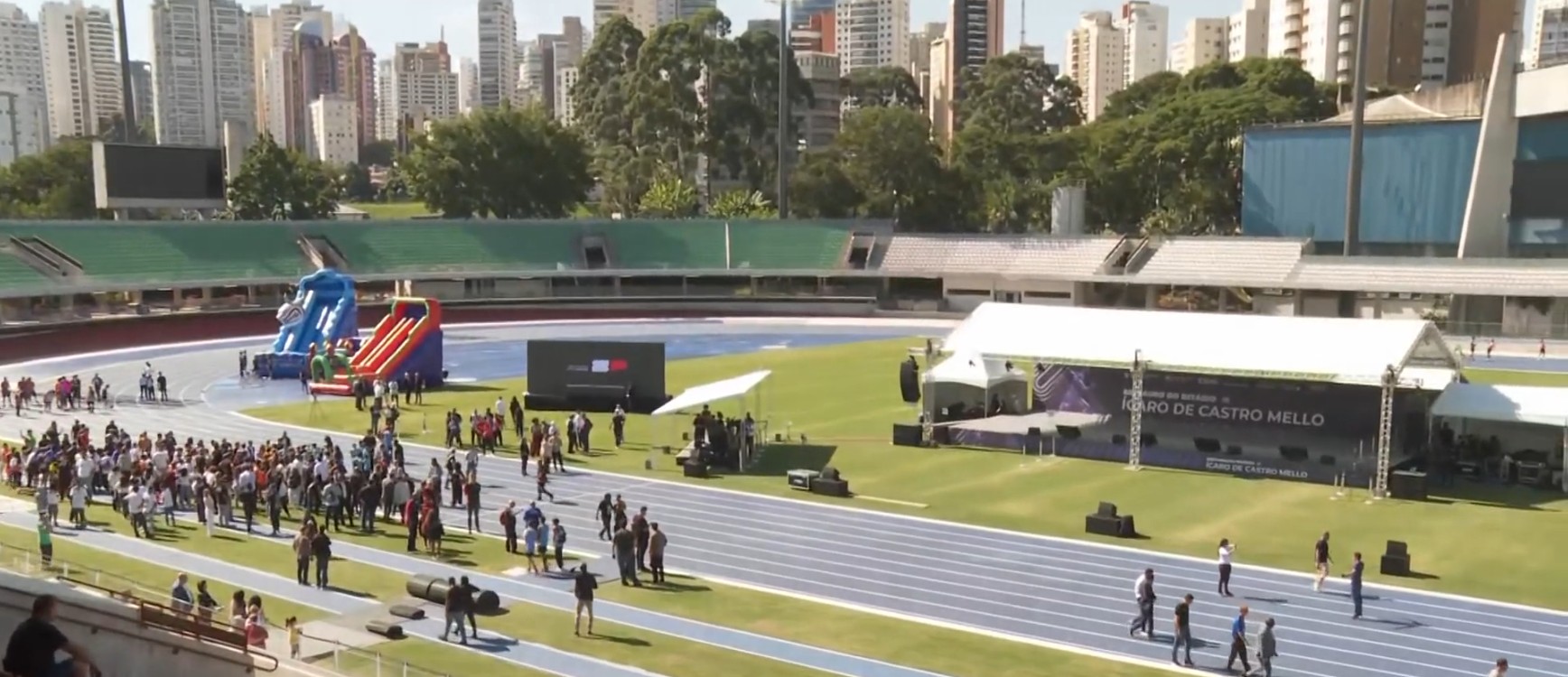
The Ibirapuera Olympic Stadium, also known as Ícaro de Castro Melo, in São Paulo's South Zone, has been reinaugurated on Friday, March 3rd, following an eighteen-month renovation. The centerpiece of the modernization is a new, imported nine-lane Olympic track, the only one of its kind in Latin America. The reopening ceremony was attended by Governor Tarcísio de Freitas, Mayor Ricardo Nunes, elite athletes, and young aspiring athletes. The renovation also included the restoration of the stadium's grandstands, which can now accommodate over 11,000 spectators, and an upgrade to the overall structure. Historically, the stadium, inaugurated in 1954 and a national heritage site, has hosted significant national and international competitions and cultural events, serving as a venue for renowned athletes like João do Pulo. Following the renovation, the Brazilian Athletics Confederation (CBAt) will manage the stadium, aiming to develop new talent. Plans include training approximately 1,600 state school teachers to promote athletics in schools and identify promising young athletes. The reopening is seen as a significant boost for aspiring athletes, offering an inspiring environment where legendary figures once competed. The State government anticipates that the revitalized stadium will once again be a key venue for major athletics competitions in Brazil and foster the sport's growth in São Paulo.
The reinauguration of the Ibirapuera Olympic Stadium with a state-of-the-art track signifies a strategic investment in athletic infrastructure, aiming to elevate Brazil's standing in the sport. By providing a world-class facility and focusing on talent development through teacher training and school programs, the initiative addresses systemic gaps in sports education and athlete identification. This approach aligns with long-term goals of fostering a robust national athletics pipeline, potentially yielding future Olympic and international successes. The stadium's historical significance, combined with modern upgrades, creates a compelling narrative for national pride and athletic aspiration, while its management by the CBAt suggests a commitment to professional oversight and program continuity. The success of this investment will likely be measured not only by the number of elite athletes produced but also by the broader impact on public health and youth engagement in sports across São Paulo and Brazil.
AI-generated to prompt reflection — not editorial opinion, not advice, not a statement of fact. How this works.