São Paulo Sees Nearly 20 Ring Thefts Per Hour in First Half of 2026
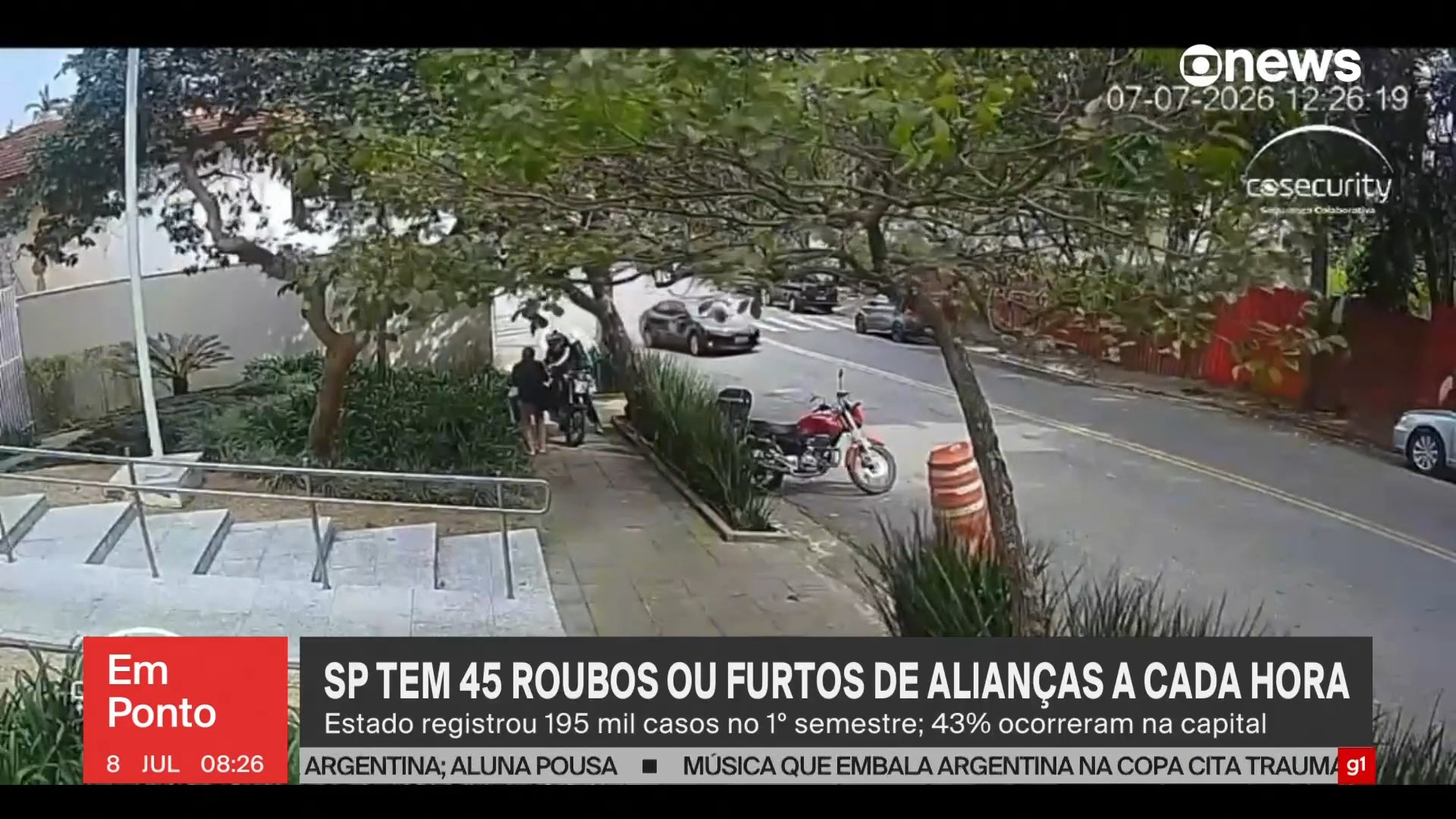
In the first half of 2026, the city of São Paulo experienced an average of nearly 20 ring thefts or robberies per hour, according to a GloboNews investigation using data from the São Paulo State Secretariat of Public Security (SSP-SP). This rate translates to approximately 471 daily incidents within the capital. Across the entire state of São Paulo, ring thefts and robberies saw a 24.1% decrease in the first semester of 2026 compared to the same period in 2025, with 195,500 recorded cases versus 257,500 previously. The capital city also observed a reduction of 23.5%, with 84,700 incidents in the first six months of 2026. Despite these decreases, the overall volume of cases remains significant, with an average of 1,086 daily incidents statewide, or 45 per hour. Recent incidents captured on security cameras highlight the ongoing issue. One video shows a woman being robbed of her ring by a delivery motorcyclist shortly after leaving her condominium in Campo Belo, South Zone. Another incident on July 4th involved a motorcyclist stealing a ring from a victim in Jardim Monte Alegre, West Zone, with the motorcycle's license plate obscured. GloboNews sought comment from the SSP-SP regarding the reduction in cases and the persistent high volume of ring thefts but had not received a response at the time of reporting.
The data indicates a concerning trend of persistent high-volume property crime targeting valuable personal items, even amidst reported percentage decreases. The focus on ring thefts, specifically, may reflect opportunistic crime driven by perceived value and ease of resale. While state and city authorities report reductions, the sheer number of daily incidents suggests that current security measures and enforcement strategies may not be sufficiently deterring perpetrators. The obscured license plate in one incident points to a deliberate attempt to evade identification, highlighting the need for improved surveillance technology and investigative techniques. Further analysis could explore the socioeconomic factors contributing to these crimes and the effectiveness of current public safety initiatives in addressing them over the long term.
AI-generated to prompt reflection — not editorial opinion, not advice, not a statement of fact. How this works.