São Paulo Subway Riders Turn Commutes into Reading Time Amid Declining Literacy
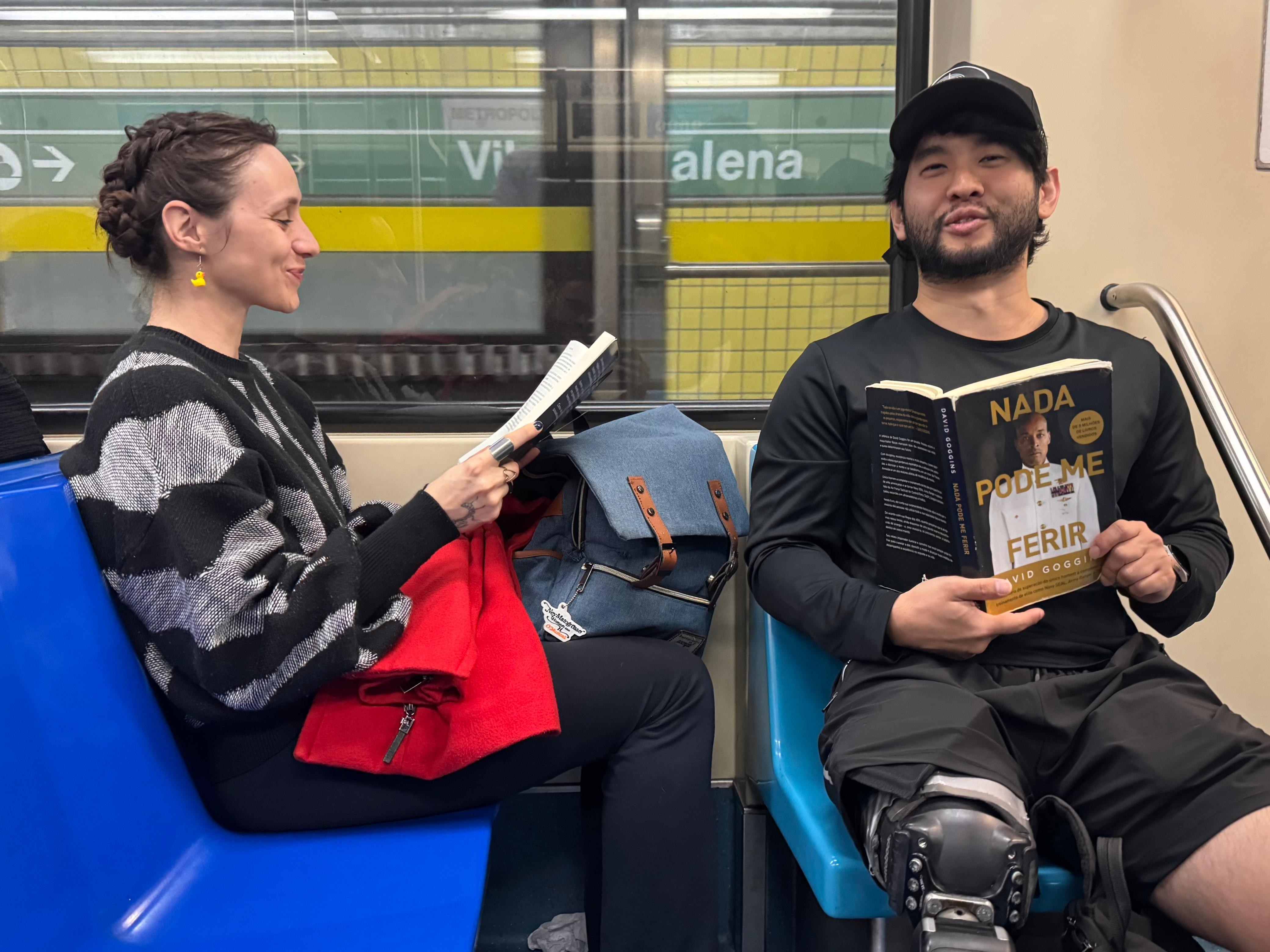
In São Paulo, Brazil, a growing number of subway passengers are transforming their daily commutes into dedicated reading time, a practice that stands in contrast to a national decline in readership. Travelers like 35-year-old artist and teacher Mariel Bonzamota and 29-year-old IT consultant Eduardo Yudi Arata are using their subway journeys on lines like the Green Line 2 to immerse themselves in books. Bonzamota is reading a novel by one of her students, while Arata is rereading David Goggins' autobiography, finding motivation in the challenging content. For many, including 38-year-old nurse Tamires Moraes, the subway is one of the few available windows in their busy schedules to engage with literature, especially with demanding jobs and young children at home. Moraes dedicates about 40 minutes daily to reading on her commute, currently engrossed in Liz Moore's suspense novel 'Ecos da Floresta'. This trend is observed across various subway lines, with passengers reading a diverse range of genres, from romance and manga to biographies and financial education books. The phenomenon is further highlighted by writer and literature PhD candidate Bruna Paiva, who gained recognition for approaching subway passengers in Rio de Janeiro and São Paulo to ask what they were reading. Paiva emphasizes that for most, reading on public transport is not about attention-seeking but about maximizing limited free time. Young apprentice Kauã Sousa, 18, also utilizes his subway rides, particularly on less crowded return trips, to read books like Colleen Hoover's 'Novembro, 9', a popular choice among a generation influenced by BookTok. Despite criticisms of some popular authors like Hoover for their handling of sensitive themes, their works are widely read and discussed. Paiva notes that social media platforms have significantly boosted young people's interest in literature and literary events since the pandemic, likening the enthusiasm at book fairs to a 'Rock in Rio' for books. Journalist Fernando Piovezam has been documenting this trend since 2016 through his project 'Vi Você Lendo', photographing passengers reading on trains and subways, showcasing a wide array of titles from popular fiction to classics. This surge in subway reading occurs as the 'Retratos da Leitura no Brasil' survey from 2024 indicates that non-readers now constitute the majority in Brazil, with over half the population not having read any book in the past year, marking a loss of 6.7 million readers between 2019 and 2024. However, data from the Brazilian Book Chamber suggests an increase in book consumption among young adults aged 18 to 34, driven by social media communities. Paiva argues that the subway reading scene demonstrates that the discussion around reading should not be limited to the type of book consumed, as both popular bestsellers and classic literature serve different, valuable roles in fostering a reading culture.
The observed phenomenon of increased reading on public transport in São Paulo, despite a national decline in readership, highlights a critical adaptation to modern urban life. It suggests that while traditional reading habits may be challenged by demanding schedules and digital distractions, dedicated individuals are actively carving out pockets of time for literature within existing routines. This behavior underscores the resilience of reading as a personal development tool and a source of motivation and escape. The influence of social media, particularly platforms like BookTok, is demonstrably reshaping reading engagement among younger demographics, driving both consumption and community formation around books. This shift indicates a potential future where reading is more socially integrated and digitally amplified, even as overall literacy rates face headwinds. The contrast between dedicated commuters finding time to read and the broader trend of declining readership points to a widening gap between active readers and the general population, necessitating a deeper examination of factors influencing literacy and access to reading materials across Brazil.
AI-generated to prompt reflection — not editorial opinion, not advice, not a statement of fact. How this works.