São Paulo Train Lines 11 and 12 Face Major Delays and Overcrowding
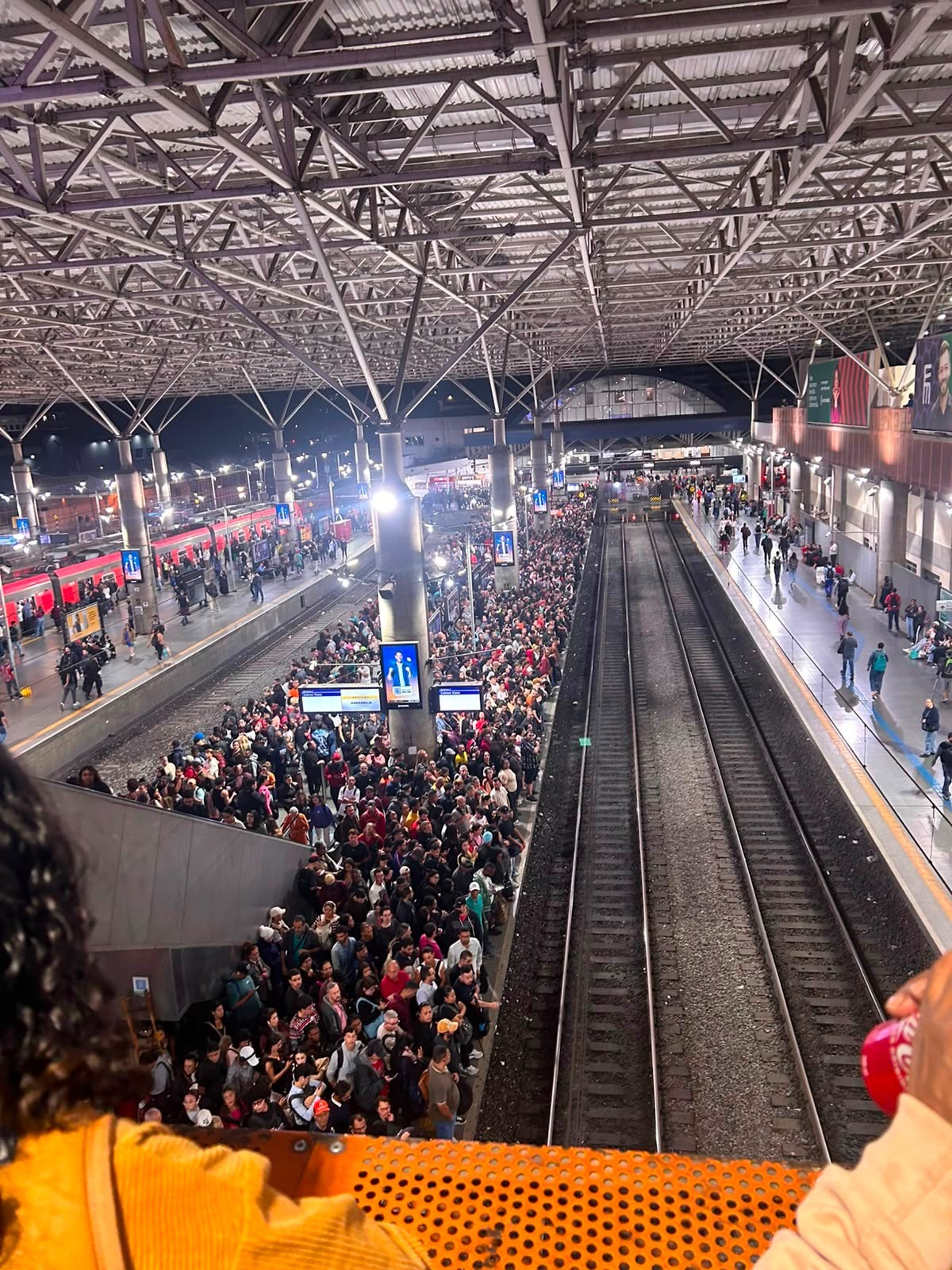
Passengers in São Paulo experienced significant train delays and severe platform overcrowding on Wednesday, November 22nd, affecting Lines 11-Coral and 12-Safira. The issues were particularly acute on Line 12-Safira, which experienced a failure starting at 8:52 AM and remained unresolved for over 11 hours. Images from the Brás station depicted packed platforms and non-operational escalators. Trívia Trens, the concessionaire that took over operations for these lines just two days prior, acknowledged an ongoing incident and stated that maintenance teams were working to resolve it. The company claimed that train intervals were within the expected norms for an ongoing occurrence, a statement that TV Globo questioned, awaiting further clarification. The failure on Line 12-Safira involved reduced speeds between Tatuapé and Engenheiro Goulart stations due to a track equipment malfunction. Trívia Trens officially assumed operation of Lines 11-Coral, 12-Safira, and 13-Jade on Tuesday, November 21st, ending the 60-day assisted operation period under CPTM supervision. The company, part of the Comporte Participações group, committed to investing R$14.3 billion over 25 years to improve the lines, including opening new stations and reducing train intervals. Despite these commitments, the transition period has seen an increase in failures on Line 11-Coral, which is the busiest line in São Paulo's metropolitan rail network.
The recent operational disruptions on São Paulo's Lines 11 and 12, occurring just days into Trívia Trens' permanent concession, highlight the inherent challenges of infrastructure transitions. While the concessionaire cites ongoing maintenance and an 'ongoing occurrence,' the immediate and severe impact on passenger service, particularly on the busiest Line 11, raises questions about the readiness and effectiveness of the transition plan. The contrast between the company's assurances of normal intervals and passenger reports of severe delays and overcrowding suggests a potential disconnect between operational metrics and user experience. Looking ahead, the success of Trívia Trens' 25-year concession hinges on its ability to not only address immediate infrastructure needs, such as track and signaling upgrades, but also to establish robust operational protocols that ensure reliability and public trust, especially during periods of change and investment.
AI-generated to prompt reflection — not editorial opinion, not advice, not a statement of fact. How this works.