São Paulo Train Strike Disrupts Nearly 1 Million Commuters
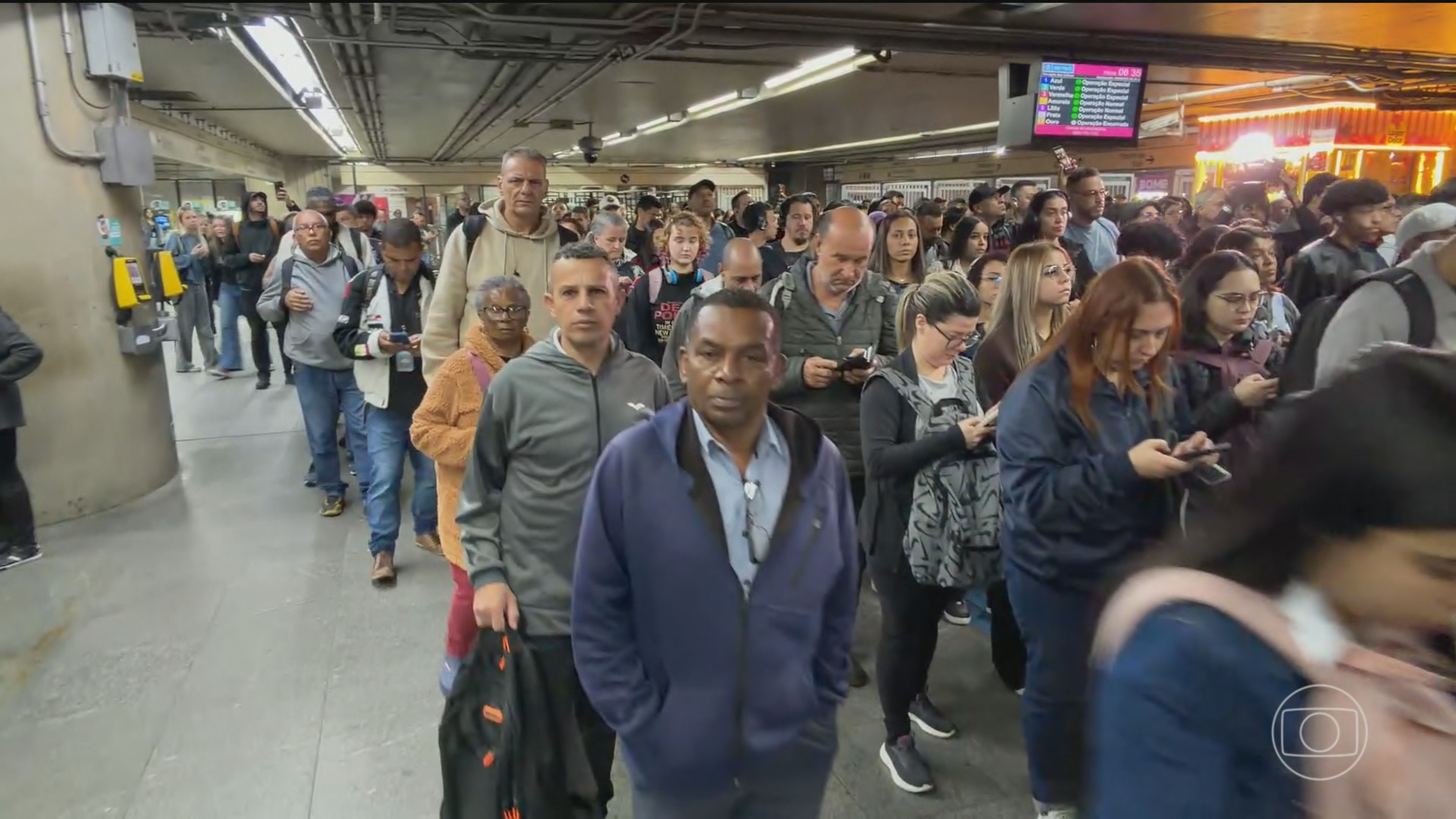
A strike affecting three CPTM (Companhia de Trens Metropolitanos) lines in São Paulo has left nearly 1 million passengers without adequate transportation in the Greater São Paulo region. The work stoppage has led to overcrowded subways and buses, causing significant traffic congestion. The affected lines serve the eastern part of the city and surrounding metropolitan areas. Passengers, like waiter Rodrigo Celestino de Souza, expressed frustration over the difficulties in finding alternative transport for their daily commutes. These specific lines were recently transferred to the concessionaire Trivia Trens two weeks prior, and have already experienced service failures, including a fire in a train car. Following these issues, CPTM resumed operations for a 90-day period, a measure not previously taken under the railway concession program. The workers' union is demanding job security for approximately 2,200 employees on lines 11, 12, and 13, which are impacted by the concession. CPTM stated that the union did not adhere to a court order requiring 80% of staff to work during peak hours and assured that no layoffs would occur. CPTM's president, Michael Cerqueira, emphasized the company's open dialogue and efforts to meet union demands. Governor Tarcísio de Freitas attributed the strike to political manipulation aimed at harming passengers. The strike continued into the evening, with trains operating on limited stations and longer intervals.
This strike highlights the systemic challenges in public transportation privatization, particularly concerning labor relations and service continuity. The transfer of lines to a private concessionaire, followed by immediate operational issues and a subsequent temporary return to public management, suggests potential governance gaps in the oversight of such transitions. The union's demand for job security for 2,200 workers underscores the human capital implications of concession models, while CPTM's reference to a court order points to a conflict between operational requirements and labor rights. Governor de Freitas's assertion of political motivation frames the dispute as potentially influenced by external agendas, rather than solely operational or labor concerns. Moving forward, a robust framework is needed to balance efficiency gains from privatization with the imperative of reliable public service and fair labor practices, especially as urban populations grow and the demand for efficient transit intensifies in the coming decade.
AI-generated to prompt reflection — not editorial opinion, not advice, not a statement of fact. How this works.
