Saber-toothed cat fossils suggest inbreeding contributed to species' extinction
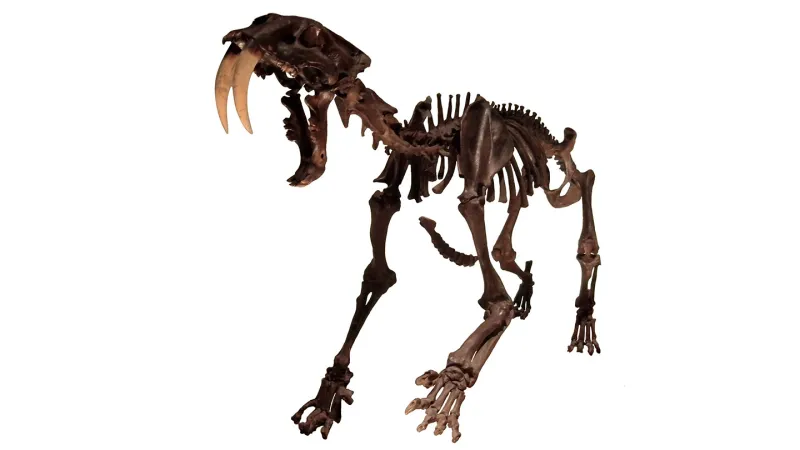
Fossilized remains of saber-toothed cats discovered at the La Brea Tar Pits in Los Angeles have revealed significant health issues, including deformed vertebrae and rare tumors. These findings suggest that inbreeding may have played a role in the decline and eventual extinction of these iconic predators. The skeletal abnormalities indicate a potential genetic bottleneck, where a reduced gene pool led to an increase in harmful mutations and reduced overall health within the population. Scientists are analyzing these remains to better understand the biological factors that may have contributed to the demise of the species. The La Brea Tar Pits are a rich source of paleontological data, offering insights into prehistoric life and extinction events. Further research on these fossils could shed more light on the specific pressures faced by saber-toothed cats during their final millennia. The study of these ancient animals continues to provide valuable lessons about evolutionary biology and the fragility of species.
The discovery of skeletal deformities and tumors in saber-toothed cat fossils from the La Brea Tar Pits offers a compelling biological perspective on extinction. While environmental pressures are often cited as primary drivers of species loss, this evidence highlights the critical role of genetic health and population dynamics. Inbreeding, as suggested by the findings, can severely compromise a species' resilience by increasing susceptibility to diseases and reducing adaptive capacity. This underscores the importance of maintaining genetic diversity, particularly for apex predators whose populations may naturally be smaller and more isolated. Understanding these internal biological vulnerabilities is crucial for conservation efforts today, as it suggests that even in the absence of immediate external threats, a species' own genetic integrity can be a significant factor in its long-term survival. This case serves as a natural experiment, illustrating how genetic bottlenecks can lead to population-level health crises over evolutionary timescales.
AI-generated to prompt reflection — not editorial opinion, not advice, not a statement of fact. How this works.