Sabesp Fills Osasco Sinkhole, Three Homes Remain Condemned
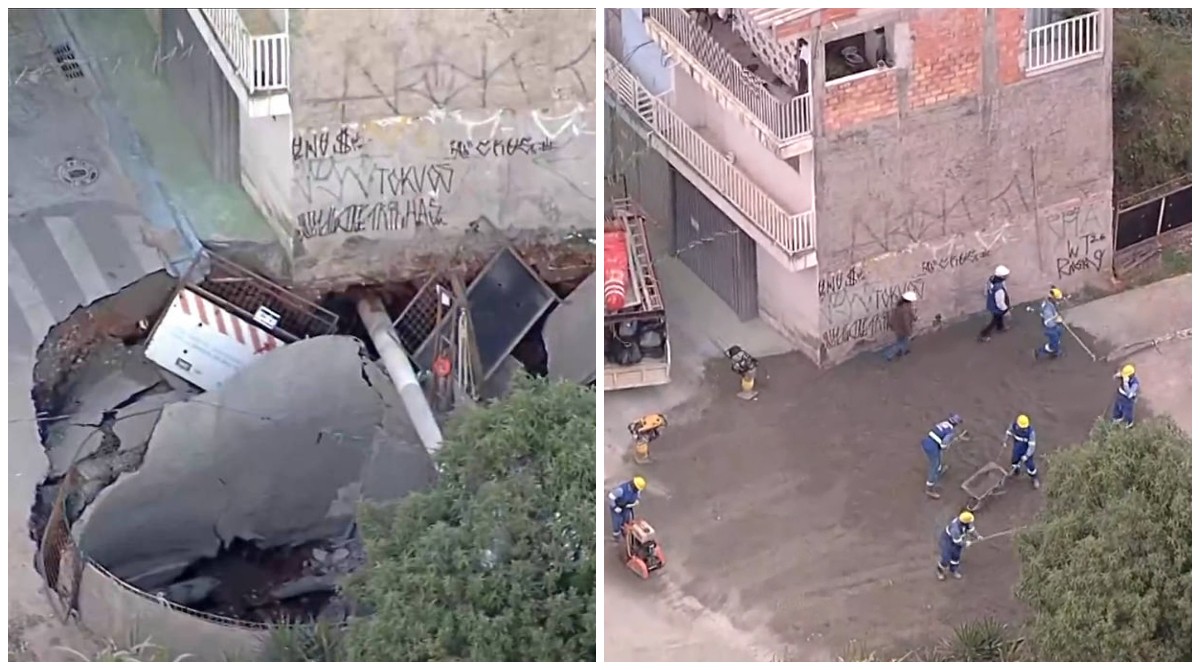
Sabesp has completed the first phase of repairs on a large crater that opened in the Jardim Rochdale neighborhood of Osasco, Greater São Paulo. The sinkhole, which appeared on Rua Cuiabá, was caused by ground movement during Sabesp's sewage network installation aimed at cleaning local streams. This movement resulted in structural cracks and damage to three homes directly opposite the construction site. The Osasco Civil Defense declared these homes unsafe, leading to their condemnation and the displacement of nine residents: seven adults and two children. Sabesp is providing these displaced individuals with financial assistance, including a voucher of at least R$2,000, and is offering social and engineering support for assessments and necessary measures while the incident's causes are investigated. The company has pledged full assistance and repair for all damages, managing each case individually. This incident follows a pattern of recent Sabesp construction issues across the São Paulo metropolitan region, including road closures, pipe bursts, and ground subsidences. Notably, a July 6 incident in São Bernardo do Campo involved a water main break during sanitation system expansion. In June, Sabesp acknowledged protocol failures led to a gas leak in downtown São Paulo, which occurred shortly after the company announced new safety measures. This followed a May incident in Jaguaré where a gas line rupture during Sabesp work caused an explosion, resulting in two deaths and significant property damage, a case still under investigation. Governor Tarcísio de Freitas announced a review of Sabesp's construction procedures, citing an increase in simultaneous projects due to heightened investment post-privatization and expressing concern over operational safety. The São Paulo State Public Services Regulatory Agency (Arsesp) has initiated its own investigation into the Osasco incident and will dispatch a technical team to assess compliance with safety protocols, with potential sanctions if irregularities are found.
This event highlights potential systemic risks associated with accelerated infrastructure development, particularly in densely populated urban areas. The increased pace of Sabesp's projects, driven by post-privatization investment, appears to be straining operational oversight and safety protocols, as suggested by Governor Tarcísio de Freitas's concerns. The regulatory agency Arsesp's involvement indicates a critical juncture where adherence to established safety standards must be rigorously enforced to prevent recurrence. Moving forward, a key challenge will be balancing the imperative for improved sanitation infrastructure with robust risk management frameworks that anticipate and mitigate the consequences of ground disturbance and utility work, especially in the context of evolving urban environments and potential climate-related ground instability.
AI-generated to prompt reflection — not editorial opinion, not advice, not a statement of fact. How this works.