Saga Prefecture Governor and Vice Minister Agree to Proceed with Shinkansen Assessment Without Route
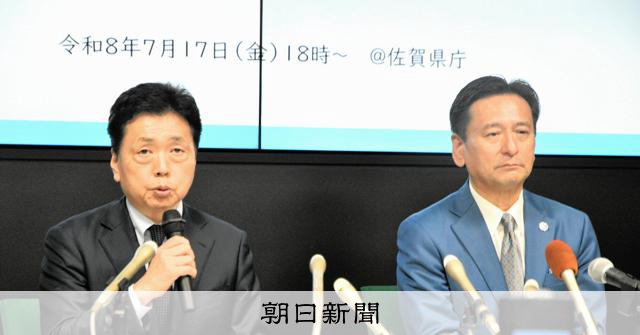
Saga Prefecture Governor Kono and Vice Minister of Land, Infrastructure, Transport and Tourism, Mr. Kishi, have reached an agreement to proceed with the environmental assessment for the Kyushu Shinkansen bullet train project. This decision was made during a press conference held on December 28, 2023. Crucially, the agreement allows the assessment process to move forward without a predetermined route for the new Shinkansen line. Governor Kono expressed his understanding that the assessment itself would not obligate the prefecture to accept the project. He stated that the prefecture's stance would be determined after the assessment is completed and the results are thoroughly reviewed. Vice Minister Kishi emphasized the importance of the assessment for understanding the project's impact and for future decision-making. The agreement aims to balance the need for infrastructure development with local concerns regarding environmental and social impacts. Both parties acknowledged the complexity of the project and the need for continued dialogue. The environmental assessment is expected to take a significant amount of time, during which further discussions and negotiations will likely take place.
The agreement between Saga Prefecture and the Ministry of Land, Infrastructure, Transport and Tourism to proceed with an environmental assessment for the Kyushu Shinkansen without a fixed route represents a strategic maneuver to advance infrastructure planning while deferring contentious route decisions. This approach allows for the collection of crucial environmental data, which is a necessary precursor for any large-scale project, thus maintaining momentum. However, it also introduces a degree of uncertainty, as the assessment's findings may reveal route options that are unacceptable to local stakeholders, potentially leading to future impasses. From a governance perspective, this method attempts to manage public opinion and political risk by separating the technical assessment phase from the politically sensitive route selection. The long-term success will hinge on the transparency of the assessment process and the government's willingness to genuinely incorporate the findings into future route deliberations, rather than using the assessment as a mere formality to justify a predetermined outcome.
AI-generated to prompt reflection — not editorial opinion, not advice, not a statement of fact. How this works.