Saharan Dust Increasingly Affecting Europe, Study Finds
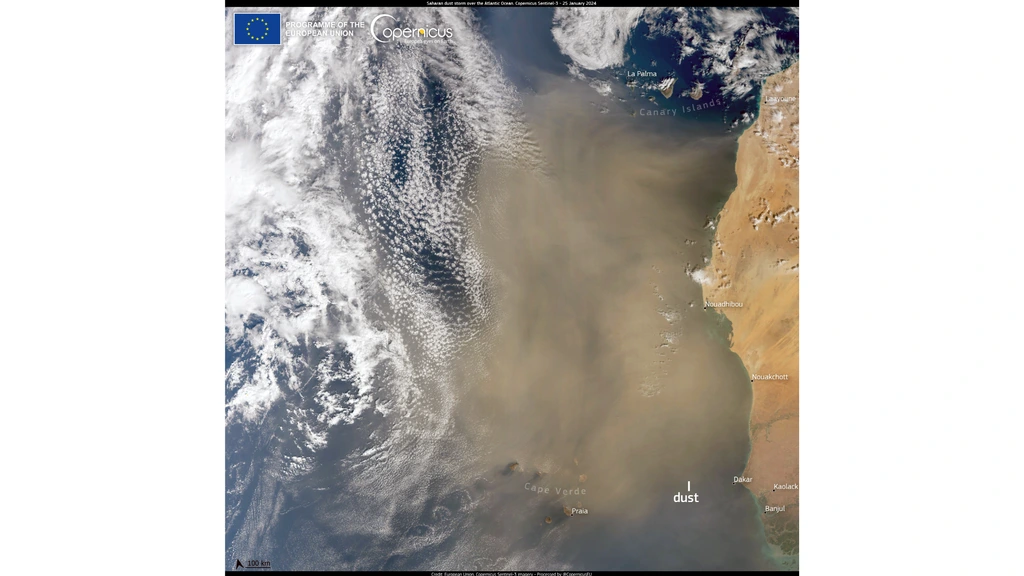
A recent study published in the journal Nature reveals a significant increase in Saharan dust reaching Europe, a phenomenon primarily driven by shifting wind patterns and potentially exacerbated by climate change. While the number of dust-laden days has remained stable between 2012 and 2021, the volume of dust per event has increased, with Southern Italy and parts of Greece being particularly affected. The trend's clarity varies across Europe, with the Netherlands showing a less distinct pattern and some countries experiencing no impact.
Inhaling this fine dust poses health risks, especially for individuals with asthma. Although the current increase is not yet substantial enough to cause widespread additional health damage, this could change if the trend continues. As human-caused air pollution decreases in Europe, Saharan dust is becoming a proportionally larger component of airborne particulate matter. This presents challenges for European nations striving to meet increasingly stringent air quality standards.
Researchers utilized air measurements to develop an AI model, cross-referenced with ice core data from the Alps, which provides a historical record of dust pollution over centuries. While the study did not directly model climate change impacts, researchers suspect it will further intensify desertification and thus dust levels. However, experts like Professor Jasper Kok urge caution, noting that the relationship between climate change, desertification, and dust pollution is not a simple linear one. Historically, warmer periods have sometimes seen less dust than colder ice ages. Beyond health, Saharan dust plays a crucial role in fertilizing marine ecosystems and the Amazon rainforest, and it also influences global climate by affecting solar radiation and cloud formation.
This study highlights a complex environmental interplay where atmospheric dust, originating from the Sahara, is increasingly impacting European air quality. The findings underscore the challenge of attributing air pollution solely to local human activity, as transcontinental natural phenomena become more significant. This necessitates a recalibrating of air quality management strategies, potentially requiring international cooperation and advanced atmospheric modeling to distinguish and mitigate different pollution sources. The potential link to climate change suggests a feedback loop where warming could amplify dust transport, further complicating efforts to achieve clean air targets and potentially impacting distant ecosystems like the Amazon, which rely on this dust for nutrient replenishment. Future policy must consider these broader, interconnected systems and the long-term implications of a changing climate on natural dust cycles.
AI-generated to prompt reflection — not editorial opinion, not advice, not a statement of fact. How this works.