Saharan dust storms hitting Europe are intensifying, study finds
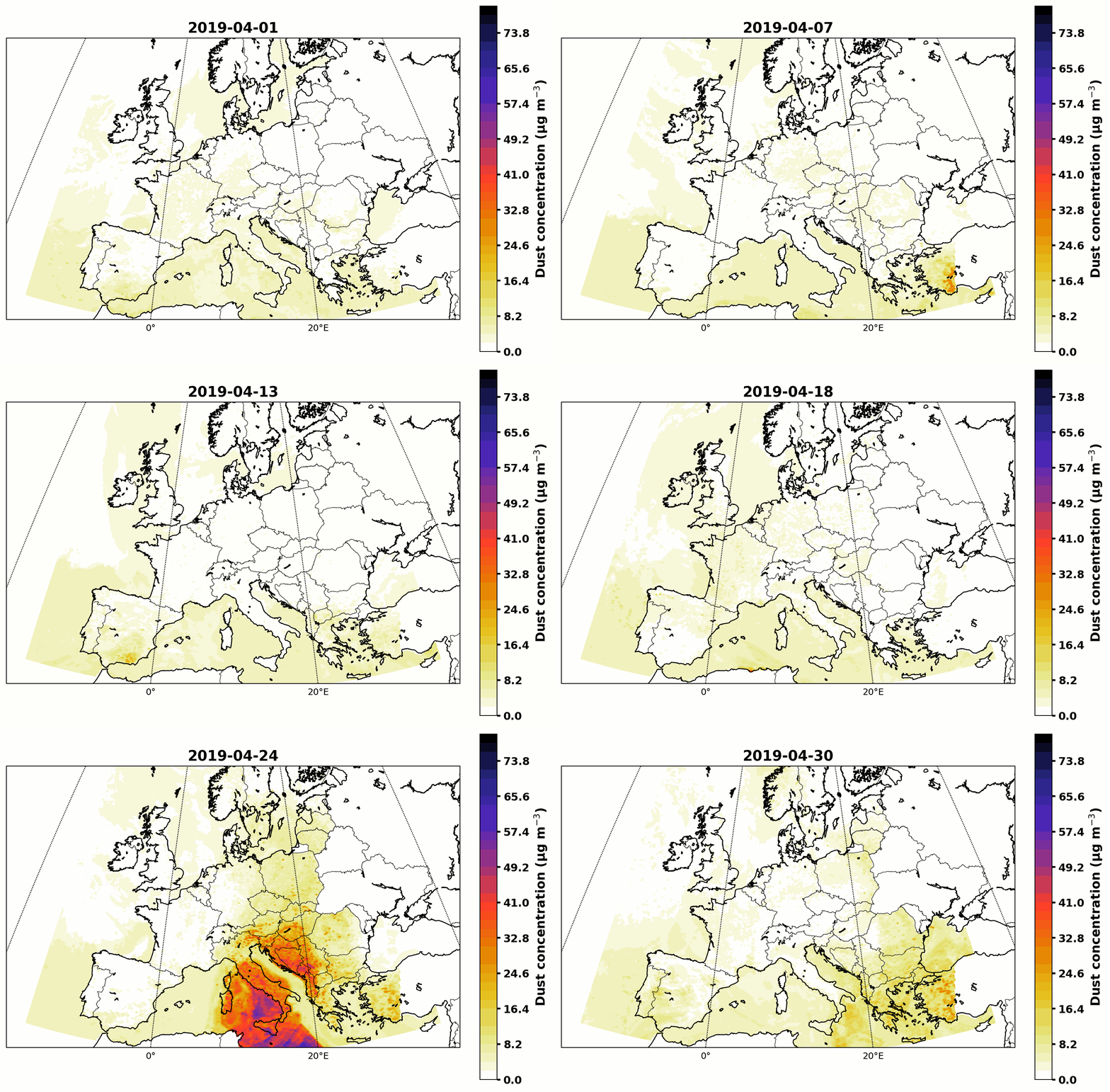
A recent study published in the scientific journal "Nature" reveals that dust transported over long distances has become more intense across much of Europe in the past decade, particularly impacting Italy and the Adriatic and Aegean Sea regions. While the frequency of these dust events has not increased, their severity has grown in southern European areas. The primary source of this airborne material is the deserts of the Sahara and the Middle East, with winds lifting fine particles thousands of kilometers across borders before they reach European cities and rural areas. Researchers analyzed approximately 18,500 daily measurements from 103 locations between 2012 and 2021 to model dust concentration. The findings indicate that southern Europe experienced an average of about 46 dust episodes annually. In 2021 alone, transported dust accounted for 31% of the World Health Organization's recommended annual limit for inhalable coarse particles (PM10). Exposure during these episodes was linked to an estimated 0.67% increase in daily mortality and a 0.73% rise in respiratory hospitalizations for individuals over 15 years old. The study's authors warn that dust pollution will increasingly threaten public health and complicate efforts to meet air quality targets. They attribute the intensification of these events to changes in atmospheric circulation that favor dust transport from North Africa, coupled with reduced soil moisture and advancing desertification, which create more loose material available for wind transport. Historical data from Alpine ice cores also support this long-term trend, showing an approximately 110% increase in deposited dust since the pre-industrial era. However, the study notes that measurement coverage was less extensive in northeastern Europe, the Balkans, and Scandinavia, potentially limiting the precision of estimates in those regions.
This study highlights a significant environmental shift impacting European public health and air quality. The intensification of Saharan dust events, linked to atmospheric circulation changes and desertification, presents a growing challenge. From a systems perspective, this phenomenon underscores the interconnectedness of climate, land use, and health outcomes across continents. Future policy considerations may need to address both climate mitigation and adaptation strategies, potentially including enhanced air quality monitoring and public health advisories tailored to these increasingly severe dust intrusions. The long-term trend indicated by ice core data suggests this is not a transient issue, necessitating proactive planning for the coming decades.
AI-generated to prompt reflection — not editorial opinion, not advice, not a statement of fact. How this works.