Salvador's Rodoviária Metro and BRT stations confuse passengers six months after terminal relocation
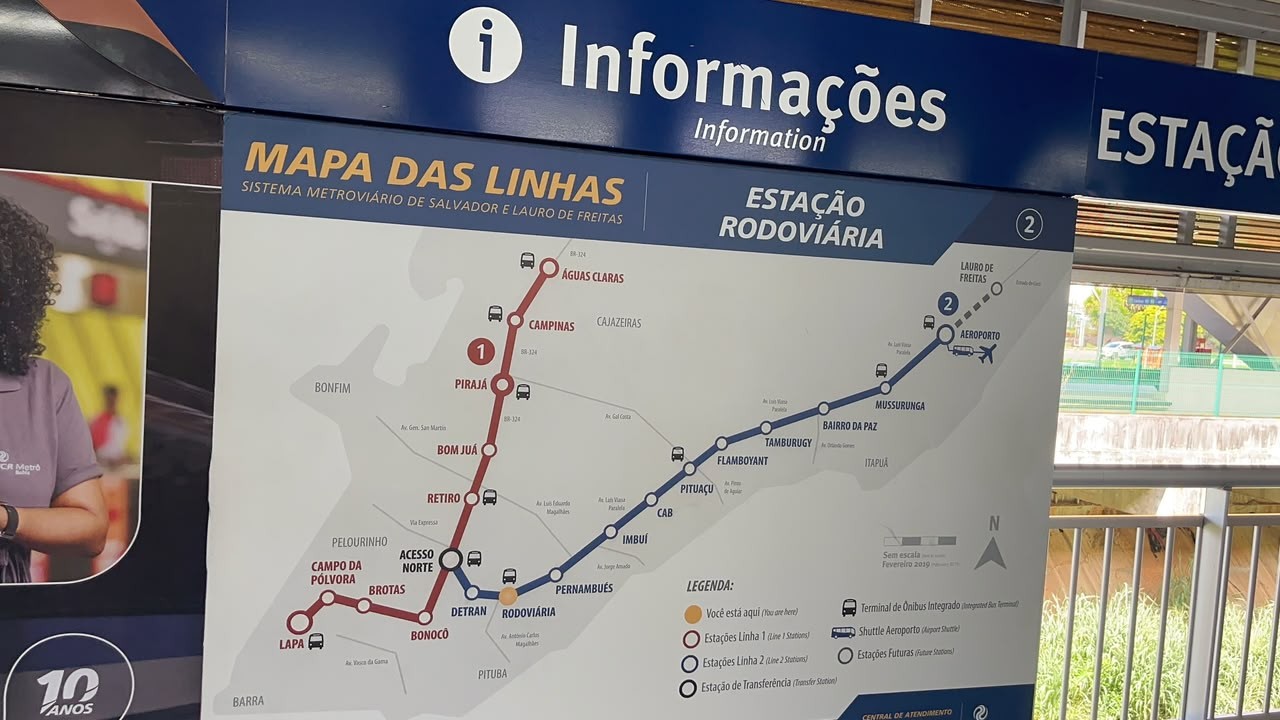
Six months after Salvador's main bus terminal relocated to Águas Claras, passengers continue to be confused by the "Rodoviária" named metro and BRT stations. These stations retain the old name, despite being located at the former, now deactivated, bus terminal site on Avenida Antônio Carlos Magalhães. This naming convention primarily affects tourists and travelers from outside Salvador, leading them to disembark at the wrong location.
Local merchants and commuters report daily instances of lost passengers arriving at the old terminal with luggage, expecting to find the active bus station. While both the metro and BRT systems have directional signage, maps, and integration information, the persistent "Rodoviária" station name overrides these efforts for those unfamiliar with the city's transport changes. The metro system, managed by CCR Metrô Bahia, serves approximately 400,000 passengers daily, with the "Rodoviária" station on Line 2 connecting to the airport. The BRT, operational since 2022, transports over 66,000 passengers daily across its five lines.
In contrast, five bus lines that previously referenced the old terminal have had their names updated by the Municipal Mobility Secretariat to "Terminal Shopping da Bahia." The future of the old bus terminal building remains undecided, with the state government considering selling it or repurposing it for state administration. The Municipal Mobility Secretariat has formally requested the state government, which manages the adjacent BRT station, to update its signage to prevent further user confusion.
The persistent naming of public transport stations after a relocated facility highlights a systemic disconnect between infrastructure changes and passenger information dissemination. This situation creates friction and inefficiency for users, particularly those less familiar with the urban environment. While signage exists, the naming convention itself acts as a primary point of confusion, suggesting that the branding and naming strategy for public transit infrastructure requires a more dynamic and user-centric approach. Future urban planning initiatives should prioritize clear, updated, and intuitive naming conventions that align with the current operational status of facilities to mitigate such passenger disorientation and enhance the overall transit experience.
AI-generated to prompt reflection — not editorial opinion, not advice, not a statement of fact. How this works.