Sand Piles Cause Waterlogging, Displacing 50 Families in Rajbari
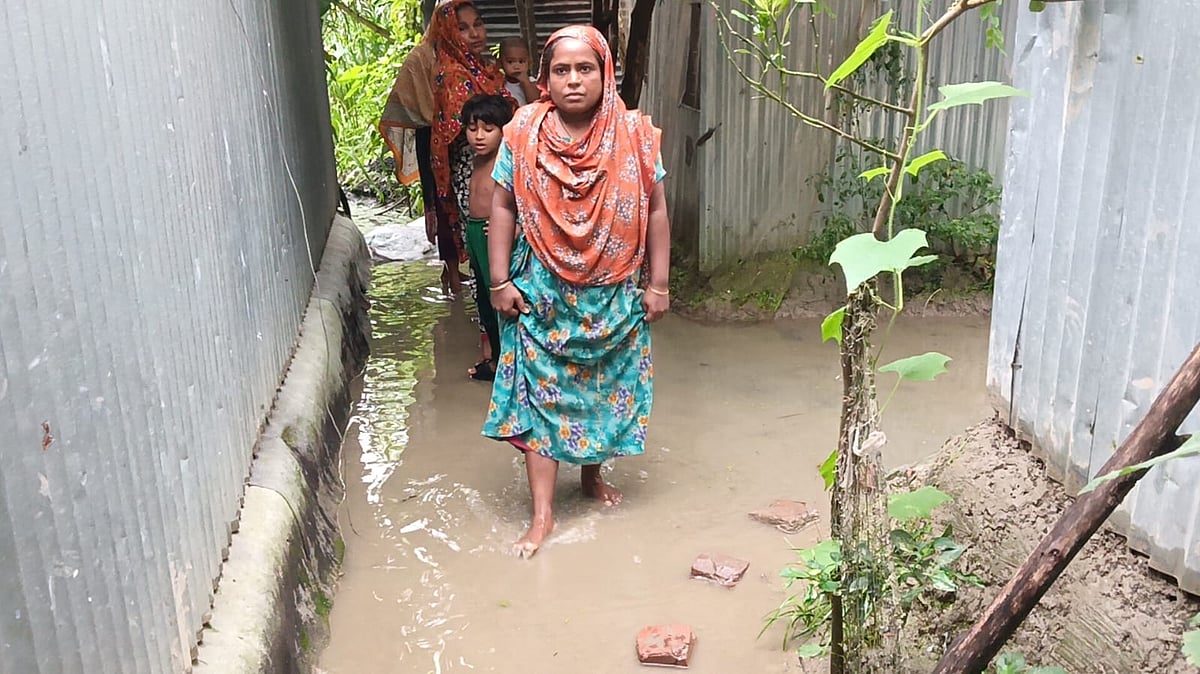
Approximately fifty families in the Daulatdia ferry terminal area of Goalanda Upazila, Rajbari, are suffering due to waterlogging caused by sand piles. The lack of proper drainage from these sand storage sites has created a dire situation, submerging homes and essential facilities. Local residents allege that influential figures, including a leader of the Upazila Sramik Dal and local members of the ruling party, are involved in the sand trade from these piles. The affected families protested this situation by blocking the Daulatdia bypass road for about half an hour on Sunday morning, amidst heavy rain. This blockade caused significant traffic disruption for vehicles heading to the southwest region, which were stranded after disembarking from ferries. The protest was eventually called off after assurances from the police. Residents like Papi Begum described their homes being inundated, with tube wells and latrines submerged, preventing them from cooking. Sarwar Molla, president of the Upazila Sramik Dal, acknowledged that some water escapes during sand unloading from bulkheads and is usually channeled to a nearby pit for removal via a pump. He attributed the current severe waterlogging primarily to heavy rainfall and assured that measures to expedite water removal are being implemented. A visit to the area revealed multiple sand piles along the bypass and near the 7th ferry ghat, where sand is unloaded from bulkheads and then sold. Residents claim that the water discharged during unloading accumulates and causes the persistent waterlogging. Niyamat Ali Sardar, a resident for 12 years, stated that before the sand piles were established two years ago, rainwater would drain naturally. The Goalanda Upazila Nirbahi Officer (UNO), Saathi Das, visited the site on Sunday afternoon, spoke with the affected families, and has ordered the sand piles to be temporarily closed and for businesses to arrange for immediate drainage. The UNO also directed the relevant businesses to ensure prompt water drainage.
The situation in Rajbari highlights a conflict between commercial sand extraction operations and residential well-being, exacerbated by inadequate infrastructure for managing water runoff. Local governance appears to be responding to public pressure, with the Upazila Nirbahi Officer intervening to halt operations temporarily and mandate drainage solutions. This event underscores a common challenge in developing regions where rapid resource extraction, often facilitated by political connections, can outpace environmental planning and public service provision. Moving forward, sustainable sand management practices, including designated extraction zones with built-in drainage and water management systems, are crucial. Establishing clear regulatory frameworks that prioritize community infrastructure and environmental protection alongside economic activity will be key to preventing future displacement and hardship.
AI-generated to prompt reflection — not editorial opinion, not advice, not a statement of fact. How this works.