Santa Catarina's Serra do Rio do Rastro Closed Due to Rockfall
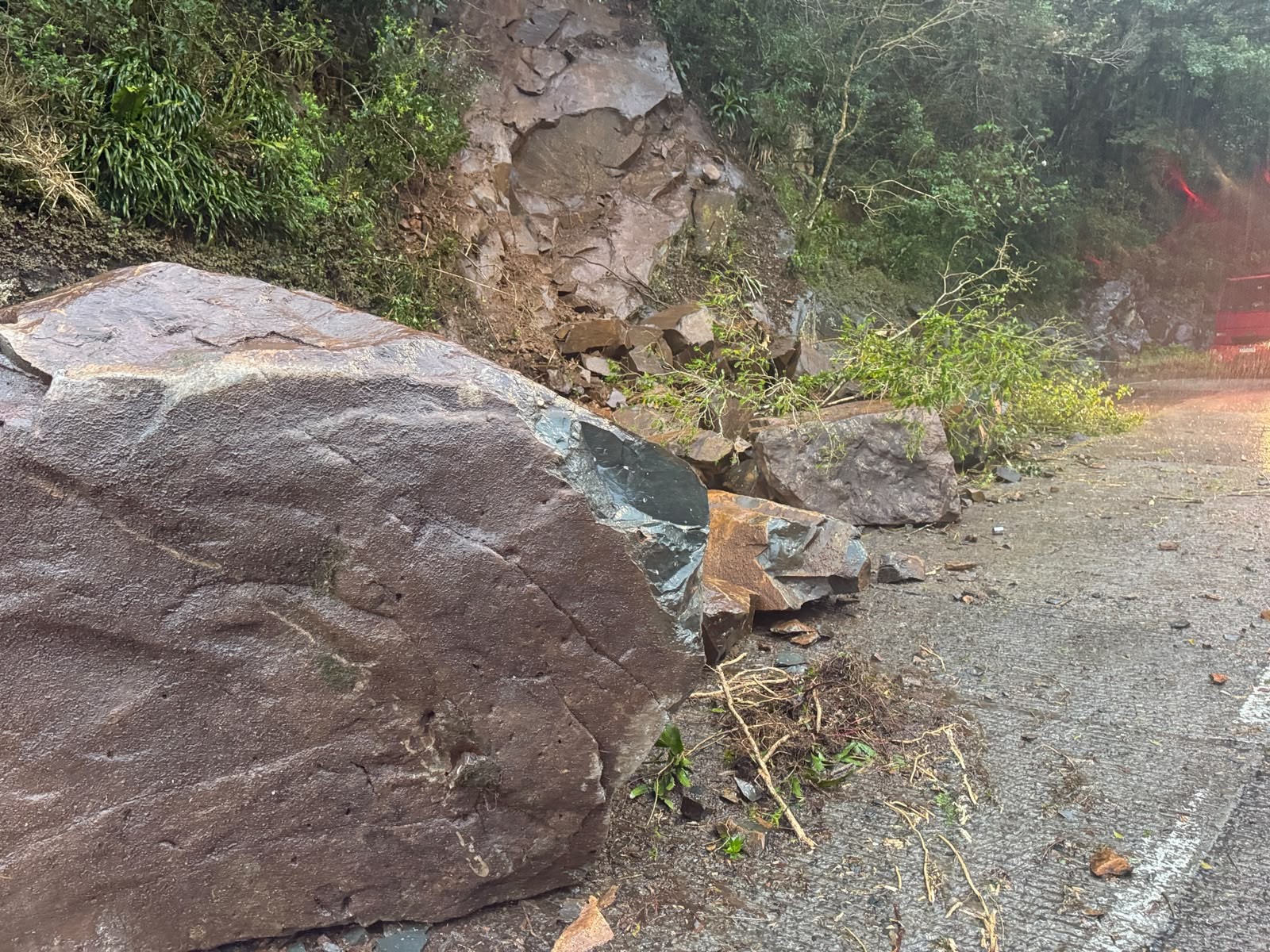
The Serra do Rio do Rastro, a popular tourist destination in Santa Catarina, Brazil, was closed in both directions on Wednesday morning, May 29th, following a significant rockslide. Large stones tumbled from the mountainsides onto the roadway between Bom Jardim da Serra and Lauro Müller, as captured in video footage. The incident occurred on a stretch of the SC-390 highway, known for its winding curves and dramatic mountain scenery, between kilometers 406 and 407. The State Highway Military Police (PMRv) advised drivers to avoid the area. The Secretariat of Infrastructure (SIE) is working to clear the debris, with an initial expectation of reopening the road by noon on the same day. An alternative route is available via BR-280. This rockfall occurs as Santa Catarina is under a red alert for severe thunderstorms issued by the National Institute of Meteorology (Inmet). The alert warns of potential rainfall exceeding 60 mm per hour or 100 mm daily, winds over 100 km/h, and hail, particularly affecting the southern and mountainous regions of the state. This follows a recent incident of hail damage that injured a child.
The rockfall on the Serra do Rio do Rastro highlights the inherent vulnerabilities of infrastructure situated in geologically active and weather-prone regions. The closure underscores the ongoing challenge of balancing tourism and transportation access with the imperative of public safety and environmental resilience. As climate patterns evolve, leading to potentially more extreme weather events, such incidents may become more frequent, necessitating proactive geological surveys and robust mitigation strategies. Future planning should consider adaptive infrastructure designs and advanced monitoring systems to predict and manage natural hazards, ensuring the long-term viability of critical routes and tourist attractions while minimizing disruption and risk.
AI-generated to prompt reflection — not editorial opinion, not advice, not a statement of fact. How this works.