Santa Teresa Trams' Silvestre Line Resumes Fixed Schedule After 20-Year Closure
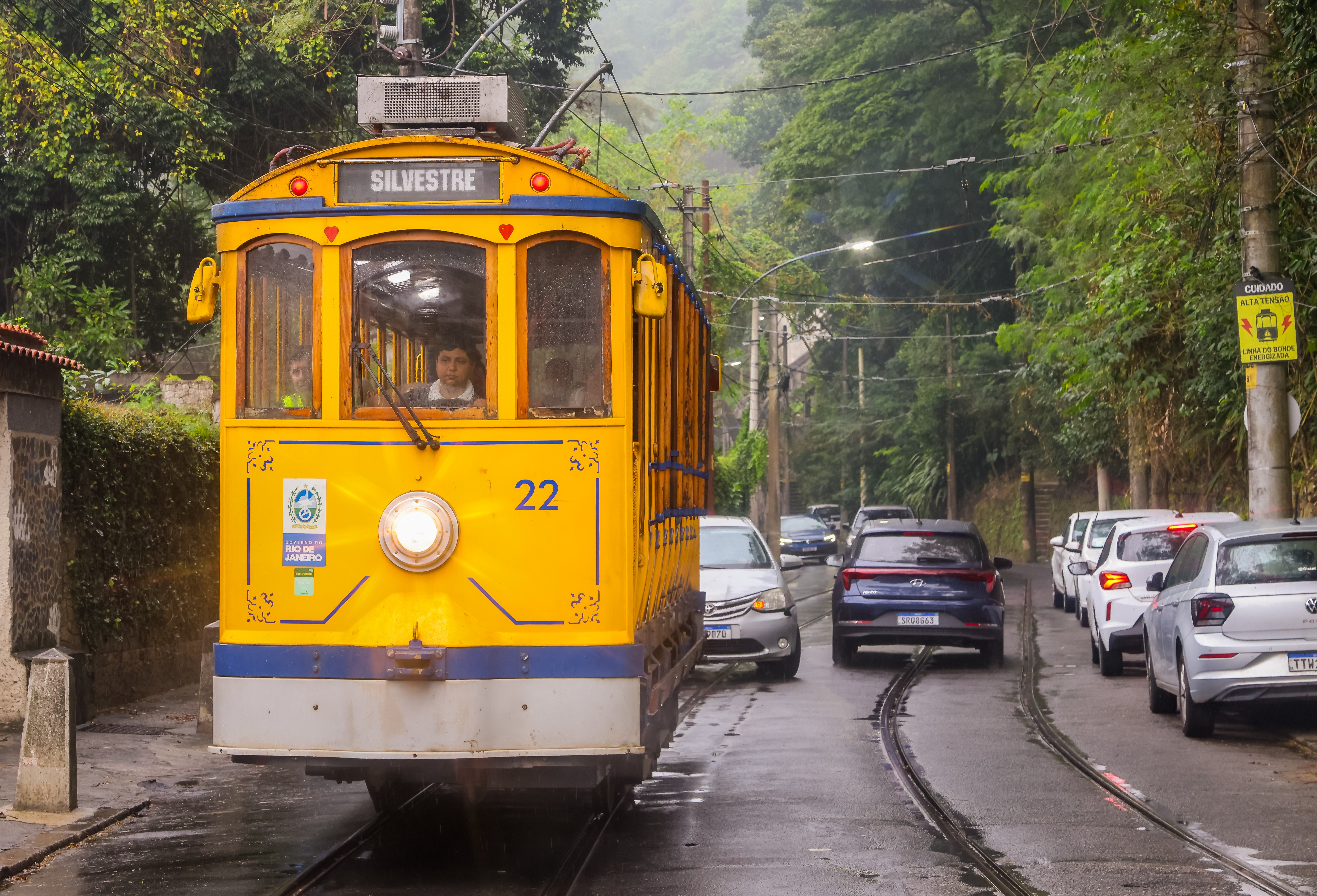
The Silvestre Line of the Santa Teresa Trams in Rio de Janeiro has officially resumed operation with a fixed schedule following the reopening of its track. During weekdays, there are now four daily round trips, departing from Carioca station at 10 AM, 11 AM, 2 PM, and 3 PM. This schedule was established after a period of operational and demand testing, enabling both residents and tourists to plan their journeys. The Silvestre Line had been inactive for over two decades before its operation was restarted by the State Secretariat of Transport and Urban Mobility (Setram) and Central Logística. The comprehensive revitalization of the tram system is expected to benefit over 40,000 people, enhancing mobility within the Santa Teresa neighborhood and preserving a significant historical landmark of Rio de Janeiro. The project involved extensive infrastructure upgrades, including the installation of approximately 667 tons of new rails, 27,800 square meters of paving, a new drainage system, and the refurbishment of nearly six kilometers of overhead wiring, all aimed at improving operational safety and reliability. Beyond restoring the historic tram route, the revitalization plans include future integration with the Corcovado Train. Works also encompassed improvements to the Paula Mattos Line and expanded operational teams. State government studies are ongoing to assess the feasibility of acquiring new trams and increasing service frequency in Santa Teresa.
The resumption of the Silvestre Line's fixed schedule marks a significant step in restoring historical urban transport infrastructure. The substantial investment in track renewal, overhead wiring, and drainage addresses long-standing reliability concerns, aiming to enhance safety and passenger experience. Future integration with the Corcovado Train suggests a broader strategy to create a cohesive historical tourism and local transit network. The ongoing demand studies for new trams and increased service indicate a forward-looking approach to capacity planning, balancing historical preservation with the evolving needs of a major metropolitan area. This initiative highlights the complex interplay between heritage conservation, urban mobility, and economic development, with potential implications for similar historical transit systems globally.
AI-generated to prompt reflection — not editorial opinion, not advice, not a statement of fact. How this works.