Santos Advances Drainage Project with New Pumping Station Construction
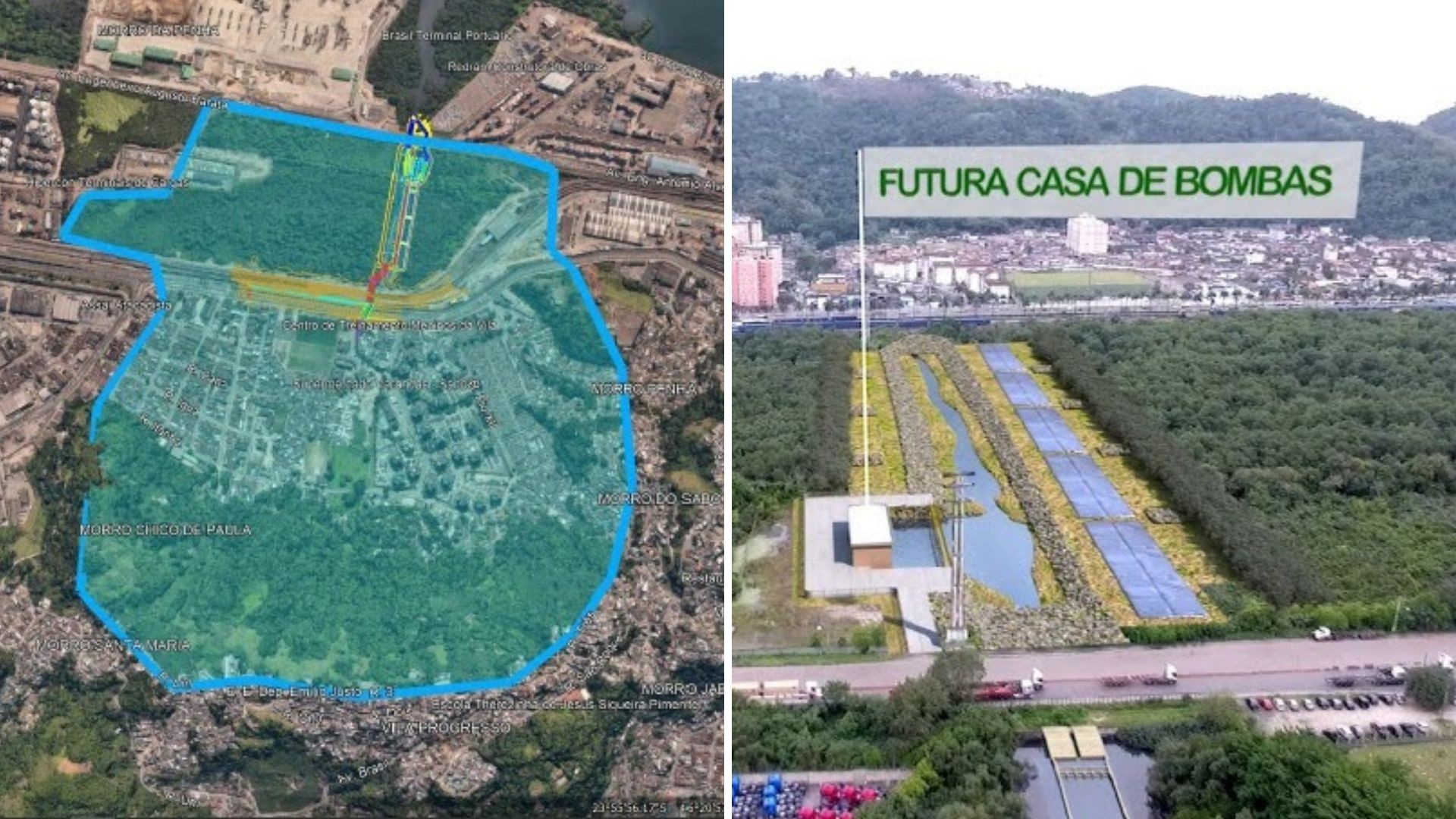
Santos, Brazil, has entered a new phase in the construction of the Estação Elevatória com Comportas 6 (EEC6) pumping station in the Saboó neighborhood. This R$ 153.3 million project aims to create a new system for draining rainwater and discharging it into the Lenheiros River, significantly enhancing flood protection for the Zona Noroeste region. The current work involves installing piles for the load chamber and preparing the foundation, a necessary step before constructing the future reservoir and pump house. This initiative is part of the "Santos Mais" Program, designed to modernize the city's macro-drainage network and mitigate the impact of flooding. The EEC6 will be the second station in the area, equipped with eight diesel-powered pumps, sluice gates, and a drainage channel covering 2 km². The station's eight vertical pumps will each have a capacity of 2.5 m³ per second, achieving a combined flow rate of 20 m³ per second. Of the total investment, R$ 149.2 million is financed by the Corporación Andina de Fomento (CAF), with the remainder provided by the Municipality of Santos. The construction of EEC6 is proceeding concurrently with the canalization of the Lenheiros River, a collaborative effort involving the municipality, MRS Logística, and the federal government. MRS Logística will invest approximately R$ 150 million in installing culverts under the railway line to direct rainwater to the river, while the municipality is responsible for building the pumping station and connecting the new culverts to the existing drainage system. The monitoring of soil settlement is expected to take about four months.
This significant infrastructure investment in Santos addresses critical urban resilience challenges posed by heavy rainfall and inadequate drainage. The project's multi-stakeholder approach, involving municipal government, private logistics companies (MRS Logística), and federal support, alongside international financing (CAF), highlights a systemic strategy for urban development. The integration of new pumping stations with river canalization and the modernization of macro-drainage networks demonstrates a forward-looking approach to climate adaptation. Future evaluations should consider the long-term operational costs, maintenance requirements, and the potential for technological upgrades to enhance efficiency and environmental performance, particularly concerning the diesel-powered pumps. The success of this project could serve as a model for other coastal cities facing similar flood risks, emphasizing the importance of coordinated investment and planning in the face of evolving environmental pressures.
AI-generated to prompt reflection — not editorial opinion, not advice, not a statement of fact. How this works.