Santos Port Conducts Brazil's First Ethanol Bunkering for a Container Ship
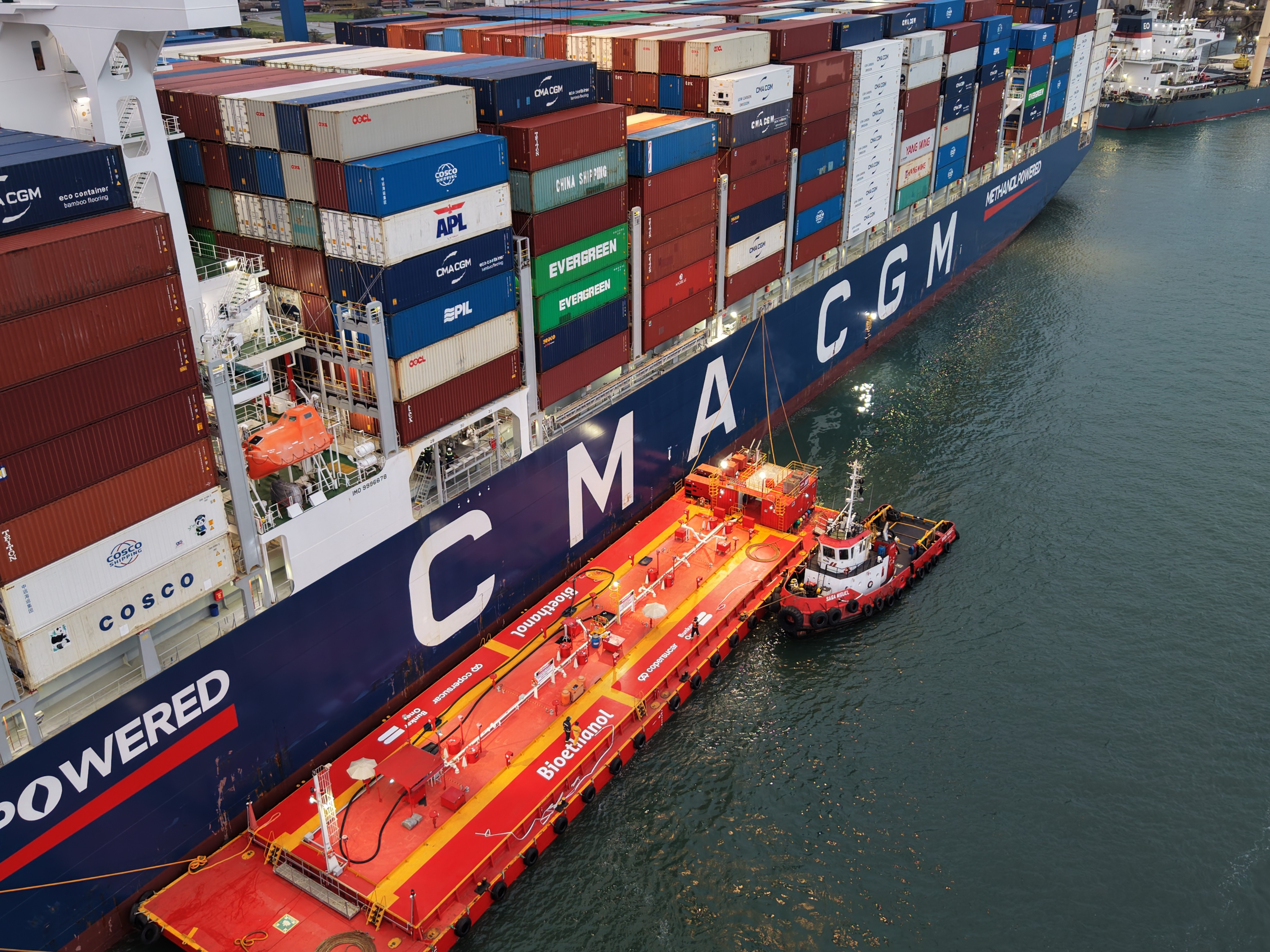
The Port of Santos, located on the coast of São Paulo, Brazil, has successfully completed the nation's first bunkering operation of a container ship using ethanol. This significant event, which took place on Sunday, December 12th, involved the transoceanic container vessel CMA CGM IRON. The ship, registered in Malta and slated for acquisition by Santos Brasil in 2025, possesses a capacity of 13,000 20-foot equivalent units (TEU). This pioneering operation is viewed by the involved companies as a crucial step towards decarbonizing maritime transport and highlights Brazil's growing role in the global renewable energy transition.
The project was a collaborative effort between CMA CGM, Copersucar, Terminal Santos Brasil, AGEO Terminais, Bunker One, and Everllence. The initiative required transporting ethanol to the Port of Santos, storing it in dedicated infrastructure, and then transferring it to the ship via a specialized barge. The CMA CGM IRON is the first of twelve vessels in the CMA CGM fleet equipped with a tri-fuel engine certified to run on ethanol. CMA CGM has committed to achieving carbon neutrality by 2050 and plans to operate approximately 200 low-carbon capable container ships by 2031. This operation positions the Port of Santos as a potential future hub for low-carbon maritime fuels in South America.
This event marks a significant advancement in the adoption of alternative maritime fuels, demonstrating the logistical and operational feasibility of using ethanol for large container vessels. The initiative underscores Brazil's potential to leverage its substantial biofuel production capacity to contribute to global decarbonization efforts in shipping. The success of this operation could catalyze further investment in low-carbon fuel infrastructure and technology, potentially positioning South American ports as key players in the energy transition. Future developments will depend on the cost-competitiveness of ethanol compared to conventional fuels, regulatory support, and the scalability of such bunkering operations across the global shipping network, particularly as major carriers like CMA CGM set ambitious carbon neutrality targets for 2050.
AI-generated to prompt reflection — not editorial opinion, not advice, not a statement of fact. How this works.