Santos, SP Continues Cleanup After 100 km/h Winds; One Fatality Reported
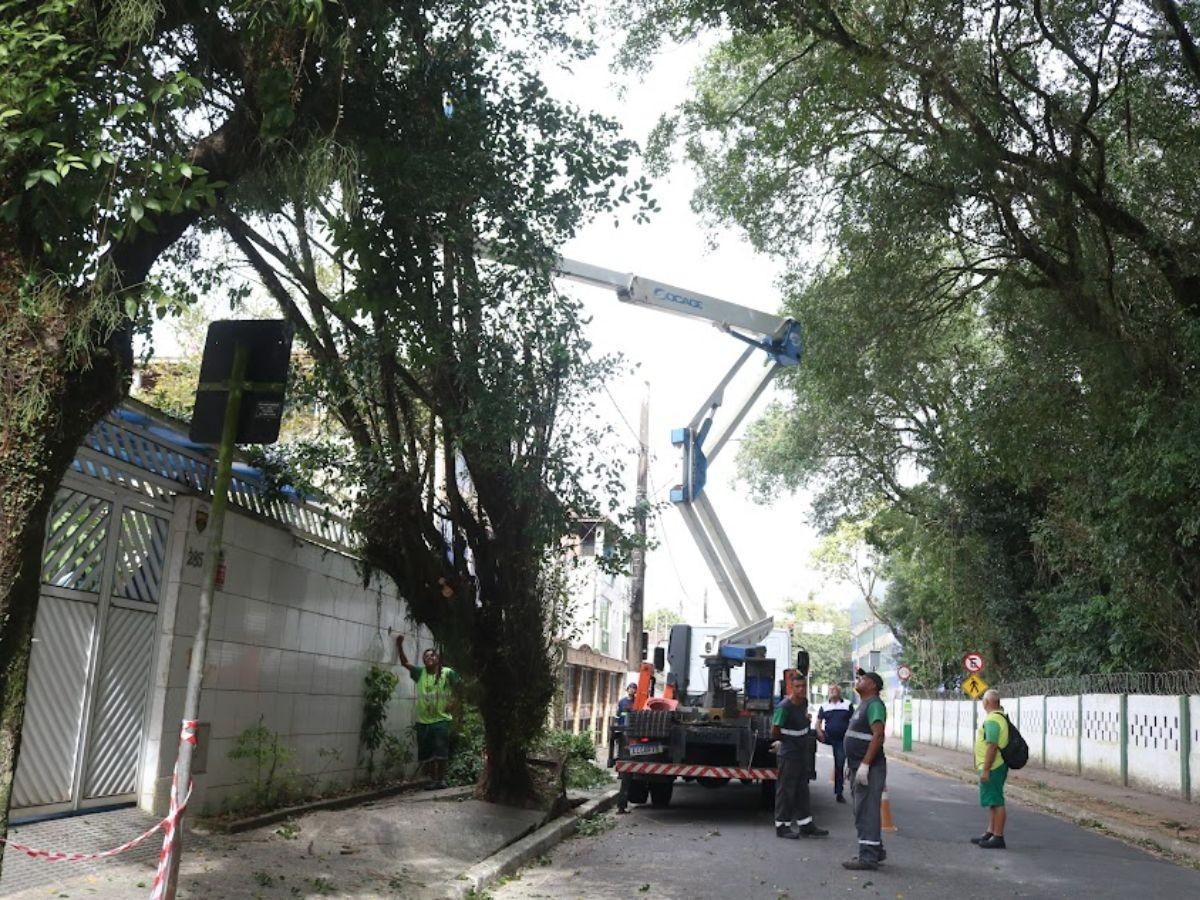
Cleanup and repair efforts are ongoing in Santos, São Paulo, following powerful winds that reached speeds exceeding 100 km/h. Approximately 160 professionals are involved in the operations, which are expected to continue until Sunday, October 2nd. The Santos Civil Defense reported around 60 incidents across the city, including collapsed walls, fallen poles, damaged roofs, and approximately 30 downed trees and vegetation. One tragic incident occurred when a 58-year-old homeless man, identified as Marcelino Izidio dos Santos, was killed after being struck by a falling tree while sitting on a wall. His body was recovered by the Forensic Institute. The strong winds caused a section of a wall at the company Dínamo to collapse onto two trucks, scattering bricks across Rua Aguiar de Andrade in the Paquetá neighborhood, though no injuries were reported in that specific event. Several neighborhoods were affected by fallen trees, including Alemoa, Boqueirão, Bom Retiro, and Vila Mathias, among others. While cleanup has been completed in some areas, priority streets for tree removal include Rua Ana Santos and Av. Francisco da Costa Pires. Civil Defense anticipates milder winds, with gusts up to 50 km/h, for the remainder of the week and continues to monitor affected areas. Residents can contact Civil Defense at 199 for emergencies or register for weather alerts via SMS by sending their CEP to 40199.
The severe weather event in Santos highlights the vulnerability of urban infrastructure and public spaces to extreme meteorological conditions. The response involves significant resource allocation for immediate repairs and debris removal, underscoring the importance of robust emergency management protocols and public safety communication channels. The fatality serves as a somber reminder of the direct human impact of such events, prompting consideration of urban planning strategies that mitigate risks for vulnerable populations, such as those experiencing homelessness. Looking ahead, the integration of advanced weather forecasting and early warning systems, coupled with resilient infrastructure design, will be crucial for enhancing community preparedness and minimizing future damages in an era of potentially increasing climate volatility.
AI-generated to prompt reflection — not editorial opinion, not advice, not a statement of fact. How this works.